The Los Angeles Chargers head into this offseason with a clear understanding that improvement on the offensive side of the ball is essential if they want to take the next step as a contender. While there are pieces in place, the unit as a whole still feels incomplete.
The front office and coaching staff know that simply running it back with the same personnel may not be enough in a competitive AFC landscape. As a result, upgrading key positions especially at wide receiver has become one of the organization’s top priorities.
One of the most pressing questions surrounds the makeup of the receiving corps. At the moment, there is clarity in some areas but uncertainty in others. Ladd McConkey has firmly established himself as a reliable presence in the slot.
His route running precision, toughness over the middle, and dependable hands have made him a favorite target in short to intermediate situations. He appears poised to remain a central figure in the offense moving forward.
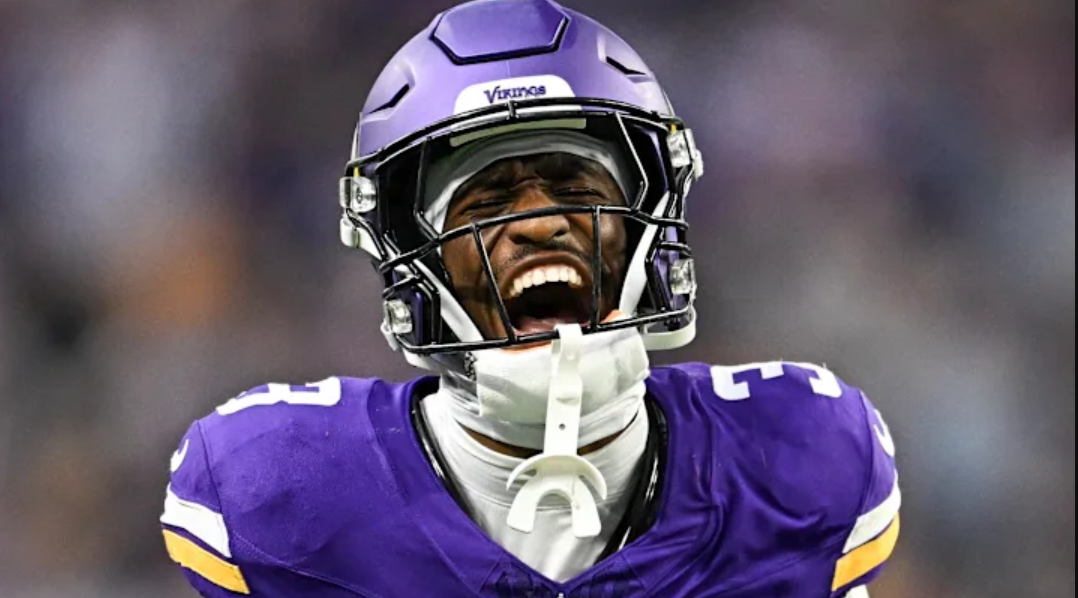
Beyond McConkey, there is intrigue surrounding Tre Harris, who enters his second professional season with rising expectations. Harris flashed potential as a rookie, demonstrating the size and athletic traits necessary to develop into a significant contributor.

The coaching staff is optimistic about his growth, but projecting a major leap always carries some uncertainty. Second year receivers often make strides, yet counting on that progression without additional reinforcements could be risky.
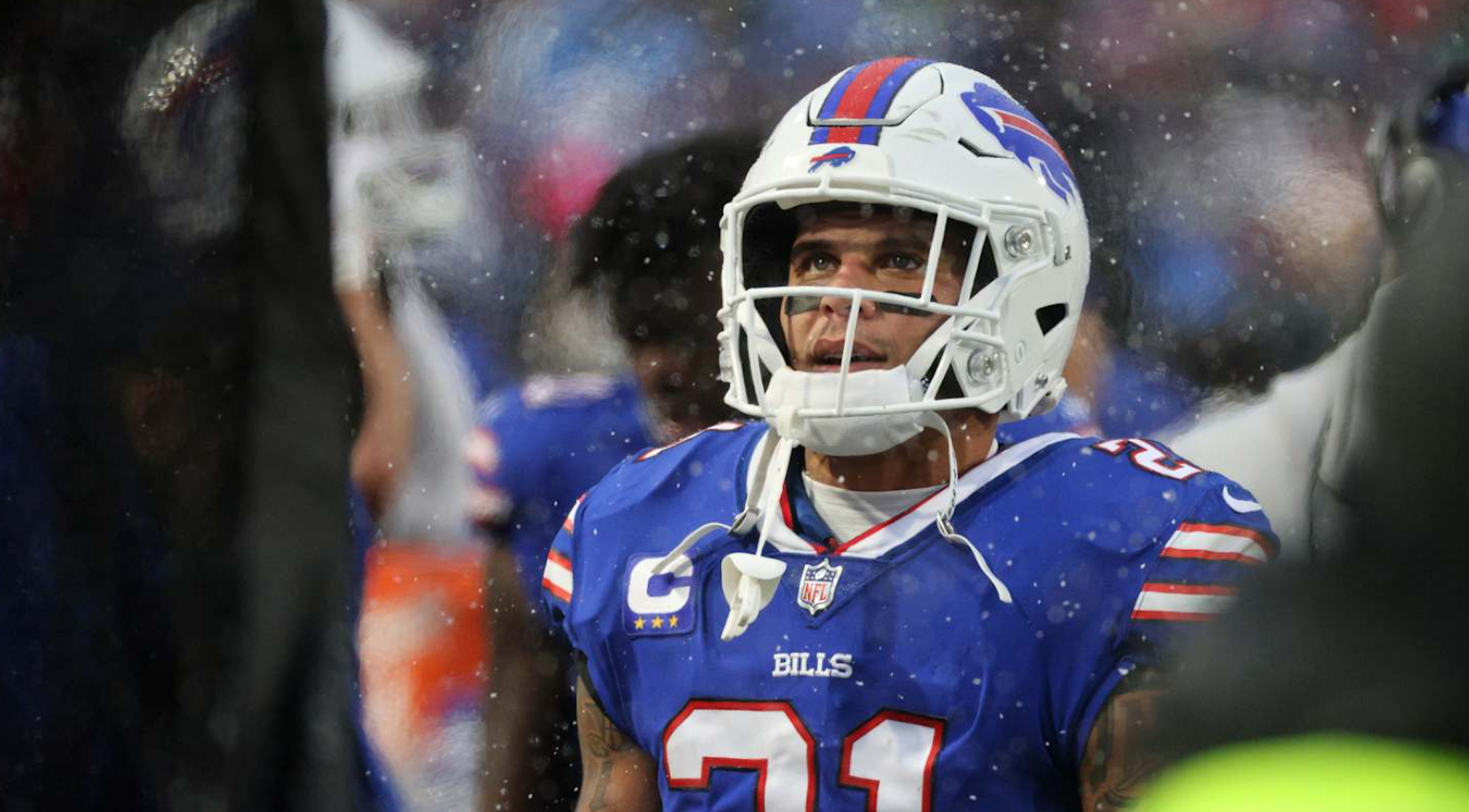
The situation becomes even more complicated when examining Quentin Johnston. The former first round pick is approaching a pivotal moment in his career, as the Chargers must soon decide whether to exercise his fifth year option. That decision carries financial and strategic implications.
Picking up the option would signal long term faith in his development, while declining it could open the door to moving on. If the Chargers determine that Johnston has not met expectations or does not fit into their evolving offensive blueprint, they may explore alternative solutions.
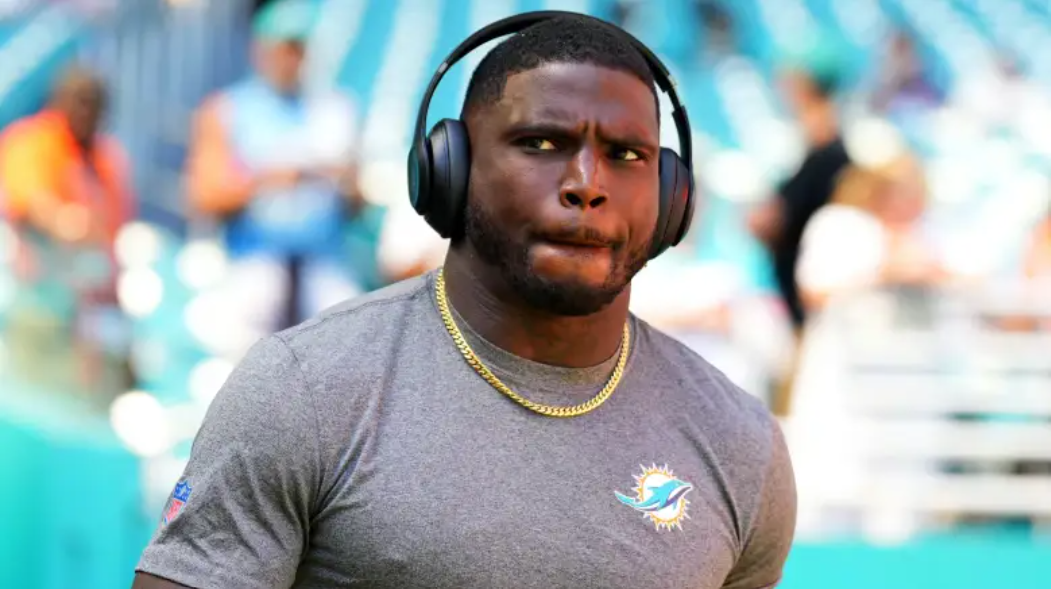
Should the organization decide to part ways with Johnston, one intriguing possibility could be pursuing Tyreek Hill, who recently became available after his time with the Miami Dolphins came to an end. Hill’s availability would instantly command league wide attention, as he remains one of the most dynamic playmakers of his generation when healthy.
The financial aspect of such a move is not as prohibitive as one might assume. According to CBS Sports contributor Garett Podell, the Chargers are in an enviable salary cap position. Entering the offseason, Los Angeles reportedly holds $78.6 million in effective cap space, which ranks second in the league based on figures from Over the Cap.
That level of financial flexibility provides the Chargers with the freedom to explore aggressive upgrades without mortgaging their future. Unlike cap strapped franchises forced to restructure deals or release veterans to create room, Los Angeles can approach negotiations from a position of strength.
Of course, money alone does not make a deal logical. Fit within the offensive system and synergy with the quarterback are equally critical. In that regard, the presence of Justin Herbert significantly enhances the appeal of pairing him with Hill. Herbert’s arm talent is widely regarded as elite.
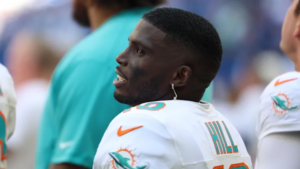
Through his first six seasons, he has accumulated 24,820 passing yards, the second highest total for any quarterback at that stage of a career, trailing only Hall of Famer Peyton Manning, who threw for 24,885 yards in his first six campaigns. Those numbers underscore Herbert’s ability to produce at a high level, even amid roster fluctuations.
What Herbert has often lacked, however, is a consistently explosive vertical weapon capable of stretching defenses snap after snap. Hill, when healthy, is arguably the premier deep threat of the modern era.
His rare combination of speed, acceleration, and ball tracking ability forces defensive coordinators to account for him on every play. Safeties must shade in his direction, corners are pushed deeper off the line, and entire coverage structures can be manipulated simply by his presence on the field.
There is also an element of schematic familiarity that strengthens the case. The Chargers’ current offensive coordinator is Mike McDaniel, who previously served as head coach of the Dolphins during Hill’s tenure in Miami.
McDaniel’s offensive philosophy emphasizes speed, spacing, pre-snap motion, and creative formations designed to maximize playmakers in space. Hill thrived in that environment, benefiting from manufactured touches, quick hitting routes, and carefully designed shot plays that exploited defensive hesitation.
If Hill were to join Los Angeles, he would not need to learn an entirely new system from scratch. Instead, he could transition into a scheme with terminology and concepts already familiar to him.
That continuity could shorten his adjustment period and allow him to contribute more quickly once fully healthy. In fact, Hill himself acknowledged McDaniel’s move to Los Angeles on social media, signaling that he took notice of the potential connection.
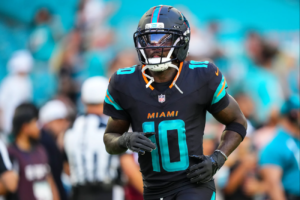
From a strategic standpoint, McDaniel’s presence could be the decisive factor. If anyone understands how to unlock Hill’s unique skill set, it is McDaniel. During their time together in Miami, Hill was frequently deployed in motion to create leverage advantages and prevent defenses from pressing him effectively.
Crossing routes, deep overs, wheel patterns, and vertical go routes were all staples of his usage. Reuniting with McDaniel would likely mean a return to those creative alignments.
For Herbert, the addition of a player like Hill could fundamentally alter the geometry of the field. Even if Hill were not 100 percent following his recovery from a torn ACL suffered early in the 2025 season, his speed even at 75 percent of peak form would likely represent the most dangerous vertical threat Herbert has had in his professional career.
Defenses would be forced to respect the possibility of explosive plays, potentially opening up intermediate routes for McConkey and providing more favorable matchups for Harris.
Of course, there are legitimate concerns. Recovering from an ACL tear is no small feat, particularly for a receiver whose game is built on elite burst and top end speed. While modern medicine has significantly improved recovery timelines, there is always uncertainty regarding how quickly a player will regain full explosiveness.
The Chargers’ medical staff would need to conduct thorough evaluations to ensure that Hill’s long term outlook aligns with the team’s competitive window.
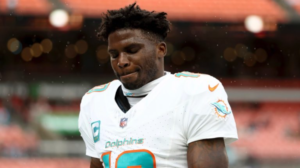
Additionally, integrating a high profile veteran into a young receiving room can shift dynamics. Leadership roles, target distribution, and locker room chemistry must all be managed carefully. Yet Hill’s track record as a game changing performer could outweigh those concerns, especially for a team eager to maximize Herbert’s prime years.
Another layer to consider is the competitive landscape of the AFC. With several teams boasting high powered offenses, standing pat may not be sufficient. The Chargers have shown flashes of offensive brilliance in recent seasons, but inconsistency and a lack of explosive plays have occasionally limited their ceiling. Adding a receiver of Hill’s caliber could elevate the unit from productive to truly formidable.
Ultimately, the decision would hinge on a combination of financial feasibility, medical evaluations, and strategic vision. The Chargers possess the cap space to make a bold move.
They have a franchise quarterback capable of maximizing elite talent. They have an offensive coordinator intimately familiar with Hill’s strengths. The alignment of those factors makes the hypothetical pairing more than mere speculation it becomes a plausible scenario.
Whether the front office ultimately pursues Hill remains to be seen. The offseason often brings unexpected twists, and multiple teams could express interest. However, the logic behind such a move is compelling.
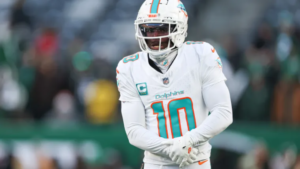
For a franchise determined to refine its offensive identity and surround Herbert with the best possible weapons, exploring the addition of a proven deep threat like Hill could represent a defining step.
As the offseason unfolds, Chargers fans will undoubtedly debate the merits and risks of such a signing. Would the potential reward outweigh the medical uncertainty? Is investing significant resources in a veteran receiver the right approach, or should the team prioritize youth and draft capital? Those are questions only time and the front office can answer.
What seems clear is that the Chargers are not content with stagnation. Armed with financial flexibility, a star quarterback, and a creative offensive mind, they are positioned to make meaningful changes.
The possibility of Hill wearing powder blue may still be hypothetical, but it captures the broader ambition in Los Angeles: build an offense that can compete with anyone, anywhere, at any time.