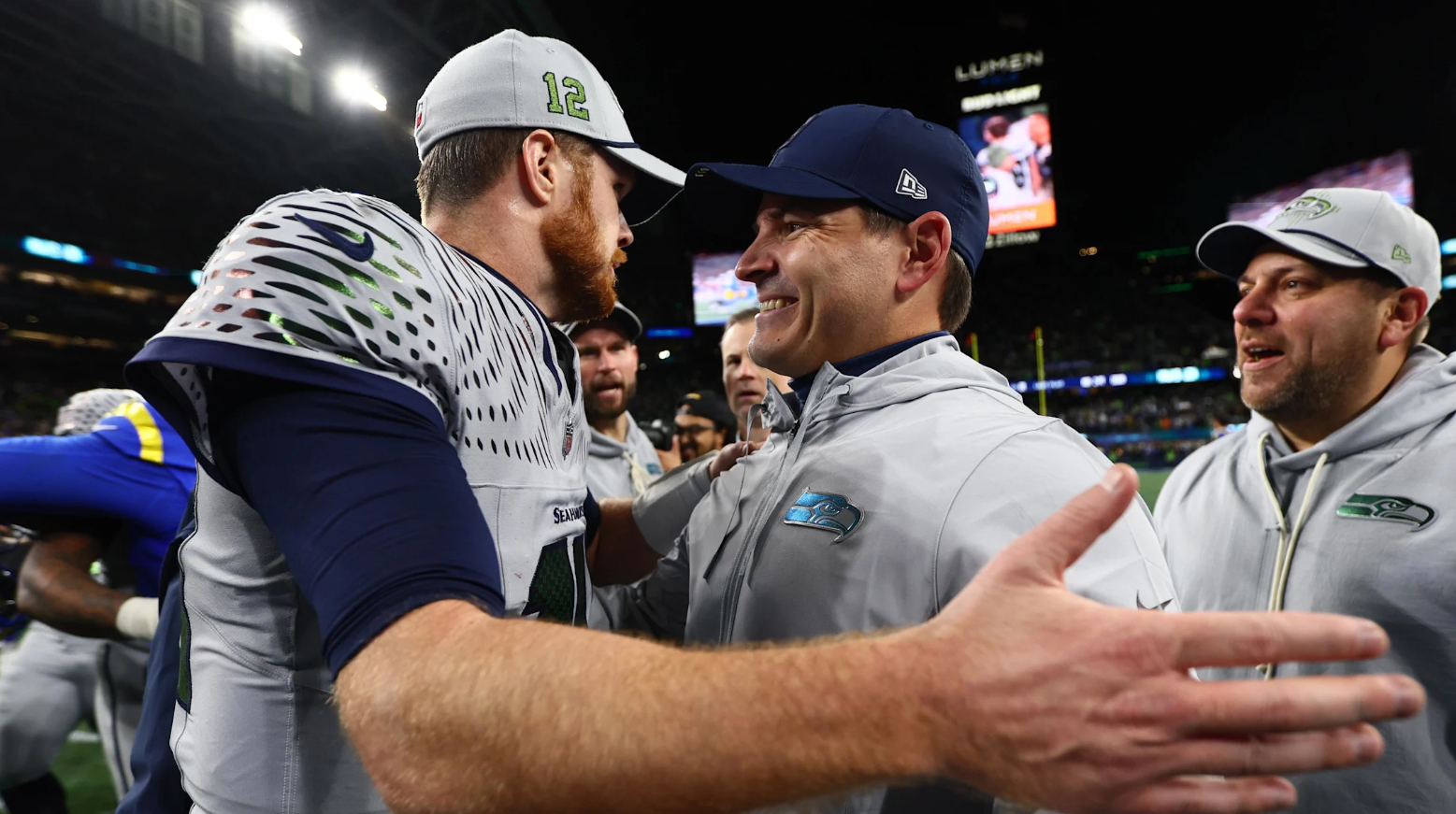
What Mike Macdonald has accomplished in a remarkably short time with the Seattle Seahawks stands out as one of the most impressive coaching transformations in recent NFL memory. When Macdonald arrived in Seattle, he inherited a team that was respectable but unspectacular a 9 to 8 squad hovering around the playoff bubble, good enough to compete but not good enough to truly contend.
Two seasons later, the Seahawks are no longer merely competitive. They are one of the league’s elite teams, having added five wins to their previous total and reaching the NFC Championship Game for the first time since the legendary 2014/15 season, when Seattle last played on football’s biggest stages.
That leap forward did not happen by accident, nor was it the result of one single change. Instead, it was the product of a carefully constructed vision one that combined smart roster building, organizational alignment, and perhaps most importantly, a culture that players genuinely embraced. While much of the credit for assembling the talent belongs to general manager John Schneider, the defining factor behind the Seahawks’ resurgence may be the environment Macdonald created once those players arrived.
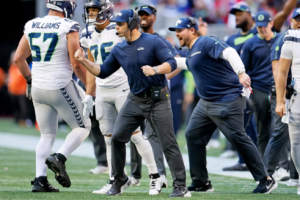
From the outside, it’s easy to point to wins and losses as the ultimate measure of success. But inside the building, Macdonald has emphasized something deeper: commitment. That philosophy became especially clear during the offseason, when the Seahawks experienced something that is increasingly rare in today’s NFL nearly perfect attendance at voluntary workouts.
In an era where players often skip optional programs to train independently, manage workloads, or simply rest, Seattle’s near universal participation sent a powerful message. According to Macdonald, that collective decision to show up laid the groundwork for everything that followed. It wasn’t mandated. It wasn’t forced. It was earned.
Macdonald explained that the Seahawks’ deep playoff run is directly connected to that offseason buy in. Speaking with Ari Horton of Seahawks.com, he made it clear that the team’s success in January was built months earlier, long before games were played or playoff brackets were formed.
“We wouldn’t be here if the guys didn’t buy in the way they did and work the way they did in the offseason,” Macdonald said. “That’s not something you can just demand. You can ask players to come to voluntary workouts as much as you want, but if you haven’t built something real if you haven’t created an environment where they know they’ll get better then they’re not going to show up.”
Those comments reveal the core of Macdonald’s approach. Rather than relying on authority alone, he focused on trust, transparency, and authenticity. The Seahawks didn’t attend offseason sessions because they were afraid of consequences. They showed up because they believed the work mattered and because they believed in the people leading them.

Macdonald acknowledged that building that kind of culture is far easier to talk about than to execute. Coaches across the league preach accountability, teamwork, and development. But players quickly recognize whether those values are truly embedded in daily operations or merely spoken during press conferences. In Seattle, Macdonald and his staff backed up their message with action.
The coaching staff designed practices that were efficient, competitive, and purposeful. Meetings were organized to maximize learning rather than overwhelm players with information. The atmosphere encouraged collaboration, communication, and honest feedback. Over time, players began to feel that coming to the facility wasn’t just about checking a box it was about sharpening their skills, strengthening relationships, and preparing to win together.
That offseason cohesion has been on full display throughout the postseason, but it was especially evident during the Seahawks’ dominant performance in the Divisional Round against the San Francisco 49ers. In a matchup that many expected to be close, Seattle delivered a statement, dismantling San Francisco 41 to 6 in a game that was effectively decided well before halftime.
The score alone told part of the story, but the way Seattle played told an even bigger one. Every phase of the game offense, defense, and special teams operated in sync. Assignments were executed cleanly. Communication was sharp. Players moved with confidence and purpose, playing not as individuals chasing highlights, but as a unified group carrying out a shared plan.
That collective identity is central to Macdonald’s philosophy. From the moment he took over, he emphasized that individual talent would only take the team so far. True success, he argued, would require trust trust between players, trust in the coaching staff, and trust in the system itself.

That trust did not appear overnight. It required players to take what Macdonald described as a “leap of faith.” Veterans had to buy into new schemes. Young players had to accept coaching and embrace competition. Everyone had to commit to the idea that the process would lead to results, even when immediate rewards weren’t guaranteed.
According to Macdonald, the players embraced that challenge.
“At the end of the day, it’s about the players trusting us trusting what we’re trying to build and what we believe will help them grow,” he said. “Our coaches and staff worked hard to create an environment where guys feel supported and challenged at the same time. If that didn’t happen, I truly believe we wouldn’t be standing here right now.”
That conviction speaks volumes. Macdonald isn’t simply crediting talent or luck. He’s pointing directly to the culture as the foundation of Seattle’s success. The wins, the playoff run, and the championship opportunity are all extensions of that foundation.
Now, the Seahawks stand just one game away from the Super Bowl but the final obstacle in their path is one they know all too well. Awaiting them in the NFC Championship Game are the Los Angeles Rams, a familiar rival and a team that has pushed Seattle to the limit throughout the season.
The Seahawks and Rams met twice during the regular season, and neither contest offered anything close to separation. Combined, the two games were decided by just three total points, with each team earning one victory. Every snap was contested. Every mistake mattered. Those games served as reminders that when these teams face off, margins are razor thin.
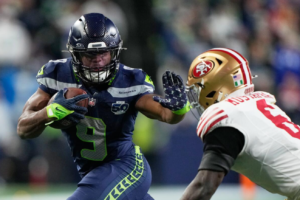
That history sets the stage for what promises to be another dramatic chapter in one of the NFC’s most compelling rivalries. Both teams are battle tested. Both are confident. And both believe they belong on the sport’s biggest stage.
Seattle will have the advantage of playing at Lumen Field, where the atmosphere is expected to be electric. The Seahawks’ home crowd has long been known as one of the loudest and most passionate in the NFL, and with a Super Bowl berth on the line, that energy will be at its peak.
Kickoff is scheduled for 3:30 p.m. PT, and the stakes could not be higher. The winner will advance to Super Bowl LX, where either the Denver Broncos or the New England Patriots await from the AFC.
For the Seahawks, this moment represents more than just a chance to compete for a championship. It is validation of a vision that began two years earlier, when Mike Macdonald took over a team in transition and challenged it to become something greater. Through patience, intentional leadership, and unwavering belief in the process, Seattle transformed from a middle of the pack contender into a legitimate powerhouse.
Regardless of how Sunday unfolds, Macdonald’s impact on the franchise is already undeniable. He has redefined expectations, reshaped the culture, and restored the Seahawks to the heart of the NFL’s elite. And now, with one final hurdle remaining, Seattle has the opportunity to turn an extraordinary journey into a historic one.