The Baltimore Orioles remain one of Major League Baseball’s most intriguing organizations, largely because of the extraordinary amount of young talent they have accumulated over the last several seasons. From homegrown stars to high upside prospects who are either already contributing or knocking on the door, the foundation in Baltimore is undeniably strong.
However, despite the promise surrounding the roster, the 2025 season failed to meet expectations in a significant way. What many believed would be another step forward instead became a frustrating campaign marked by inconsistency, underperformance, and unmet potential.
That disappointment ultimately cost Brandon Hyde his job. Hyde, who had once been credited for guiding the Orioles through their rebuild and into contention, was dismissed earlier than many expected as the organization looked for a reset. The decision signaled that the front office believed the team was too talented to accept regression and that a new voice in the clubhouse was necessary to unlock the full capabilities of the roster.
Once Hyde was let go, Baltimore quickly became one of the most attractive managerial openings in the sport. The appeal was obvious. Few teams could offer a new manager a blend of youth, star power, payroll flexibility, and postseason expectations all at once. As a result, the Orioles’ managerial search drew considerable attention across the league, with speculation swirling about which direction the franchise would ultimately take.
After weeks of interviews and internal evaluations, the Orioles settled on Craig Albernaz, a highly respected figure from the Cleveland Guardians’ organization. Albernaz had built a strong reputation as an associate manager in Cleveland, where he was known for his communication skills, analytical understanding, and ability to connect with players across different stages of their careers. Baltimore believed that combination made him an ideal fit for a team trying to transition from promising contender to consistent powerhouse.
MLB.com’s Jake Rill confirmed the move when the club made it official, announcing that the Orioles had found their next skipper. With Albernaz stepping into the role, Baltimore signaled that it wanted to blend modern baseball thinking with a player first leadership style one that could maximize both performance and accountability.
The hiring of Albernaz was only one piece of what has already been an eventful offseason for the Orioles. While much of their activity came early in free agency, the organization wasted little time making bold moves that demonstrated a clear sense of urgency. The most eye catching of those moves was the acquisition of Pete Alonso, a true middle of the order force whose power immediately changes the complexion of Baltimore’s lineup.
Landing Alonso was widely viewed as a major victory for the Orioles’ front office. For years, critics argued that Baltimore lacked a proven, fear inducing bat capable of carrying an offense in October. Alonso’s arrival addresses that concern directly. Beyond Alonso, the Orioles also added several other key pieces, reinforcing both the pitching staff and the outfield in ways that improved the roster’s balance and depth.
By the time the initial wave of free agency settled, Baltimore had already committed significant resources. The club invested $195 million across four free agents Alonso, Ryan Helsley, Zach Eflin, and Leody Taveras placing the Orioles among the top spenders in baseball. That level of financial commitment marked a notable shift for a franchise that, not long ago, was viewed as cautious or conservative in the open market.
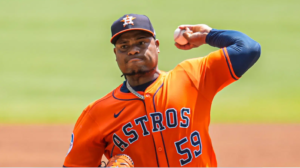
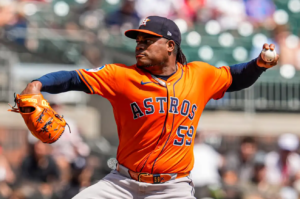
Even with those additions, the Orioles may not be finished. Several notable names remain available, and one pitcher in particular has emerged as a potential game changer for Baltimore’s rotation, Framber Valdez.
ESPN’s Paul Hembekides highlighted just how aggressive the Orioles have been and how much more they could still do. With general manager Mike Elias entering the final year of his contract, there is a growing sense that Baltimore’s front office wants to push all its chips into the middle of the table. According to projections, Valdez could command a contract in the range of six years and $180 million, especially after Ranger Suárez secured a $130 million deal over five years with Boston.
If the Orioles were to land Valdez at that price point, it would elevate them past heavy spenders like the Los Angeles Dodgers and Toronto Blue Jays in total free agent expenditures. Such a move would not only reshape Baltimore’s rotation but also send a clear message to the rest of the American League: the Orioles are done waiting.
From a baseball standpoint, adding Valdez would be transformative. The left hander is a proven workhorse with postseason experience and a World Series ring on his résumé. His ability to generate ground balls, limit damage, and pitch deep into games would immediately stabilize a rotation that struggled at times in 2025. Pairing Valdez with Baltimore’s existing arms would give the club one of the more formidable pitching staffs in the AL East.
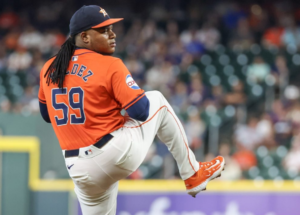
However, Valdez’s free agent process has not been without complications. His market has lingered longer than expected, in part due to lingering questions stemming from a controversial pitch crossing incident involving catcher César Salazar. The incident raised eyebrows across the league and sparked debate about intent, communication, and clubhouse dynamics.
According to reporting from JomBoy Media, both Valdez and Salazar were called into the manager’s office following the game in question. Valdez reportedly apologized to Salazar, maintaining that the cross up was accidental and not a deliberate act. While the situation created momentary concern, it has not resulted in any formal discipline or broader pattern of issues.
If teams determine that the incident was indeed unintentional, then Valdez carries no meaningful character red flags. For a franchise like Baltimore one that places a premium on clubhouse culture that distinction matters. Assuming the Orioles are satisfied with the explanations provided, there would be little reason for them to hesitate in pursuing the left hander aggressively.
Baltimore’s motivation is clear. Just a few seasons ago, the Orioles were celebrating a 100 win campaign that announced their arrival as a legitimate contender. Since then, expectations have only grown. The frustration of 2025, therefore, felt amplified because it contrasted so sharply with what the team believed it could achieve.
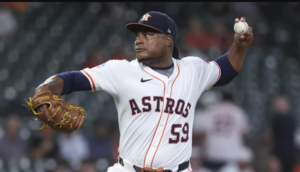
Bringing in Albernaz, investing heavily in free agency, and potentially targeting a pitcher of Valdez’s caliber all point toward the same objective: getting back to the postseason and staying there. The AL East remains one of baseball’s most unforgiving divisions, with powerhouse organizations in New York, Boston, and Toronto all capable of spending and contending at the same time. To survive and thrive in that environment, Baltimore understands it must be proactive rather than reactive.
Valdez, if signed, would likely play a central role in the Orioles’ attempt to rebound. His presence would ease pressure on younger pitchers, shorten games for the bullpen, and provide the type of reliability that becomes invaluable in September and October. While no single move guarantees success, adding a pitcher of his caliber would significantly raise Baltimore’s floor and ceiling alike.
Ultimately, the Orioles are at a crossroads. The talent is real, the window is open, and the expectations are no longer modest. Whether or not Valdez ends up in Baltimore, the message from the organization is unmistakable: this team is done being patient. The Orioles want to win now, and every decision this offseason has been made with that goal firmly in mind.
Only time will reveal how these moves play out on the field. But if Baltimore continues on this aggressive path, it will remain firmly in the conversation as one of the most dangerous and ambitious teams in a crowded American League landscape.