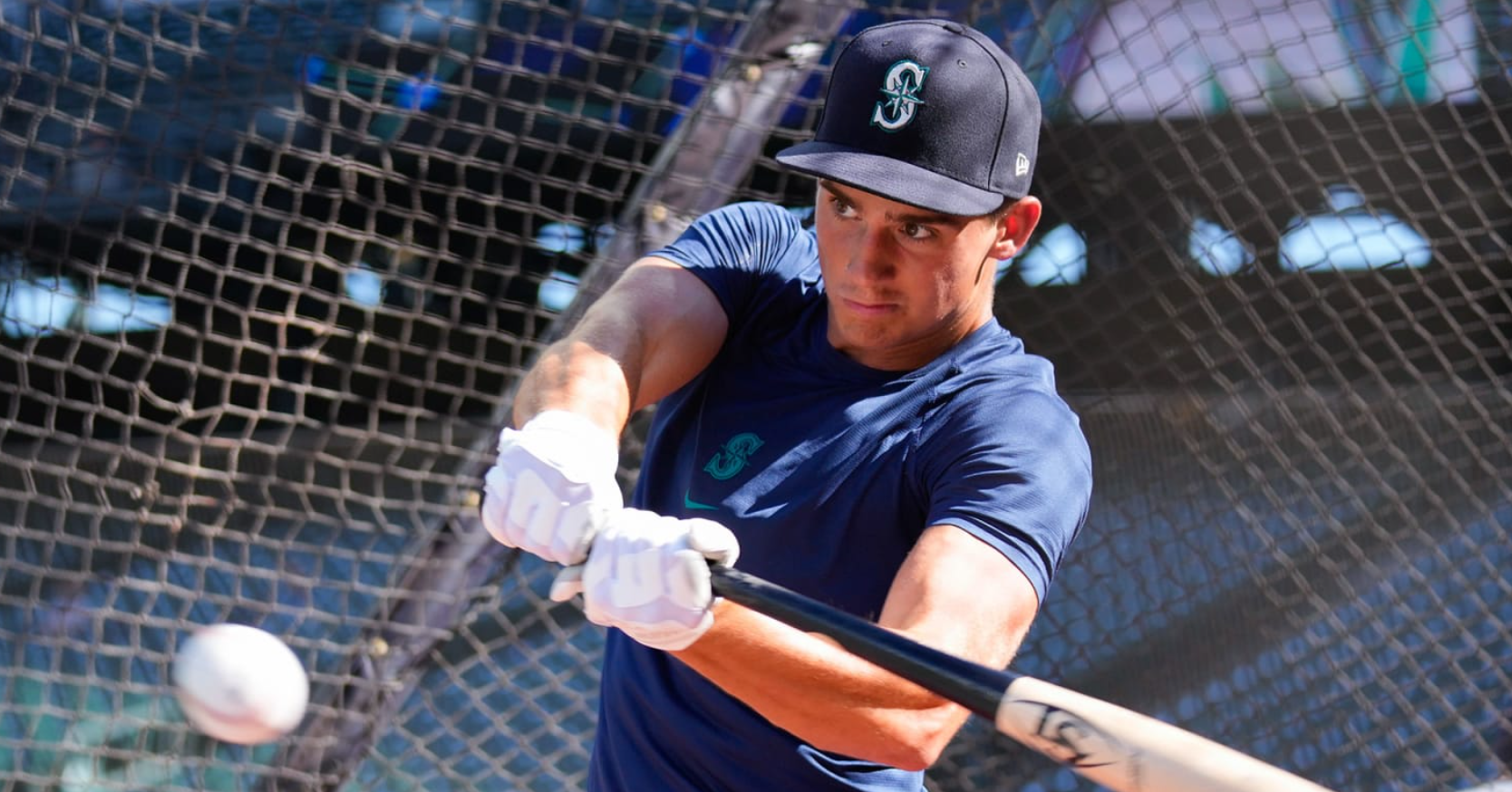
Seattle Mariners_For Cole Young, the 2026 season represents something close to a fresh start not redemption in a dramatic, storybook sense, but a chance to reclaim his footing in the ever demanding world of Major League Baseball.
After getting his first extended opportunity in the big leagues and failing to seize it, the 22 year old infielder is entering the new year determined to prove that he’s more than just a highly touted prospect whose reputation outpaced his readiness.
Young opened the 2025 campaign as the starting second baseman for the Mariners, a role that reflected the organization’s confidence in his talent and long term potential. The Mariners believed his bat to ball skills, mature plate approach, and defensive versatility would translate smoothly to the highest level.
However, the transition proved more difficult than expected. Over the course of the season, Young struggled to find offensive consistency. He finished the year batting .211, with four home runs, 41 runs batted in, and just one stolen base numbers that fell short of both internal expectations and external projections.
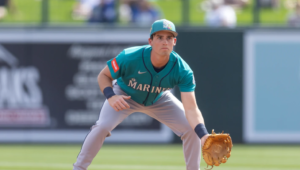
As the season progressed, it became clear that opposing pitchers had begun to identify and exploit weaknesses in his approach. His timing wavered, his bat speed dipped late in the year, and his confidence seemed to erode. Eventually, he lost his grip on the everyday job at second base. What began as an exciting opportunity to establish himself in the majors ended in frustration, with Young closing the season on a disappointing note.
Yet setbacks often provide the clearest path to growth. Rather than dwell on the disappointment, Young used the offseason as a period of reflection and reinvention. Determined to address the physical and mechanical shortcomings that surfaced during his rookie campaign, he committed himself to an intense training regimen. The results have been evident during spring workouts.
When Young arrived at Mariners camp this spring, he looked noticeably different. Leaner, stronger, and more explosive in his movements, he appeared to have reshaped his body with purpose. The added strength hasn’t come at the expense of agility; if anything, he’s moving more fluidly in the field and showing improved quickness in his first step. Those physical gains are translating into sharper defensive actions and more zip on his throws across the diamond.
Mariners general manager Justin Hollander publicly praised Young’s dedication and transformation during a Friday appearance on Seattle Sports’ Brock & Salk. Hollander made it clear that the organization has taken notice of the work their young infielder put in over the winter.
“I think he really changed his body this offseason. I’m really proud of what he did in the offseason,” Hollander said. “He’s moving better, he’s throwing better, and I think you’ll see him be able to maintain consistent bat speed, a consistent approach, and get to some pitches that he maybe didn’t get to at the end of last season when he was tired and kind of the league had exposed a small hole from him.”
That “small hole” Hollander referenced became increasingly apparent as 2025 wore on. Major league pitchers, adept at identifying patterns, began challenging Young in specific zones and sequences that disrupted his rhythm. Fatigue also seemed to play a role. The grind of a full big league schedule travel, preparation, and the daily mental demands can wear down even seasoned veterans. For a 22 year old navigating his first full season, the toll was significant.
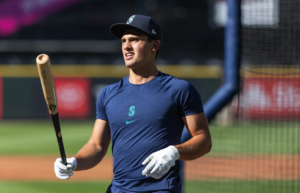
By focusing on conditioning and durability this winter, Young has aimed to ensure that late-season fatigue won’t undermine him again. Improved strength and endurance should help him maintain steady bat speed deep into the year, a crucial factor in catching up to premium velocity and adjusting to off speed pitches. Just as importantly, a more consistent physical foundation can reinforce a stable mental approach at the plate.
Early signs this spring suggest progress. Young has displayed sharper swings, better balance through contact, and a willingness to attack hittable pitches rather than falling into defensive counts. Coaches have noted that his pre-pitch movements appear more controlled, and his overall body language reflects renewed confidence.
Of course, spring performance is only part of the equation. The real test will come once the regular season begins and opposing teams once again tailor their scouting reports to exploit weaknesses. But unlike last year, Young enters 2026 armed with firsthand knowledge of how the league will challenge him.
For the Mariners, Young’s resurgence would carry meaningful implications. The organization continues to build around a core of young, controllable talent, and having a steady, productive presence in the middle infield remains a priority. If Young can translate his offseason gains into consistent production, he could reestablish himself as a foundational piece rather than a question mark.
At just 22 years old, time is still firmly on his side. Development rarely follows a straight line, and many successful major leaguers have endured early struggles before finding their footing. What separates long term contributors from fleeting prospects is often the response to adversity.
In that regard, 2026 is less about erasing the disappointment of 2025 and more about demonstrating growth. Young doesn’t need to rewrite his story overnight; he simply needs to show that he’s learning, adapting, and evolving. The Mariners’ front office clearly believes he has taken meaningful steps in that direction.
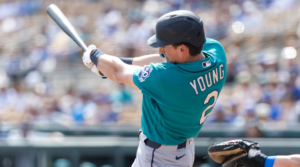
Now, the stage is set for Young to validate that belief. Armed with a stronger frame, a refined approach, and the humility that comes from early setbacks, he has an opportunity to reshape the narrative surrounding his career. Redemption in baseball rarely comes in grand gestures it arrives through daily adjustments, incremental improvements, and sustained performance.
For Cole Young, the coming season is his chance to prove that the promise which once made him a top prospect was never misplaced it just needed time, resilience, and a little hard earned perspective to fully emerge.
Young is facing tough competition
One of the primary challenges facing Young as he pushes for a spot on the roster is the undeniable traffic jam of talent standing in his way. The competition isn’t just stiff it’s crowded with players who have either already impressed or are making strong cases of their own this spring.
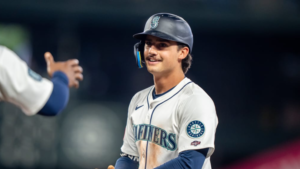
Chief among them is Colt Emerson, whose performance has been so consistently impressive that many around the organization view him as nearly guaranteed to secure a place on the team. Emerson’s emergence has significantly narrowed the margin for error for anyone else hoping to carve out a role.
With Emerson seemingly close to a roster spot, Young’s path becomes even more complicated. Instead of competing in a wide open race, he finds himself battling directly with several capable infielders for limited opportunities at second base. Ryan Bliss, Leo Rivas, and Miles Mastrobuoni are all firmly in the mix, each bringing a distinct skill set to the table.
Bliss offers speed and defensive versatility, Rivas provides steady glove work and contact ability, and Mastrobuoni’s flexibility across multiple positions enhances his value. The presence of these players creates a scenario in which every at bat, every defensive play, and every inning carries heightened significance.
For Young, the situation demands not just solid play, but standout performances. In a competition this tight, simply being reliable may not be enough. He must demonstrate that he can provide something unique or superior compared to his peers whether that’s offensive upside, defensive consistency, or overall impact. The margin separating these players is slim, which means roster decisions could ultimately hinge on small but meaningful differences.
Despite the congestion, however, there is genuine optimism within the organization regarding Young’s readiness. General manager Justin Hollander has made it clear that he remains highly encouraged by what he has seen. Rather than being discouraged by the competition, Hollander views Young as someone who has responded exactly the way the team hoped he would.
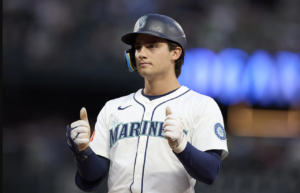
According to Hollander, Young has shown clear signs that he is prepared for the next level. The belief inside the front office is that he is no longer simply developing he is positioning himself to seize a major league opportunity. Hollander expressed confidence that Young appears capable of stepping into a big league role and embracing it fully, rather than merely surviving the jump.
“I think he’s showing us that he’s ready to play in the big leagues and ready to just take the job and run with it,” Hollander said when discussing the infielder’s progress. That statement reflects more than just cautious optimism; it signals that Young has done the necessary work to change the internal evaluation of where he stands in his development.
A key factor in that shift has been Young’s commitment during the offseason. Hollander emphasized that the organization challenged him to put in the work over the winter, and by all accounts, Young delivered.
Whether it was refining his mechanics, improving his strength and conditioning, or sharpening his defensive instincts, he approached the offseason with seriousness and focus. That preparation is now translating into confidence and consistency on the field.
Hollander made it clear that the offseason work was not just about incremental improvement it was about proving readiness. In the team’s eyes, Young needed to demonstrate that he understood what was required to compete at the highest level and that he was willing to invest the time and energy necessary to get there. By doing so, he effectively checked off one of the most important boxes in his progression.
The excitement surrounding Young stems from that growth. It’s not simply about raw talent anymore; it’s about maturity, preparation, and execution. The front office sees a player who has embraced the challenge rather than shied away from it. Even in the face of a crowded infield picture, Young has forced himself into serious consideration.
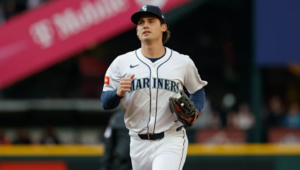
Of course, none of this guarantees him a roster spot. The competition remains fierce, and roster construction often involves difficult choices that extend beyond individual performance.
Positional flexibility, roster balance, and long term planning all factor into final decisions. Still, the fact that Young is being discussed as someone capable of “taking the job and running with it” speaks volumes about how far he has come.
In a camp defined by intense competition and limited openings, Young has managed to keep himself firmly in the conversation.
The path may be complicated by Emerson’s near lock status and the presence of Bliss, Rivas, and Mastrobuoni, but Young has done everything within his control to strengthen his case. If nothing else, he has shown that he belongs in the discussion and perhaps, as Hollander believes, that he is finally ready for the bright lights of the big leagues.