As the Major League Baseball offseason began, the Philadelphia Phillies were widely viewed as one of the teams most likely to make significant moves. Coming off yet another painful postseason exit, expectations were high that the front office would respond aggressively. The roster was already talented, but the sense around the league and among the fan base was that the Phillies were only a piece or two away from finally getting over the hump and turning postseason heartbreak into a championship run.
That urgency, however, never truly translated into action.
From the outside looking in, the Phillies’ offseason has felt underwhelming, especially when compared to the ambition shown by several of their competitors. Philadelphia entered the winter with financial flexibility and a clear mandate to improve, but as the months passed, the list of impactful additions remained surprisingly short. For a team that has consistently come close without sealing the deal in October, standing mostly pat was not what many fans envisioned.
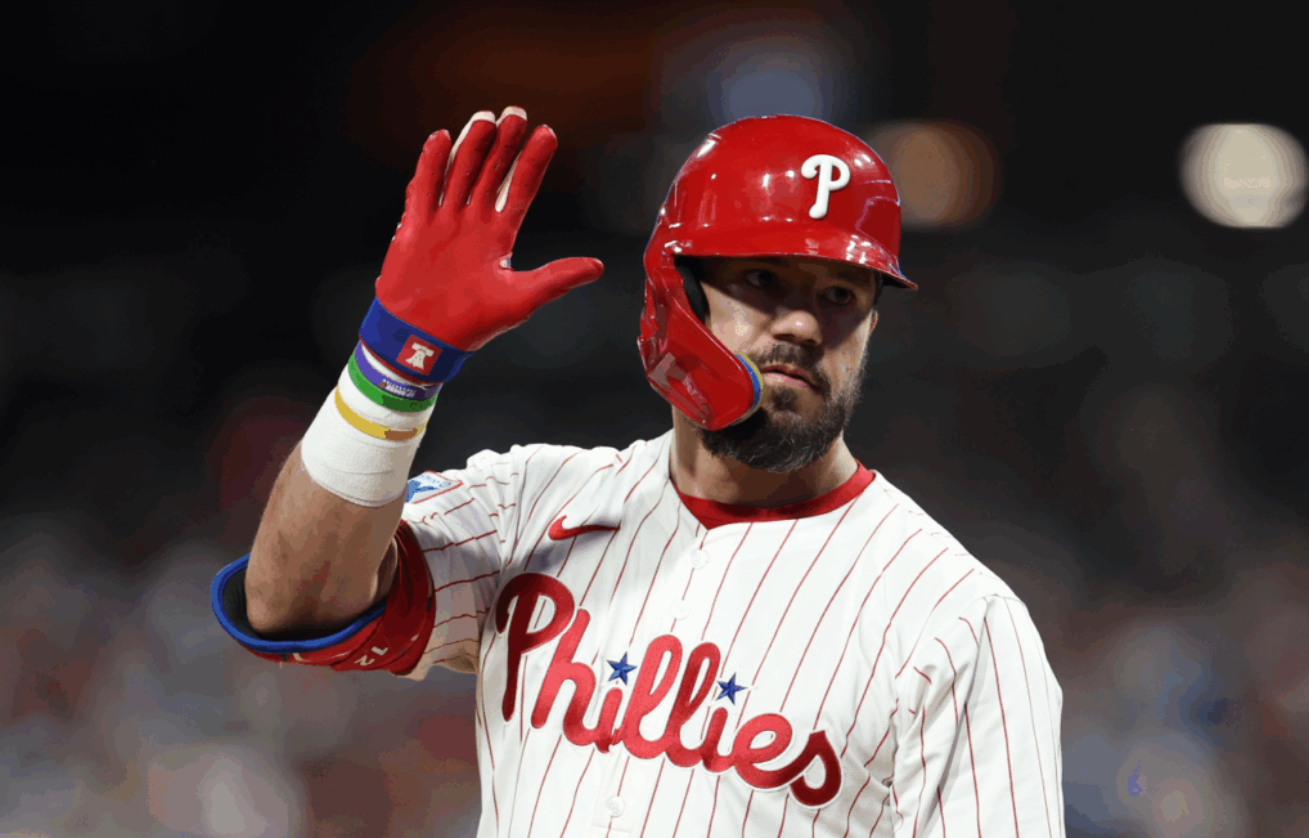
To their credit, the Phillies did make one major commitment early in free agency by re-signing Kyle Schwarber. The star slugger agreed to a five year, $150 million contract, ensuring that one of the most powerful bats in the lineup would remain in Philadelphia for the foreseeable future. Schwarber’s leadership, postseason experience, and ability to change games with one swing made retaining him a priority, and the front office wasted little time locking him up.
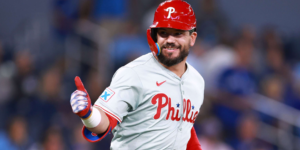
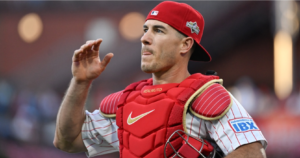
They also managed to bring back catcher J.T. Realmuto, another cornerstone of the franchise and one of the most respected players at his position. Realmuto’s return provided some stability to a roster that relies heavily on its veteran core, and his presence behind the plate remains invaluable. Still, while these moves were important, they largely amounted to maintenance rather than transformation.
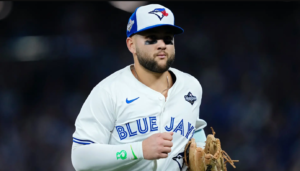
The real turning point of the offseason came with the Phillies’ pursuit of shortstop Bo Bichette.
For a time, it appeared as though Philadelphia was on the verge of landing the former Toronto Blue Jays star. Rumors swirled that talks were progressing, and optimism grew that Bichette would be the headline acquisition fans had been waiting for. His combination of offensive production, defensive reliability, and age made him an ideal fit for a team trying to maximize its championship window without sacrificing the future.
As anticipation built, many believed Bichette’s arrival was inevitable. He was widely expected to be the missing piece that would elevate the Phillies from contender to favorite, providing a dynamic presence in the infield and adding another dangerous bat to an already formidable lineup. For a fan base desperate for a bold move, Bichette symbolized hope and ambition.
Then, in a stunning late twist, those hopes were dashed.
Just as the Phillies appeared close to finalizing a deal, their National League East rivals, the New York Mets, entered the picture and ultimately secured Bichette’s services. The last second swoop by the Mets was a gut punch for Philadelphia, not only because of the player they lost out on, but because he ended up strengthening a direct divisional rival. What had seemed like a defining moment for the Phillies’ offseason instead became a painful reminder of how quickly momentum can vanish.
After missing out on Bichette, the Phillies struggled to regain traction. With the marquee free agents off the board and few meaningful upgrades made elsewhere, the remainder of the offseason passed quietly. While other teams around the league reshaped their rosters and addressed glaring weaknesses, Philadelphia largely stood still, opting to trust that internal improvement and continuity would be enough.
As the offseason winds down, that conservative approach has drawn increased scrutiny.
Now, heading toward the 2026 MLB season, the Phillies have been dealt a sobering outlook. A recent prediction paints a grim picture of what lies ahead, suggesting that Philadelphia may be poised for disappointment rather than redemption. The projection highlights concerns about roster depth, aging veterans, and the lack of meaningful offseason upgrades, all of which could catch up to the team over the course of a long season.
For a franchise that has consistently been on the doorstep of greatness, the fear is that standing pat may ultimately result in stagnation. While the Phillies still boast a talented core capable of competing, the margin for error in today’s MLB is razor thin. Without taking calculated risks or injecting new energy into the roster, even strong teams can quickly find themselves passed by more aggressive rivals.
As fans look ahead to 2026, optimism is tempered by frustration. The Phillies remain relevant, but relevance alone is no longer enough. After years of near misses and playoff heartbreak, expectations are championship or bust. Whether this quiet offseason proves to be a miscalculation or a vote of confidence in the current roster will ultimately be decided on the field but for now, doubt lingers where excitement once thrived.
Philadelphia Phillies Fans Won’t Like This New Prediction
Jim Bowden of The Athletic didn’t exactly hide his disappointment when evaluating the Philadelphia Phillies’ offseason, and his outlook for the franchise heading into the 2026 campaign reflects that skepticism.
In Bowden’s projection of the National League East standings, Philadelphia finds itself finishing third in the division, a placement that underscores his belief that the team failed to make the kind of meaningful progress necessary to keep pace with its rivals.
Rather than viewing the Phillies as a club poised to take another step forward, Bowden framed their situation as one filled with uncertainty and unresolved concerns. His analysis went beyond a simple standings prediction and dove into a series of pressing questions that, in his view, could ultimately define the team’s season. At the heart of those concerns is whether Philadelphia’s front office has remained committed to the same core for too long, potentially missing opportunities to refresh the roster or address lingering weaknesses.
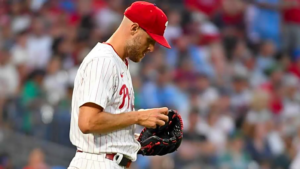
One of the biggest areas Bowden highlighted was the pitching staff, which has been central to the Phillies’ success in recent years but also carries significant risk. Zack Wheeler, long regarded as one of the most reliable and dominant starters in the National League, is once again expected to anchor the rotation.
However, Bowden questioned whether Wheeler can remain healthy over the course of a full season and continue to perform at an elite level as mileage accumulates. Even slight regression or injury trouble could have a major ripple effect on a rotation that depends heavily on him.
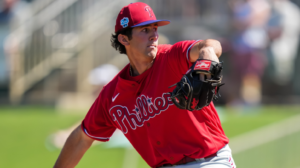
Adding to that uncertainty is the presence of rookie Andrew Painter, whose talent and upside are undeniable but whose health and readiness remain open questions. Painter has been viewed as a potential cornerstone of the Phillies’ pitching future, yet Bowden expressed concern about whether the young right hander can stay on the field and immediately meet the lofty expectations placed upon him. Relying on a rookie to play a significant role in a contending rotation is always a gamble, and Bowden clearly sees that gamble as one of Philadelphia’s biggest risks entering the season.
Aaron Nola’s situation also factored heavily into Bowden’s doubts. Once considered one of the most dependable starters in baseball, Nola has experienced fluctuations in performance that have raised questions about whether he can truly return to his previous form. Bowden pointed to Nola’s inconsistency as another reason for concern, suggesting that the Phillies’ rotation could quickly become vulnerable if he fails to rediscover the command and efficiency that once made him a frontline starter.
Those pitching related questions are compounded by the broader issue of roster construction. Bowden’s commentary implied that Philadelphia may have leaned too heavily on continuity, choosing familiarity over bold changes during the offseason. While keeping a core together can sometimes foster chemistry and stability, it can also lead to stagnation if key areas are not adequately upgraded. Bowden’s evaluation suggests he believes the Phillies fell into the latter category, opting not to be aggressive enough in addressing their needs.
That perspective was reinforced by the grade Bowden assigned to Philadelphia’s offseason moves. Handing out a C+ is hardly flattering, especially for a team with postseason aspirations and a sizable payroll. The grade signals that, in Bowden’s view, the Phillies neither collapsed nor excelled during the winter, but instead settled for a mediocre approach that did little to elevate their status within a highly competitive division. For a franchise aiming to contend, mediocrity in roster building can be just as damaging as outright failure.
The harsh assessment paints a picture of a team facing an uphill climb as the season approaches. The National League East remains one of baseball’s toughest divisions, and Bowden’s projection reflects the belief that Philadelphia may struggle to keep pace with more proactive or better rounded rivals. His doubts are rooted not only in what the Phillies failed to do during the offseason, but also in the number of variables that must break perfectly for them to exceed expectations.
Still, despite Bowden’s critical outlook, there remains room for optimism however cautious it may be. Baseball has a long history of teams outperforming projections and silencing skeptics once the games actually begin. Health, player development, and unexpected breakouts can dramatically reshape a season’s narrative, and the Phillies do possess enough talent to challenge pessimistic forecasts if things fall into place.
There is no denying that the offseason left many observers underwhelmed, and Bowden’s analysis captures that sentiment clearly. Yet projections and grades, while informative, are not final verdicts. The Phillies now enter the season with something to prove, both to analysts like Bowden and to their own fan base. Whether they validate the criticism or turn it into motivation will ultimately be decided on the field, where preseason doubts can quickly fade or be confirmed once the first pitch is thrown.
What Did the Phillies Do During the MLB Offseason?
When you take a step back and evaluate the Phillies’ offseason as a whole, it’s hard to argue that the front office made many moves that truly moved the needle. Compared to other contenders around the league, Philadelphia’s winter felt relatively quiet, lacking the kind of splash additions that generate real momentum heading into a new season.
The headline move of the offseason was clearly Kyle Schwarber, whose presence continues to be a central part of the Phillies’ offensive identity. Bringing him back was the most significant commitment the organization made, and it underscored how important his power and leadership are to the lineup.
Re-signing catcher J.T. Realmuto was also a sensible and stabilizing decision. Realmuto remains one of the best all around catchers in baseball, and retaining him ensured continuity both behind the plate and in the clubhouse. Those two decisions were defensible, even necessary, but they also accounted for the majority of Philadelphia’s meaningful offseason activity.
Beyond Schwarber and Realmuto, the Phillies’ additions were far more modest. The team committed two years and $22 million to reliever Brad Keller, a move aimed at bolstering the bullpen. While Keller brings experience and depth, he’s not the type of elite, shutdown arm that dramatically changes the outlook of a relief corps. He profiles more as a complementary piece than a true difference maker, leaving questions about whether the bullpen has enough high end talent to hold up over a full season.
In the outfield, Philadelphia signed Adolis García to a one year, $10 million contract. García adds power and athleticism, and on a short term deal, the risk is relatively limited. Still, this signing feels more like a stopgap than a long term solution. García can provide pop and solid defense, but expecting him to fundamentally transform the offense may be asking too much. The Phillies also brought in right hander Zach Pop on a one year, $900,000 deal, another low risk depth move that doesn’t significantly alter the team’s ceiling.
On the trade front, Philadelphia acquired right handers Yoniel Curet and Jonathan Bowlan, along with left hander Kyle Backhus. While these pitchers add organizational depth and may eventually contribute in some capacity, none are viewed as top tier prospects or likely impact players for 2026. These types of trades often fly under the radar because they rarely produce immediate results at the major league level. As such, they did little to ease concerns about whether the Phillies did enough to keep pace with other National League contenders.
All of this naturally leads to a sense of unease as the team approaches the upcoming season. The lack of bold moves stands out even more when viewed in the context of what division rivals have done. Most notably, the Mets made substantial improvements, significantly upgrading their roster and raising expectations. Watching a rival aggressively address weaknesses while Philadelphia remained relatively conservative only amplifies the disappointment among fans and observers.
That frustration is understandable. The Phillies are a team that has shown flashes of being a legitimate contender, and this offseason felt like a missed opportunity to push their chips further into the middle of the table. When a roster is close to competing at a high level, marginal improvements may not be enough. Standing still or appearing to do so can be just as damaging as taking a step backward.
Still, it’s not all doom and gloom in Philadelphia. Despite an underwhelming offseason, the Phillies’ roster is far from devoid of talent. The core of the team remains intact, and there are proven players capable of carrying the club for stretches at a time. If key contributors stay healthy and perform at or near their peak levels, Philadelphia can still be competitive.
The path forward largely depends on internal growth and bounce back performances. If younger players take meaningful steps forward and veterans deliver consistent production, the Phillies could exceed expectations. Baseball seasons are long and unpredictable, and teams don’t always need headline grabbing offseasons to find success. Chemistry, health, and timely performances often matter just as much as winter transactions.
In the end, while the offseason may have left much to be desired, the Phillies aren’t entering the season without hope. The talent is there, even if the upgrades were limited. If the roster comes together and players rise to the occasion, Philadelphia still has a realistic chance to position itself as a playoff caliber team. The margin for error may be thinner than fans would like, but the door to contention is not completely closed.