It’s relatively rare for a player who is barely into his mid 20s, already has a taste of the major leagues, and still has multiple years of team control remaining to be available via trade. Even more uncommon is when that player is an infielder, a position group that organizations across baseball are constantly trying to stockpile and protect. Yet that is exactly the opportunity the Baltimore Orioles found themselves presented with, and they chose to take advantage of it.
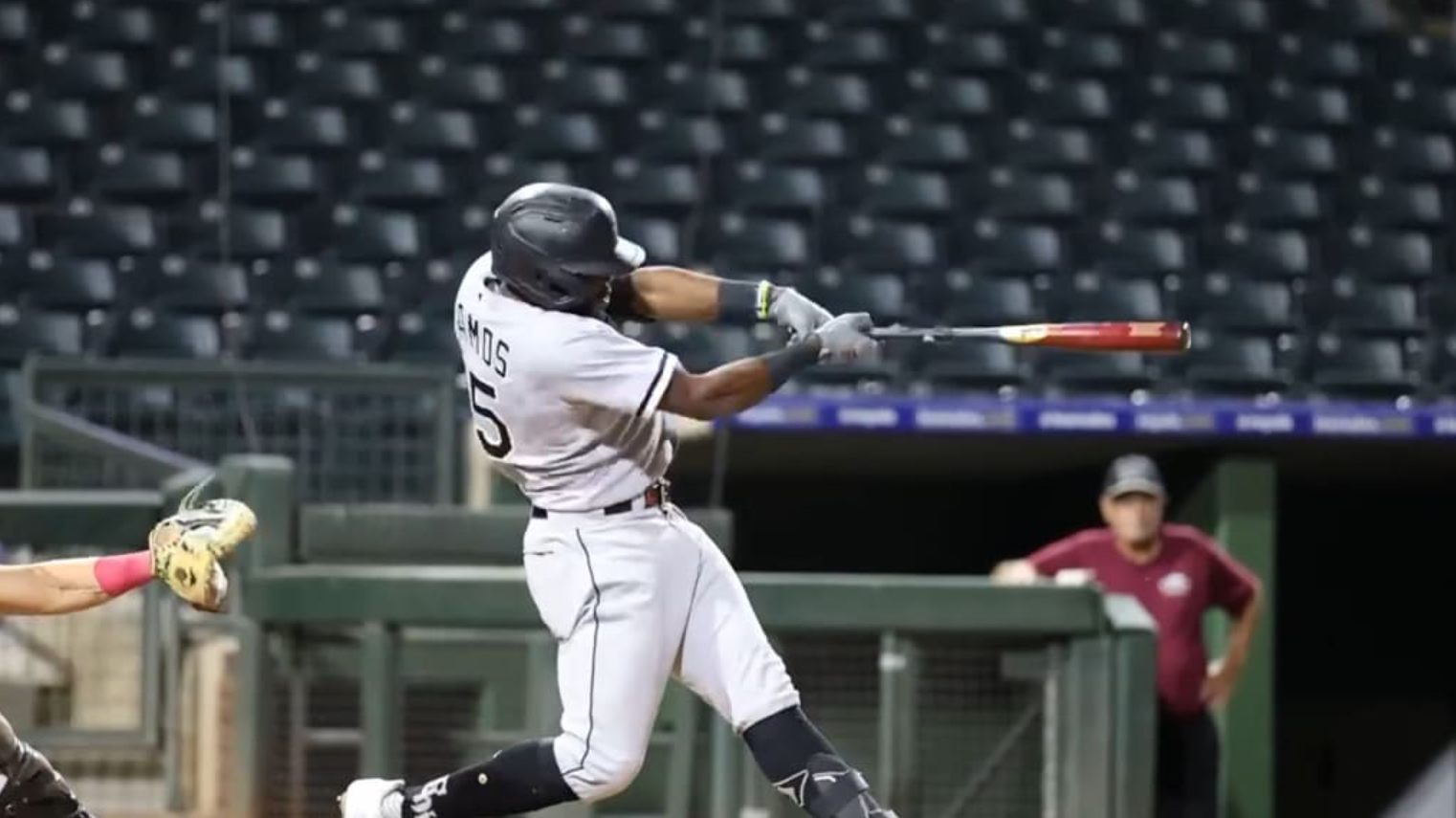
On Sunday, Baltimore added an intriguing young piece to its organizational depth by acquiring third baseman Bryan Ramos from the Chicago White Sox. The transaction was first reported by respected insider Francys Romero and came as part of Chicago’s ongoing effort to reshuffle its 40 man roster.
In order to create flexibility and open space for other moves, the White Sox made the decision to part ways with Ramos, sending him to an Orioles organization that has built a reputation for identifying undervalued talent and patiently developing it.
Ramos, who was born in Cuba, is set to turn 24 years old on March 12. Despite his youth, he has already logged time at the game’s highest level, a notable accomplishment that speaks to both his talent and his proximity to the majors.
Physically, he fits the mold of a modern corner infielder. Standing 6 foot 2 and weighing approximately 225 pounds, Ramos has a strong, sturdy frame that suggests durability and the potential for continued physical maturity. He bats and throws right-handed, which gives him a fairly traditional profile for a third baseman.
His first exposure to Major League Baseball came during the 2024 season, when he appeared in 32 games for the White Sox. That initial stint was very much a learning experience. Ramos hit .202 during that stretch and left the yard three times, numbers that don’t jump off the page but are also not uncommon for a young player adjusting to the speed, pitching quality, and pressure of the big leagues. Like many rookies, he showed flashes of ability while also demonstrating that there was still plenty of development ahead.
The following year, Ramos’ major league opportunities were far more limited. In 2025, he appeared in just four games at the MLB level, collecting two hits in 12 at bats for a .167 average. Such a small sample size doesn’t provide much clarity about his true ability against major league pitching, but it does highlight how quickly a young player’s role can change when an organization is in flux or prioritizing other options.

Ramos spent the bulk of the 2025 season at Triple A Charlotte, where the results were mixed. On one hand, his overall batting average of .216 indicated that he struggled to consistently square up pitches and find rhythm at the plate. On the other hand, a deeper look at his production reveals some encouraging signs.
Despite the low average, he recorded 17 doubles and 16 home runs, showing that when he did make contact, it often came with authority. He also added 13 stolen bases, an indicator that he is not a plodding corner infielder but rather an athlete capable of contributing on the basepaths.
Those numbers paint the picture of a player who has power and speed components in his game but may still be working through approach issues, pitch recognition, or consistency in his swing mechanics. Triple A can be a challenging environment, particularly for hitters, as they frequently face pitchers with major league experience or prospects refining advanced arsenals. Struggles at that level, especially for someone in his early 20s, are not necessarily a red flag so much as a reminder that development is rarely linear.
Looking back one season earlier provides additional context for Ramos’ offensive profile. In the previous year at the Triple A level, he produced a .263 batting average along with a .755 OPS. That line is far more in line with what teams hope to see from a young infielder nearing major league readiness.
It suggests that the tools are there and that Ramos has already demonstrated the ability to be an above average contributor against high level minor league competition.

Zooming out even further to consider his entire minor league career, Ramos owns a .757 OPS. While that figure doesn’t place him among elite offensive prospects, it does reflect a level of consistency and competence across multiple levels of the system.
He is not known as a pure home run hitter who will anchor the middle of a lineup, but he does possess enough pop to drive the ball into the gaps and occasionally over the fence. His ability to collect extra base hits adds value, particularly when paired with his willingness and capacity to steal bases.
In many ways, Ramos profiles as a well rounded player rather than a specialist. He doesn’t dominate in one specific area, but he contributes in several facets of the game. That type of profile can sometimes be overlooked in favor of louder tools, yet it often results in players who carve out meaningful big league roles once everything clicks.
For the Orioles, this acquisition is less about immediate impact and more about calculated upside. Baltimore is not acquiring Ramos with the expectation that he will step into a starting role at the major league level right away. Instead, they are adding him as a depth piece with potential, someone who can continue to develop within a system that has recently enjoyed considerable success in turning young players into productive big leaguers.
At just 23 years old, Ramos still has time on his side. Players at that age are often still adjusting to professional pitching, refining their defensive instincts, and learning how to make in game adjustments. Baltimore can afford to be patient, allowing him to work with its coaching staff, analytics department, and player development personnel to see if small tweaks can unlock more consistent performance.
From a risk reward standpoint, the move makes a great deal of sense. Because Ramos was not firmly entrenched in Chicago’s long term plans and was occupying a 40 man roster spot, the cost to acquire him was likely modest.
For Baltimore, that means minimal downside. If Ramos fails to progress, the organization can move on without significant loss. If, however, he taps into his potential and becomes a reliable major league contributor, the Orioles will have found real value.
This type of transaction also aligns with how successful organizations tend to operate. Rather than chasing only high profile names or sacrificing premium prospects, they often look for opportunities on the margins players who may have fallen slightly out of favor elsewhere but still possess underlying skills worth betting on. Ramos fits that mold perfectly.
In summary, while Bryan Ramos is far from a finished product, his age, experience, and track record make him an intriguing addition for Baltimore. He brings a combination of size, athleticism, and versatility, along with a history that suggests more growth could be on the horizon. The Orioles don’t need him to be a star; they simply need him to continue developing. Given the organization’s recent success in that area, this low risk acquisition could quietly pay dividends down the road.