There are several ways to frame the Buffalo Bills’ struggles from this past season, whether through inconsistency, missed opportunities, or schematic growing pains. But regardless of the angle, nearly every honest evaluation circles back to the same core issue, Buffalo simply did not have enough reliable depth at wide receiver. The lack of proven options outside the top of the depth chart repeatedly limited the offense, especially in high leverage moments when defenses were able to focus their coverage on the Bills’ primary threats.
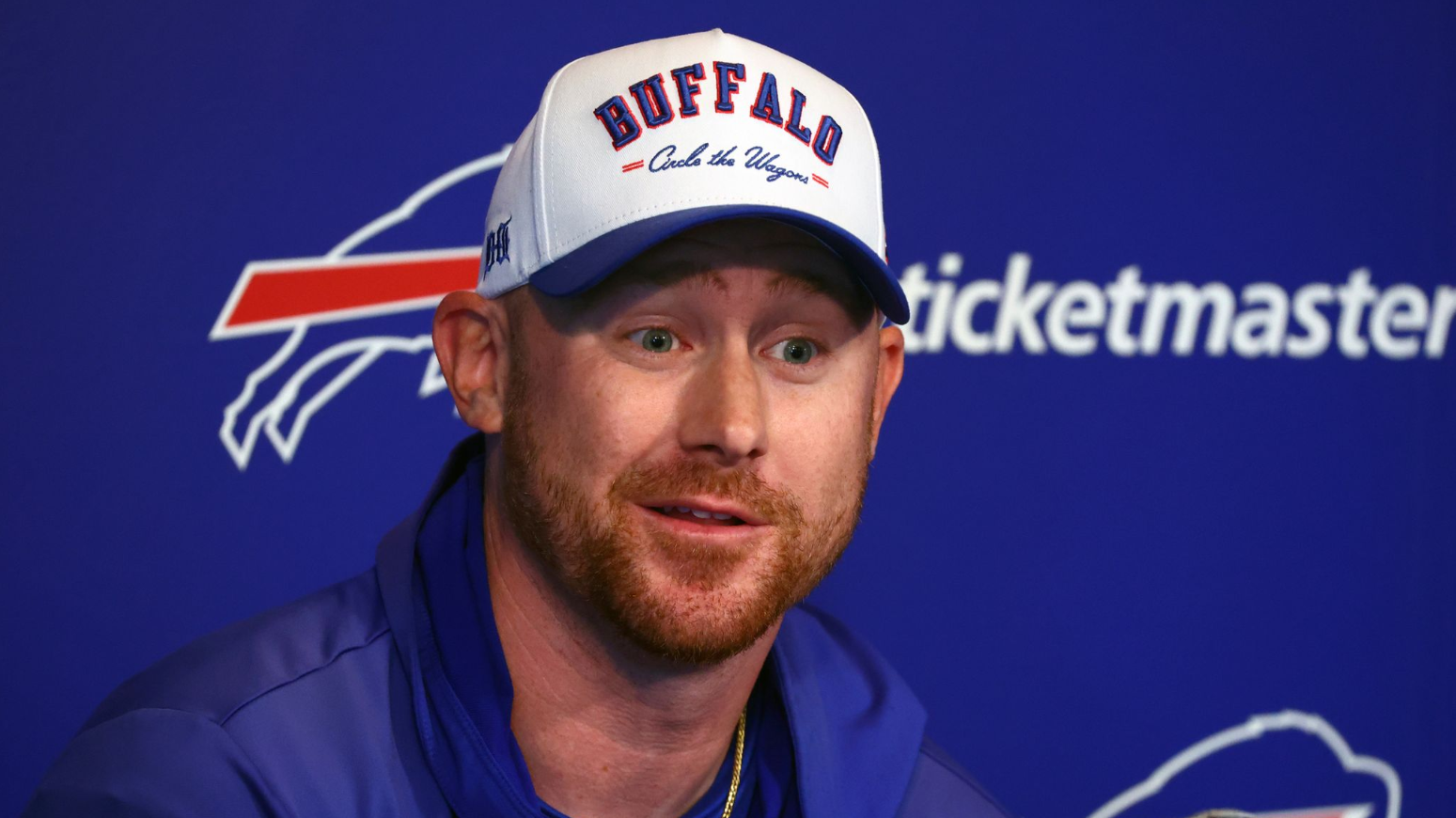
As the organization looks ahead to the 2026 season, that problem is unlikely to be ignored. With Joe Brady now firmly in place as the Bills’ head coach, offensive upgrades particularly at receiver are expected to sit near the top of Buffalo’s offseason priority list. Brady’s offensive philosophy emphasizes versatility, timing, and spacing, all of which depend heavily on having multiple capable pass catchers who can win in different ways. Without that depth, even the most creative play calling has a ceiling.
Against that backdrop, an intriguing name has already begun circulating in league discussions: Minnesota Vikings wide receiver Jordan Addison. According to a recent article published by NFL Spin Zone, reporter Sayre Bedinger identified the Buffalo Bills as the most logical landing spot for Addison should the Vikings make him available. While nothing is imminent, the pairing has quickly gained traction as a move that could make sense for both sides.
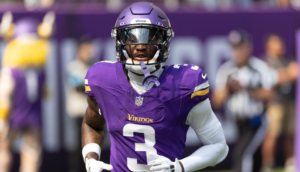
Minnesota’s situation, in particular, has fueled speculation. The Vikings were rocked this offseason by the surprising dismissal of general manager Kwesi Adofo Mensah, a decision that sent shockwaves throughout the league and signaled potential instability within the organization.
When front offices undergo dramatic leadership changes, roster shakeups often follow. Players who were once considered foundational pieces can suddenly become trade candidates as new decision makers reassess priorities, contracts, and long term direction.
Addison appears to fit the profile of what many around the league refer to as a “distressed asset.” While his talent is unquestioned, his future in Minnesota feels less certain amid the front office turmoil and on field struggles. The Vikings endured a disappointing campaign during quarterback J.J. McCarthy’s first season under center, and the offense never quite found consistent rhythm. That instability only adds to the sense that Minnesota could explore moving high value players to reset or retool.
From Buffalo’s perspective, Addison checks several important boxes. He is a proven NFL receiver with the ability to separate, threaten defenses vertically, and contribute immediately. More importantly, he would bring a skill set that complements the Bills’ existing offensive pieces rather than duplicating them. For a team that too often relied on a narrow passing attack, adding a receiver of Addison’s caliber could significantly expand what Brady can do schematically.
There is also a financial and strategic element at play. Trading for a young, productive wide receiver allows Buffalo to address a major need without relying solely on the draft, where immediate impact can be unpredictable. While the Bills could certainly explore free agency, top tier receivers rarely hit the open market without hefty price tags or long term risk. Addison, still early in his career, represents a potential middle ground: proven production without the mileage of an aging veteran.
Of course, any trade would come with questions. Addison’s situation in Minnesota has not been without controversy, and Buffalo would need to feel confident in both his fit within the locker room and his alignment with the team’s culture. Still, those concerns appear manageable when weighed against the upside he brings to the field.
League observers increasingly believe that Addison will be one of the more closely watched names once the trade market fully develops. Minnesota’s organizational uncertainty, combined with Buffalo’s clear need at wide receiver, creates a natural intersection point. While nothing is guaranteed, the logic behind the connection is difficult to ignore.
As the offseason unfolds, the Bills’ approach to upgrading their offense will offer insight into how aggressively they plan to pursue another championship run under Joe Brady. Whether through the draft, free agency, or a blockbuster trade, Buffalo is expected to make meaningful moves at wide receiver. If Jordan Addison becomes available, the Bills appear well positioned and highly motivated to be at the front of the line.
In the coming weeks, Addison’s name is likely to surface repeatedly in trade rumors. And if Buffalo does indeed emerge as a serious suitor, it could mark one of the most impactful offensive additions of the Bills’ offseason.
Buffalo Looking to Upgrade WR, Could Trade For Addison
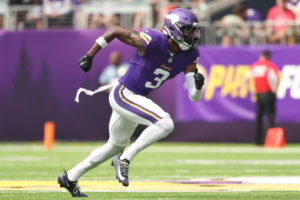
Jordan Addison’s first three seasons in the NFL have unfolded entirely in Minnesota, but they’ve hardly been stable. Over that span, he’s had to adjust to an ever changing situation, catching passes from eight different quarterbacks while trying to establish himself in a crowded offense.
On paper, a surface level look at his production might suggest that his trajectory has flattened or even dipped slightly from year to year. Dig a little deeper, though, and a different picture emerges one of a talented receiver who has struggled to find consistent rhythm while playing in the shadow of one of the league’s biggest stars, Justin Jefferson.
Rather than a player in decline, Addison often looks like someone searching for opportunity. Jefferson’s dominance naturally makes him the focal point of Minnesota’s offense, and that reality has limited Addison’s chances to be featured in high leverage situations.
When opportunities have come his way, however, Addison has repeatedly flashed the traits that made him a coveted prospect, sharp route running, legitimate vertical speed, and the ability to stretch defenses down the field. His skill set hasn’t disappeared; it’s simply been underutilized in a system designed to funnel targets to a true superstar.
That’s why the idea of a fresh start feels especially compelling in Addison’s case. A change of scenery could unlock a different version of his career one where he’s not automatically the secondary option by default. Addison isn’t widely viewed as a classic No. 1 receiver in the mold of Jefferson or other elite target hogs around the league, but context matters.
Place him in the right environment, and his value could look very different. In Buffalo, for example, Addison would immediately step into a prominent role. Paired with Khalil Shakir, he could realistically become the Bills’ top receiving option, or at least a co-lead in the passing game.

From a stylistic standpoint, Addison’s strengths line up well with what Buffalo has often sought in its offense. He’s a legitimate downfield threat with well above average speed, capable of winning vertically and forcing defenses to account for him deep.
Time and again, he’s shown an ability to separate and make plays beyond the intermediate areas of the field. That kind of skill set can dramatically alter how defenses play, even if the stat line doesn’t always explode. For a quarterback friendly offense, Addison’s ability to stretch coverage could open space for everyone else.
Meanwhile, the situation in Minnesota appears to be shifting. With the firing of general manager Kwesi Adofo Mensah, the Vikings seem poised to chart a new course. Front office changes often signal a reevaluation of the roster, and players who aren’t firmly viewed as part of the long term vision can quickly find themselves on the trade block.
Addison, despite his talent, could fall into that category. If the new decision makers decide to reset certain positions or stockpile draft capital, moving a young receiver who still has value might make sense from their perspective.
That potential reset could work in Buffalo’s favor. Addison’s market value likely wouldn’t be exorbitant. Given his role to date and the perception that he hasn’t fully broken out, he’s probably not commanding a premium package in return. A mid round draft pick could be enough to get a deal done, making him a relatively low risk acquisition with significant upside. For a team looking to boost its offense without sacrificing major future assets, that’s an appealing proposition.
There’s also the contract element to consider. Addison has one year remaining on his rookie extension, which effectively gives any acquiring team a built in trial period. Buffalo could view him as a short term investment a player who can immediately raise the ceiling of the offense without a long term financial commitment. If he thrives in a new system and proves he can handle a larger role, the Bills would then be in a strong position to negotiate an extension and keep him around for the foreseeable future.
In that sense, Addison would function almost like a high upside “loaner” player. The immediate benefit is clear, improved speed, versatility, and playmaking ability in the receiving corps. The long term benefit depends on performance, but the power would rest largely with Buffalo. If Addison hits his stride and finally gets the volume and consistency he’s lacked, the Bills could lock him in as a key piece of their offense. If not, they’d still have gained a year of solid production at a relatively modest cost.

Ultimately, Addison’s story so far may say more about circumstance than capability. He’s spent his early career navigating instability at quarterback and competing for attention alongside one of the NFL’s premier receivers. A move to a team that needs him and is willing to feature him could be exactly what’s required to reveal his full potential. For Buffalo, that makes Addison an intriguing option: a talented, motivated receiver who may still be waiting for the right opportunity to truly break out.
Buffalo’s Future at Wide Receiver
There’s little debate about Josh Allen’s ability, competitiveness, or commitment to winning at the highest level. He has already proven he can carry a franchise and consistently keep the Buffalo Bills in the Super Bowl conversation. What remains in question, however, is whether the organization will do enough to fully support him during the prime of his career. Elite quarterbacks can elevate a roster, but even the best of them need a strong, reliable supporting cast to finish the job.
Right now, Buffalo’s situation at wide receiver should be setting off alarms inside the front office. Khalil Shakir is the lone exception, as he is under contract through 2029 and has shown promise as a dependable option.
Beyond him, the cupboard is far from secure. The Bills currently do not have any other wide receivers signed beyond the 2027 season, a reality that underscores how fragile the long term plan at the position truly is. For a team built around a franchise quarterback, that level of uncertainty is a risky way to operate.

This offseason represents a critical window for Buffalo to act. The team can no longer afford to treat wide receiver as a secondary concern or a problem to solve later. Whether the solution comes in the form of a high-profile acquisition like Jordan Addison or another proven playmaker, the message needs to be clear: Josh Allen needs more weapons, and he needs them now. Waiting another year only increases the chances of squandering opportunities that may never come back.
Time is the one resource that even elite quarterbacks cannot replace. Each season that ends without a Super Bowl appearance or worse, without a championship represents a missed chance to capitalize on Allen’s rare blend of arm strength, athleticism, and leadership. Buffalo has already seen how thin the margin for error can be in the AFC, where powerhouse teams and elite quarterbacks seem to emerge every season. Standing still while rivals get stronger is not an option.
The foundation of the roster is solid, and there is no shortage of talent across several key areas. Buffalo has pieces in place on both sides of the ball, and the team has consistently shown it can compete deep into the postseason. What’s missing is that final push the kind of aggressive, forward thinking move that signals a true all in approach. Giving Allen a deeper, more dynamic receiving corps could be the difference between falling short and finally breaking through.
Ultimately, this comes down to responsibility and urgency. Josh Allen has already done his part. He has embraced the pressure, led the team through highs and lows, and delivered year after year. Now it’s up to the front office to match that commitment. Building a stronger offense around him isn’t just a smart football decision; it’s a necessary one.
He’s earned the chance to chase a championship with everything he needs around him.