The Boston Red Sox have checked off several major boxes on their offseason to do list, but as the calendar creeps closer to spring training, one key question still looms large over the roster, how the infield will ultimately come together.
Boston’s front office made its biggest moves on the pitching side, committing significant resources to strengthen both the rotation and overall depth. The additions of Sonny Gray, Ranger Suárez, Johan Oviedo, and Willson Contreras signaled a clear intent to fortify a staff that needed stability and reliability after an uneven year. Those signings addressed glaring needs on the mound and gave the club a far more defined pitching blueprint heading into camp.
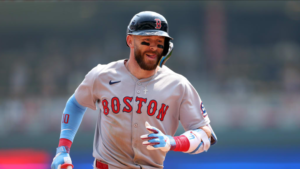
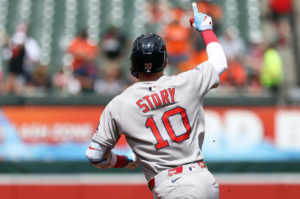
By contrast, the positionplayer group particularly the infield remains far less settled. Trevor Story is firmly entrenched at shortstop, and Contreras is expected to see most of his time at first base, providing some offensive upside and veteran presence. Beyond those two anchors, however, the picture grows increasingly murky. Second base and third base remain unresolved, with multiple internal and external options discussed but no definitive solution yet in place.
For weeks, the Red Sox have been active in trade discussions, exploring a variety of potential paths to upgrade the infield. Those talks have been persistent but ultimately unproductive, with no agreement materializing. Part of the challenge has been the broader market itself, which has been characterized by inflated asking prices and teams reluctant to part with controllable infield talent without receiving a premium return. Boston, while motivated, has been hesitant to overextend itself simply to force a deal.
The ticking clock only adds to the pressure. With pitchers and catchers scheduled to report soon, roster uncertainty becomes less palatable. Teams generally prefer to enter camp with most of their starting jobs clearly defined, allowing players to prepare for specific roles rather than auditioning out of necessity. While competition can be healthy, prolonged ambiguity especially at multiple infield positions can complicate planning and preparation.
Against that backdrop, MassLive’s Chris Cotillo attempted an early projection of Boston’s Opening Day roster, offering a glimpse into how the front office might ultimately resolve the situation. His forecast suggested a subtle but meaningful shift in strategy. Instead of continuing to chase a trade in a market tilted heavily in sellers’ favor, Cotillo projected that the Red Sox could pivot toward free agency to shore up the infield before the season begins.
Such a move would reflect a pragmatic approach. Free agency, while not without its own risks, provides more certainty in terms of cost and availability. Contracts can be negotiated without sacrificing prospects or young contributors, and short term deals can offer flexibility if internal options emerge later in the year. For a team that has already invested heavily in pitching, preserving organizational depth may be just as important as filling immediate holes.
Cotillo’s projection does not necessarily imply a splashy signing, but rather a stabilizing addition someone capable of handling everyday duties or at least forming part of a platoon while providing defensive reliability. This type of acquisition could ease pressure on younger players and allow the Red Sox to avoid rushing anyone into a role they may not yet be ready to handle at the major league level.
It also underscores a broader reality of the offseason. As the market evolves, teams must balance urgency with discipline. While Boston’s need for infield clarity is obvious, overpaying in a trade could create longer term issues that outweigh the short term benefit. A measured free agent signing, even if it lacks headline appeal, might represent the most efficient way to stabilize the roster without compromising future plans.
Ultimately, the Red Sox still have time to find answers, but that window is narrowing. Whether through a late trade or a strategic free agent addition, the infield puzzle must be solved soon. Cotillo’s early roster projection suggests that Boston may already be preparing to adjust its approach, choosing patience and flexibility over desperation. As spring training draws near, that decision could shape not only the Opening Day lineup, but the trajectory of the season as a whole.
Eugenio Suárez Emerges as Cleanest Infield Fix
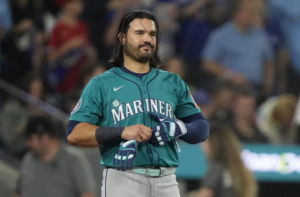
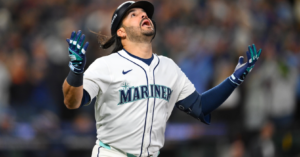
Cotillo’s outlook envisions the Red Sox addressing one of their biggest roster questions by bringing in Eugenio Suárez, a move that would go a long way toward stabilizing an infield that currently feels unsettled. Adding Suárez would provide immediate clarity. He would take over at third base, which in turn would allow top prospect Marcelo Mayer to begin the season at second. That alignment not only creates a more coherent defensive structure but also reduces the urgency for Boston to chase costly trade options, where prices often rise quickly once the season approaches.
The logic behind targeting Suárez is easy to understand and largely centers on two traits the Red Sox desperately need, power and reliability. Suárez is coming off a massive offensive season in which he crushed 49 home runs, marking the second time in his career he has been named an All Star and solidifying his reputation as one of the game’s premier power threats. Few hitters in baseball can match his ability to alter the outcome of a game with a single swing, and that skill carries real value for a lineup that has lost a significant source of production.
While his overall numbers paint a somewhat uneven picture he finished with a .228 batting average, a .298 on base percentage, and a .526 slugging percentage the raw power jumps off the page. Over the last two seasons alone, Suárez has launched 79 home runs. That level of output is exactly what the Red Sox are missing after Alex Bregman departed for Chicago in free agency. Without Bregman in the middle of the order, Boston lacks a consistent, intimidating right handed bat capable of punishing mistakes and forcing opposing pitchers to alter their game plans.
Suárez’s appeal isn’t just about last season’s totals; it’s about the broader trend. His power has remained remarkably consistent, even as other aspects of his game have fluctuated. In an era where home runs remain one of the most reliable ways to generate offense, having a hitter who can reach 40 plus homers is a luxury few teams enjoy. For the Red Sox, who struggled at times to produce timely power, Suárez represents a straightforward solution to a lingering problem.
Of course, the potential signing would not come without concerns. Suárez has long been prone to strikeouts, and that tendency has not diminished with age. His aggressive approach can lead to prolonged slumps, especially when pitchers exploit his willingness to chase pitches out of the zone. Additionally, advanced defensive metrics generally view him as a below average third baseman. While he is serviceable and experienced at the position, he is unlikely to provide the kind of defensive value that offsets offensive downturns.
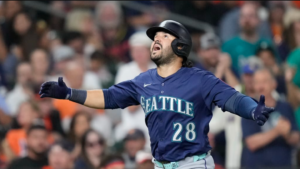
There is also the question of context. After being traded from Arizona to Seattle last season, Suárez’s overall production dipped, a reminder that ballpark and lineup environment can significantly impact results. Seattle’s more pitcher friendly setting did him no favors, and his numbers reflected that shift. Still, even during that period, his power never truly disappeared. He continued to drive the ball with authority, reinforcing the idea that his biggest strength translates regardless of surroundings.
Perhaps most importantly, Suárez has shown he can deliver when the stakes are highest. His postseason performances have highlighted his value in pressure filled situations, where one swing can define a series. That kind of experience and track record carries weight for a Red Sox team hoping to return to contention and make noise in October. Boston has long thrived on players who embrace big moments, and Suárez’s history suggests he would not shrink from them.
In the bigger picture, signing Suárez would be less about perfection and more about fit. He may not be a flawless player, but his strengths align closely with Boston’s needs. The Red Sox are searching for dependable power, lineup balance, and a way to solidify their infield without sacrificing future assets in a trade. Suárez checks those boxes, even if he brings some imperfections along with him.
Ultimately, Cotillo’s projection reflects a pragmatic approach. Rather than chasing an idealized solution, the Red Sox could opt for a proven veteran whose flaws are well understood and whose upside is obvious. By anchoring third base with Suárez, Boston would gain stability, unlock flexibility elsewhere on the roster, and inject much needed power into its offense. For a team trying to reestablish itself as a contender, that kind of move could make all the difference.
Why the Timing and Market Work in Boston’s Favor
From Boston’s vantage point, the situation extends beyond simply evaluating a single player and instead hinges on the state of the overall market. According to Cotillo, the Red Sox have continued to explore trade possibilities for infield help, but those conversations have largely stalled because rival teams are holding firm on their demands. The price tags attached to potential targets have not softened, and chief baseball officer Craig Breslow has been reluctant to part with either top tier pitching assets or valuable outfield depth in exchange for a move he believes does not properly balance cost and return.
That stance reflects a broader organizational philosophy. Boston is not interested in making a deal for the sake of activity, particularly if it means weakening areas of strength to address a single need. Breslow and the front office appear content to remain patient, even as outside pressure mounts to resolve lingering roster questions. In their view, protecting long term value is just as important as filling a short term hole, especially for a club attempting to stay competitive without compromising its future.
Meanwhile, developments on the free agent front have added an intriguing wrinkle. The market for Suárez, which initially appeared poised to move quickly, has progressed more slowly than many anticipated. Executives around the league have begun to speculate that his eventual contract may fall well short of the early projections that circulated earlier in the offseason. If that proves true, it could create an opportunity for a team like Boston to step in with a shorter term deal that delivers immediate on-field production without the additional cost of surrendering prospects.
For the Red Sox, that possibility carries particular appeal. With the club already mindful of competitive balance tax limitations, efficiency has become a guiding principle. A modest free agent signing that addresses a clear need while preserving organizational depth would align neatly with those constraints. Rather than overextending in a trade market that has yet to budge, Boston could potentially solve a major roster issue with nothing more than financial commitment and even that commitment might be more manageable than once expected.
Bringing in Suárez would not magically erase every uncertainty surrounding the roster, but it would go a long way toward clarifying the picture. Installing a proven option at third base would immediately stabilize the infield and allow the coaching staff to define roles with greater confidence. It would also create a clearer developmental runway for Mayer, reducing the pressure to rush him or force him into an awkward fit. In that sense, one move could have a ripple effect across multiple layers of the organization.
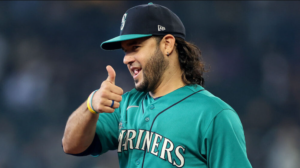
Beyond the positional clarity, such a signing would provide Boston with additional flexibility elsewhere. With one major question answered, the front office could approach the rest of the roster from a position of relative comfort rather than urgency. Any surplus whether in pitching or the outfield could then be managed strategically instead of being leveraged hastily in a trade born out of necessity. That breathing room can be invaluable over the course of a long season.
Another benefit lies in what the move would prevent. By addressing third base now, the Red Sox could reduce the likelihood of having to make a midseason trade when leverage often disappears and prices rise. Teams that wait until July to patch obvious weaknesses frequently pay a premium, either in prospects or payroll flexibility. Securing a solution before Opening Day would allow Boston to avoid negotiating from a position of desperation later on.
Cotillo was careful to describe this scenario as more of a projection than confirmed reporting, but the reasoning behind it is hard to dismiss. The trade market remains largely frozen, with little indication that sellers are willing to lower their demands. At the same time, the free agent landscape appears to be shifting in a direction that could favor patient buyers. As spring training approaches, those dynamics may converge in a way that makes a straightforward signing more attractive than a complicated deal.
Ultimately, the Red Sox may discover that the most sensible answer is also the most uncomplicated one. Rather than continuing to push against a rigid trade market, they could opt to add a bat with a track record of power and consistency, check off a major need, and allow the rest of the roster to fall into place naturally. In doing so, Boston would not only strengthen its lineup but also gain the flexibility and stability it has been seeking throughout the offseason.