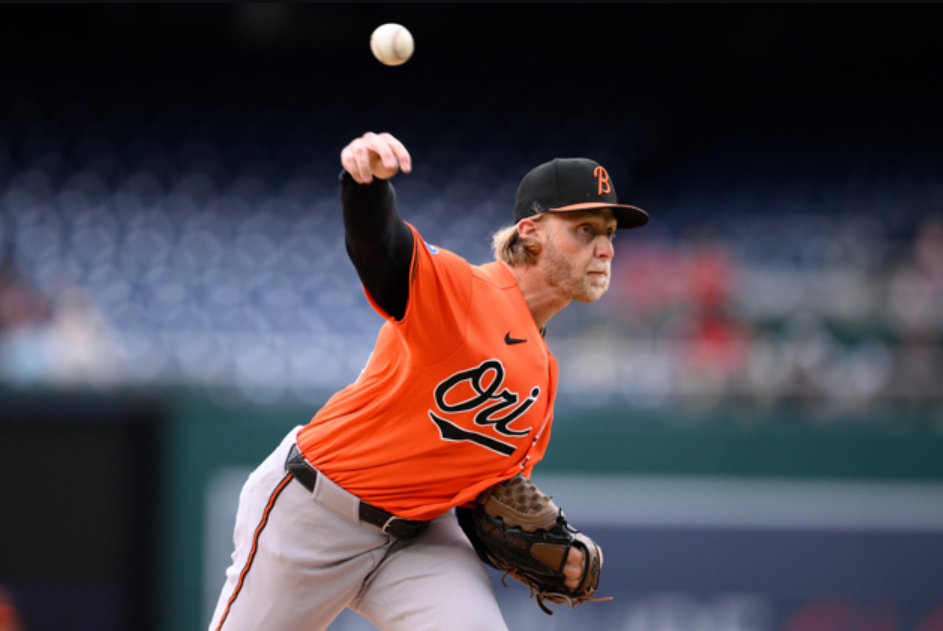
The Baltimore Orioles have made a bold and attention grabbing move that signals both confidence in their roster construction and a willingness to invest in long term pitching stability. In a development that has quickly drawn attention across Major League Baseball, the organization has reportedly finalized a five year contract extension worth $68 million with starting pitcher Shane Baz.
The news was first shared by ESPN insider Jeff Passan, and it underscores Baltimore’s belief in Baz’s potential despite a career that has already featured notable highs and frustrating setbacks.
This newly agreed upon deal is significant for several reasons. Most notably, it secures Baz’s services well beyond his current team control window. The extension covers the remaining three years of arbitration eligibility that Baz had left, while also locking in two additional seasons that would have otherwise been part of his free agency.
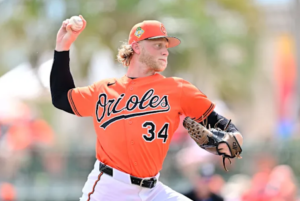
In doing so, the Orioles are effectively betting on Baz to not only regain his earlier promise but also to develop into a reliable and impactful presence in their starting rotation for years to come.
Baltimore’s acquisition of Baz itself was already a headline worthy transaction. The Orioles managed to bring him in this past December through a trade with one of their American League East rivals, the Tampa Bay Rays.
Considering the competitive nature of the division and the Rays’ reputation for developing pitching talent, acquiring Baz was seen as both a strategic and somewhat risky move. It represented Baltimore’s willingness to take on a player with immense upside, even if that upside had not been fully realized due to injuries and inconsistency.
At 26 years old, Baz is entering what many would consider a pivotal stage of his career. He is now set to begin his fifth season at the major league level, a point at which many pitchers start to establish themselves more firmly.
Earlier in his career, Baz was widely regarded as one of the most promising pitching prospects in baseball. Scouts and analysts alike often projected him as a future ace, praising his electric arm, strong command, and the kind of raw talent that could anchor a rotation.
However, Baz’s journey to this point has been anything but smooth. Injuries have played a significant role in shaping his career trajectory, limiting his ability to build momentum and fully showcase his abilities on a consistent basis. In 2022, Baz’s season was cut short after just six starts due to arthroscopic surgery.
That setback alone was challenging, but it was soon followed by an even more serious development; he required Tommy John surgery later that same year. The procedure sidelined him for the entirety of the 2023 season, forcing him into a lengthy rehabilitation process.
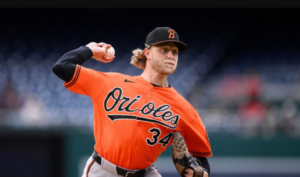
The missed time was undoubtedly a major hurdle, both physically and mentally. For a pitcher once seen as a rising star, losing an entire season can disrupt development and raise questions about long term durability. Yet Baz showed resilience in his recovery. When he returned to the mound in 2024, there were clear signs that he still possessed the talent that had once made him such a highly regarded prospect.
During the 2024 campaign, Baz appeared in 14 games and delivered encouraging results. He posted a 3.06 earned run average (ERA), demonstrating an ability to limit damage and compete effectively against major league hitters. While the sample size was relatively small, the performance suggested that Baz was regaining his form and could still fulfill the expectations that once surrounded him.
Building on that return, the following season marked an important milestone in Baz’s career. For the first time, he completed a full major league campaign, making 31 starts. Simply reaching that level of durability was a noteworthy achievement given his previous injury history.
However, the results themselves were less impressive. Baz finished the season with a 4.87 ERA, indicating struggles with consistency and effectiveness. Additionally, his Baseball Reference WAR (Wins Above Replacement) came in at under 1.0, reflecting a performance that fell short of expectations for a frontline starter.
Despite those challenges, the Orioles’ decision to commit to Baz in a substantial way highlights their belief in his underlying potential. Teams often look beyond surface level statistics when evaluating players, particularly those with a track record of injuries.
Factors such as pitch quality, velocity, movement, and advanced analytics can provide a more nuanced picture of a pitcher’s capabilities. It’s likely that Baltimore sees indicators suggesting that Baz can improve upon his recent performance and evolve into a more reliable contributor.
Of course, the extension does not exist in a vacuum. It is also important to consider the cost Baltimore paid to acquire Baz in the first place. In order to complete the trade with Tampa Bay, the Orioles parted with a significant package of young talent. The deal included several top prospects; Caden Bodine, Slater de Brun, Michael Forrett, and Austin Overn. Additionally, Baltimore sent a Competitive Balance Round A draft pick to the Rays as part of the transaction.
That level of investment underscores just how highly the Orioles value Baz. Giving up multiple prospects especially those with considerable upside along with a valuable draft pick is not a decision organizations take lightly. It represents a calculated risk, one that hinges on Baz’s ability to stay healthy and perform at a high level moving forward.
From a broader perspective, the extension also reflects a growing trend in Major League Baseball. Teams are increasingly looking to lock in players earlier in their careers, particularly pitchers, in order to gain cost certainty and potentially secure value before salaries escalate through arbitration or free agency.
By signing Baz to this deal now, the Orioles are attempting to strike that balance providing the player with financial security while also positioning themselves to benefit if he reaches or exceeds his projected ceiling.
For Baz, the extension offers stability and a clear vote of confidence from his new organization. After dealing with the uncertainty that often accompanies injuries and inconsistent performance, having a long term contract in place can provide a sense of reassurance. It also gives him the opportunity to focus fully on refining his craft and contributing to the team without the added pressure of impending contract negotiations.
Looking ahead, the success of this deal will ultimately depend on Baz’s ability to stay healthy and continue developing as a pitcher. If he can recapture the form that once made him one of the sport’s top prospects and perhaps even surpass it the extension could prove to be a bargain for Baltimore. On the other hand, if injuries or inconsistency persist, the contract may be viewed as a gamble that did not pay off.
For the Orioles, though, the move signals ambition. It demonstrates a willingness to take calculated risks in pursuit of sustained competitiveness. By investing in a pitcher with Baz’s talent, even with the associated uncertainties, Baltimore is making it clear that they are committed to building a roster capable of contending at a high level.
In the end, this extension represents more than just a financial agreement. It is a statement of belief belief in Baz’s talent, belief in their development system, and belief in their ability to maximize the potential of a player who still has plenty of room to grow. Whether that belief ultimately proves justified will be one of the more intriguing storylines to follow in the coming
What the Shane Baz extension means for the Orioles
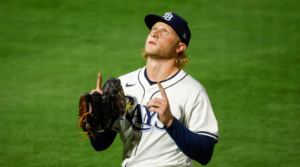
Shane Baz has quickly emerged as one of the most intriguing names to watch this season, drawing significant attention from both analysts and fans who believe he is on the verge of a breakout campaign. After finally putting together a fully healthy year, the right handed pitcher appears to be in an ideal position to elevate his performance to another level.
The optimism surrounding Baz is not limited to outside observers; the Baltimore Orioles clearly share that belief, as evidenced by their decision to invest in him for the long term. Their confidence signals that they see more than just flashes of potential they see a pitcher who could become a key cornerstone of their rotation.
A closer look at Baz’s performance last season provides additional context for why expectations are so high. One notable factor is the environment in which he pitched his home games. Baz spent last season throwing in a Triple A ballpark at George M. Steinbrenner Field, a setting that appeared to have a significant impact on his numbers.
The statistics tell a compelling story; of the 26 home runs he surrendered over the course of the year, 18 came at home. This imbalance contributed heavily to his inflated 5.90 ERA in those outings, painting a picture of a pitcher who struggled in his own ballpark.
However, when Baz took the mound away from home, he looked like an entirely different pitcher. His road performance showcased the talent that has long made him a highly regarded prospect. Over 84 innings pitched away from his home field, Baz compiled a much more impressive 3.86 ERA while limiting opposing hitters to a .227 batting average.
These numbers suggest that his struggles were not necessarily indicative of his overall ability, but rather influenced by the specific conditions of his home environment. For many evaluators, this split reinforces the belief that Baz’s true potential has yet to be fully realized, and that under more neutral or favorable circumstances, he could produce far more consistent results.
From the Orioles’ perspective, securing Baz with a long term deal serves a strategic purpose that goes beyond simply betting on his upside. The team’s starting rotation currently faces several uncertainties when it comes to long term stability. Trevor Rogers, for instance, is set to hit free agency after the conclusion of this season.
Given his recent performance, there is a strong likelihood that he will command a lucrative contract on the open market, which could make it difficult for Baltimore to retain him. Losing a pitcher of Rogers’ caliber would leave a noticeable gap in the rotation, further emphasizing the importance of having controllable talent in place.
Kyle Bradish represents another piece of the puzzle, though his situation is somewhat more secure. He remains under team control for two additional seasons beyond the current year, providing the Orioles with a degree of continuity.
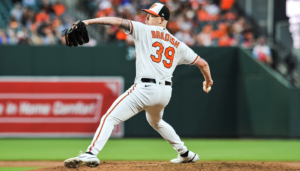
Even so, two years can pass quickly in the world of baseball, and relying too heavily on short term control can create challenges when planning for sustained success. By locking in Baz, the Orioles are taking a proactive step to ensure that they have at least one pitcher who could anchor the rotation for years to come.
The rest of the rotation adds to the sense of urgency behind this move. Both Chris Bassitt and Zach Eflin are currently playing on one year contracts, meaning their futures with the team are far from guaranteed. While they can provide valuable innings and veteran presence in the short term, their temporary status underscores the lack of long term certainty within the pitching staff. Without additional commitments, the Orioles could find themselves needing to rebuild a significant portion of their rotation in the near future.
In that context, the decision to invest in Baz becomes more understandable. By committing to him now, the Orioles are not only betting on his development but also addressing a broader organizational need.
They are effectively securing a potential building block at a time when their rotation could otherwise become increasingly unstable. This approach reflects a willingness to think ahead and mitigate future risks, even if it requires taking on some level of uncertainty in the present.
Of course, committing substantial financial resources to a pitcher like Baz over a five year period is not without its risks. While his talent is undeniable, he has yet to fully establish himself as a consistent top tier performer at the major league level.
Injuries, performance fluctuations, and the inherent unpredictability of pitching all contribute to the uncertainty surrounding any long term deal for a starting pitcher. For the Orioles, this agreement represents a calculated gamble one that could either pay significant dividends or fall short of expectations.
Yet, it is precisely this element of untapped potential that makes the investment so intriguing. Baz has shown flashes of brilliance that hint at what he could become if everything clicks.
His combination of velocity, movement, and competitiveness gives him the tools needed to succeed at a high level. If he can build on his strengths, refine his command, and benefit from more favorable pitching conditions, there is a strong possibility that he could evolve into one of the more impactful starters in the league.
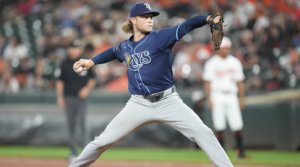
The Orioles’ willingness to take this chance suggests that they believe in their ability to help Baz reach that next level. Whether through coaching, analytics, or adjustments to his approach, the organization appears confident that they can unlock the consistency that has so far eluded him. In doing so, they are positioning themselves to potentially reap the rewards of having a high upside pitcher under contract during his prime years.
As the new season begins, all eyes will be on Baz to see how he performs under these heightened expectations. His first opportunity to make an impression will come on Sunday, when he is scheduled to take the mound against the Minnesota Twins. This outing will mark the start of what many hope will be a defining season for the young right hander. It will also serve as an early test of whether the optimism surrounding him is well founded.
For Baz, the upcoming campaign represents more than just another year it is a chance to validate the faith that both analysts and his team have placed in him. Strong performances could reinforce the notion that he is indeed on the verge of a breakout, while struggles might raise questions about whether he can consistently translate his potential into results. Either way, his progress will be closely monitored, as it carries significant implications not only for his own career but also for the Orioles’ future.
In the end, the decision to lock up Baz reflects a blend of optimism, strategy, and calculated risk. The Orioles are betting that his best days are still ahead of him and that he can become a key piece of their long term success. While there are no guarantees in baseball, the potential upside of this move makes it an intriguing one to watch as the season unfolds.