With Jurickson Profar no longer penciled into the heart of the lineup for the Atlanta Braves, the natural question becomes; how exactly will the club fill that void? Replacing a productive bat is never simple, and at this stage of the preseason, there is no definitive answer.
However, the projections over at FanGraphs’ Roster Resource have taken an early stab at solving the puzzle. In their latest depth chart update, Profar has essentially been wiped from the equation for the 2026 campaign, and a familiar National League East name has been slotted into his place as a potential solution at designated hitter.
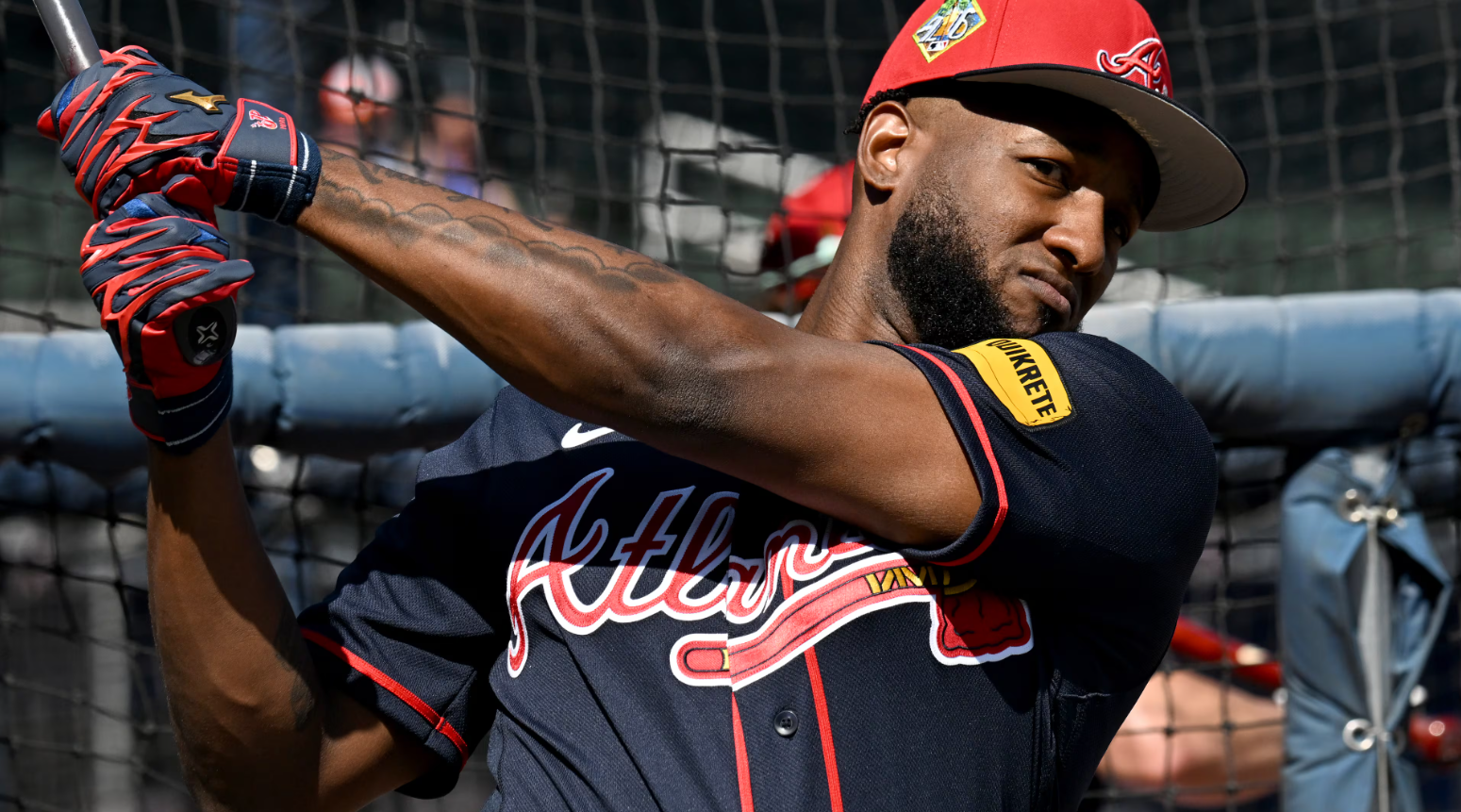
According to Roster Resource’s current outlook, the Braves could turn to Dominic Smith, a former member of the New York Mets, to step into a prominent role. Smith, who joined the organization on a minor league contract, is projected to move up the internal depth chart and claim the designated hitter job against right handed pitching. In this scenario, he would serve as a platoon option, offering left handed balance and veteran experience in a lineup that suddenly has an opening to address.
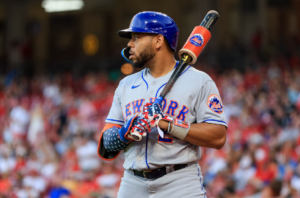
Of course, it’s important to emphasize that this projection is speculative. Roster Resource is piecing together possibilities based on current roster composition, spring performances, and logical roster construction.
The Braves themselves have not publicly committed to Smith or anyone else as Profar’s direct replacement. At this point in camp, these depth charts are educated guesses rather than insider revelations. Still, the idea of Smith emerging as a contributor is intriguing.
Smith’s career has been something of a roller coaster. Once viewed as a cornerstone bat for the Mets, he flashed legitimate middle of the order potential during his time in New York.
While he hasn’t consistently replicated that peak production in recent seasons, he remains a player with upside, particularly in the right matchup situations. For Atlanta, a club that has often excelled at maximizing under the radar talent, this could represent a low risk, potentially rewarding experiment.
The designated hitter role also offers a measure of flexibility. Rather than committing to a single everyday option, the Braves could mix and match depending on pitching matchups, health, and performance trends.
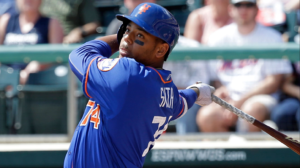
Smith fits the profile of someone who could handle the bulk of at bats against right handers while the team rotates others into the DH spot when facing lefties. That versatility may ultimately be more valuable than simply trying to replicate Profar’s production with a one for one substitution.
Even so, Smith is far from the only former Met drawing attention in Braves camp. Another ex-New York player has been turning heads with a strong spring showing, complicating the depth chart picture even further.
While Roster Resource currently highlights Smith as the most logical internal candidate, spring training performances can quickly alter those projections. If another veteran or young bat continues to surge at the plate, the front office could be persuaded to adjust its plans.
This internal competition may actually benefit Atlanta in the long run. Rather than rushing to acquire an external replacement or force a single player into the role, the Braves can allow the battle to unfold organically. Spring training often reveals unexpected contributors, and a hot stretch at the right time can earn a player a roster spot that once seemed unlikely. For someone like Smith, that means every at bat carries significance.
There’s also the broader context to consider. The Braves remain one of the National League’s most talented and balanced rosters, meaning they don’t necessarily need one individual to replicate Profar’s numbers in isolation. Instead, they could distribute that offensive responsibility across multiple players. If the lineup remains productive from top to bottom, the loss of one bat becomes easier to absorb.
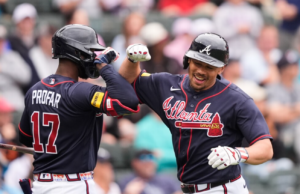
Still, depth matters over the course of a 162 game season. Injuries, slumps, and scheduling quirks inevitably test a team’s bench and platoon pieces. Having a player with Smith’s experience available even if he begins in a part time role could provide valuable insurance. And if he proves capable of seizing the opportunity outright, the Braves would have found an in house solution without sacrificing long term assets.
At this stage, though, it’s all projection. FanGraphs’ Roster Resource has offered one plausible roadmap, elevating Smith from a minor league signee to a projected designated hitter against righties. Whether that becomes reality will depend on performance, health, and the team’s evaluation over the remaining weeks of camp.
What’s clear is that Atlanta is exploring multiple avenues to fill the gap. If it isn’t Smith who ultimately steps forward, another former Mets player currently making noise this spring could emerge instead. The competition is open, and the Braves appear content to let the results dictate their decision rather than rushing to a premature conclusion.
In the end, replacing Profar may not come down to one headline grabbing move. It could instead be a combination of savvy roster management, platoon strategy, and internal development. For now, Roster Resource has placed its bet on Dominic Smith as the early favorite. But until Opening Day arrives and the lineup card is officially posted, the situation remains fluid and full of possibility.
Dominic Smith and Ben Gamel are two candidates to replace Jurickson Profar on the Braves roster
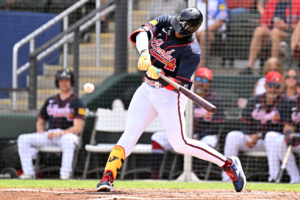
The Atlanta Braves have options when it comes to how they handle the financial flexibility created by moving on from Jurickson Profar. One logical path would be to redirect the savings toward strengthening the lineup with another hitter. However, a sizable portion of the fan base might argue that bolstering the starting rotation should take precedence.
While adding offensive depth is never a bad thing, the pool of available free agent bats at this stage of the offseason doesn’t exactly feature anyone who dramatically shifts expectations. Given that reality and considering that Atlanta expects several key contributors to return at some point it may ultimately make more sense for the organization to look inward for solutions rather than committing additional resources externally.
For now, the Braves appear willing to evaluate internal candidates, and two familiar names have entered the conversation. Dominic Smith has made an early impression in spring action, going 3 for 6 at the plate to start camp. Though it’s a minuscule sample size, it’s enough to at least generate some curiosity about whether he could carve out a meaningful role.
Ben Gamel, meanwhile, has been even more productive statistically in the early going, collecting four hits in 11 at bats, with three of those hits leaving the yard. Power production, even in spring, tends to draw attention especially for a club seeking to replace a bat like Profar’s.
When comparing the two, Gamel’s defensive versatility gives him a notable edge. His ability to handle the outfield adds roster flexibility that Smith simply doesn’t provide. Smith’s defensive profile is limited primarily to first base, and even that opportunity is scarce in Atlanta. With Matt Olson entrenched as one of the most durable everyday players in baseball, first base is rarely available.
Olson almost never takes days off, meaning Smith’s path to consistent playing time would likely come as a designated hitter or in sporadic pinch hitting opportunities. Gamel, on the other hand, could serve as a reserve outfielder, step in for injuries, or rotate through different spots to keep regulars fresh.
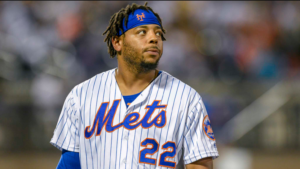
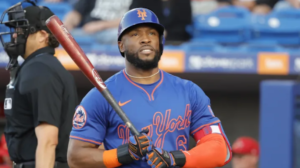
Still, neither former member of the New York Mets appears capable of matching what Profar brought to the table at his best. Smith enjoyed a respectable 2025 campaign with the San Francisco Giants, batting .284 across 225 plate appearances. On the surface, that average suggests solid offensive output.
Yet a deeper look reveals limited impact power just five home runs over that stretch. For a player who would likely be slotted into a run producing role as a designated hitter, that modest home run total leaves questions about whether he can truly fill the void left behind.
Gamel’s recent track record presents even greater uncertainty. He spent the entirety of last season in the minor leagues, which speaks volumes about how clubs currently view him. While he has accumulated plenty of big league experience over the years, that time has largely defined his ceiling.
He profiles as a serviceable depth piece someone capable of stepping in as a fifth outfielder but not a player expected to anchor the middle of a competitive lineup. His strengths lie in effort, versatility, and occasional pop, not in consistent, above-average offensive production.
Atlanta’s predicament became slightly more frustrating due to timing. Just days before the Braves might have explored the possibility, Starling Marte came off the market after agreeing to a one year contract with the Kansas City Royals. Marte would have represented an ideal short term solution.
As a veteran with postseason experience and a history of offensive consistency, he could have slotted into the lineup seamlessly while providing capable defense in the outfield. His presence would have offered a blend of reliability and upside that internal options simply don’t match.
Missing out on Marte narrows the Braves’ choices considerably. With external alternatives dwindling and none of the remaining free agents projecting as true difference makers, Atlanta may be left to lean on Smith as the primary short term fix.
In that role, Smith could prove serviceable for stretches. His ability to put the ball in play and maintain a respectable batting average gives him some value, especially against right handed pitching. Over a brief span, he might approximate league average production and keep the lineup afloat.
However, the concern lies in sustainability. Over the course of a full 162 game season, asking Smith to consistently replicate Profar’s overall offensive contributions may be unrealistic.
Profar’s combination of patience, power, and positional flexibility allowed him to impact games in multiple ways. Smith’s offensive profile is more limited, and without regular defensive opportunities, his value hinges almost entirely on what he does at the plate.
Gamel, meanwhile, could factor into a platoon arrangement or serve as insurance if injuries strike. His early spring power surge is encouraging, but spring training numbers often require context. The level of competition varies, and hot streaks can fade quickly once the regular season begins. While his defensive adaptability enhances his roster case, it doesn’t necessarily solve Atlanta’s need for reliable middle of the order production.
Ultimately, the Braves find themselves balancing pragmatism with ambition. They could dip back into free agency and allocate Profar’s saved salary toward a veteran bat, but doing so may not significantly elevate the roster.
Alternatively, they could preserve those resources for a midseason acquisition, particularly if the trade market presents opportunities closer to the deadline. That approach would align with the belief that reinforcements are already on the horizon internally.
From a roster construction standpoint, going internal carries both risk and reward. It offers financial flexibility and avoids long term commitments, yet it places considerable faith in players who have either shown limitations at the major league level or struggled to secure consistent roles recently. The front office must weigh whether short term adequacy is sufficient or whether a more aggressive pursuit of external help is warranted.
In the meantime, Smith appears positioned to receive the first opportunity. If he capitalizes on it and delivers steady at bats, he could stabilize the designated hitter spot until reinforcements arrive. But if production lags, pressure will mount quickly both from fans eager for upgrades and from a competitive clubhouse determined to maximize its championship window.
The Braves’ decision making over the coming weeks will reveal how they view their current roster. Do they believe internal depth can sustain them until healthier days return? Or will they determine that external reinforcements are necessary to keep pace in a highly competitive National League? For now, the likely outcome seems to involve giving Smith a chance to prove he can handle the responsibility, even if expectations remain tempered.
In the grand scheme, replacing Profar may require a collective effort rather than a one for one substitution. No single internal candidate appears poised to mirror his exact production. Instead, Atlanta might rely on a combination of situational matchups, roster flexibility, and eventual reinforcements to compensate. Whether that patchwork approach holds up over six months will ultimately determine how costly missing out on a player like Marte truly was.