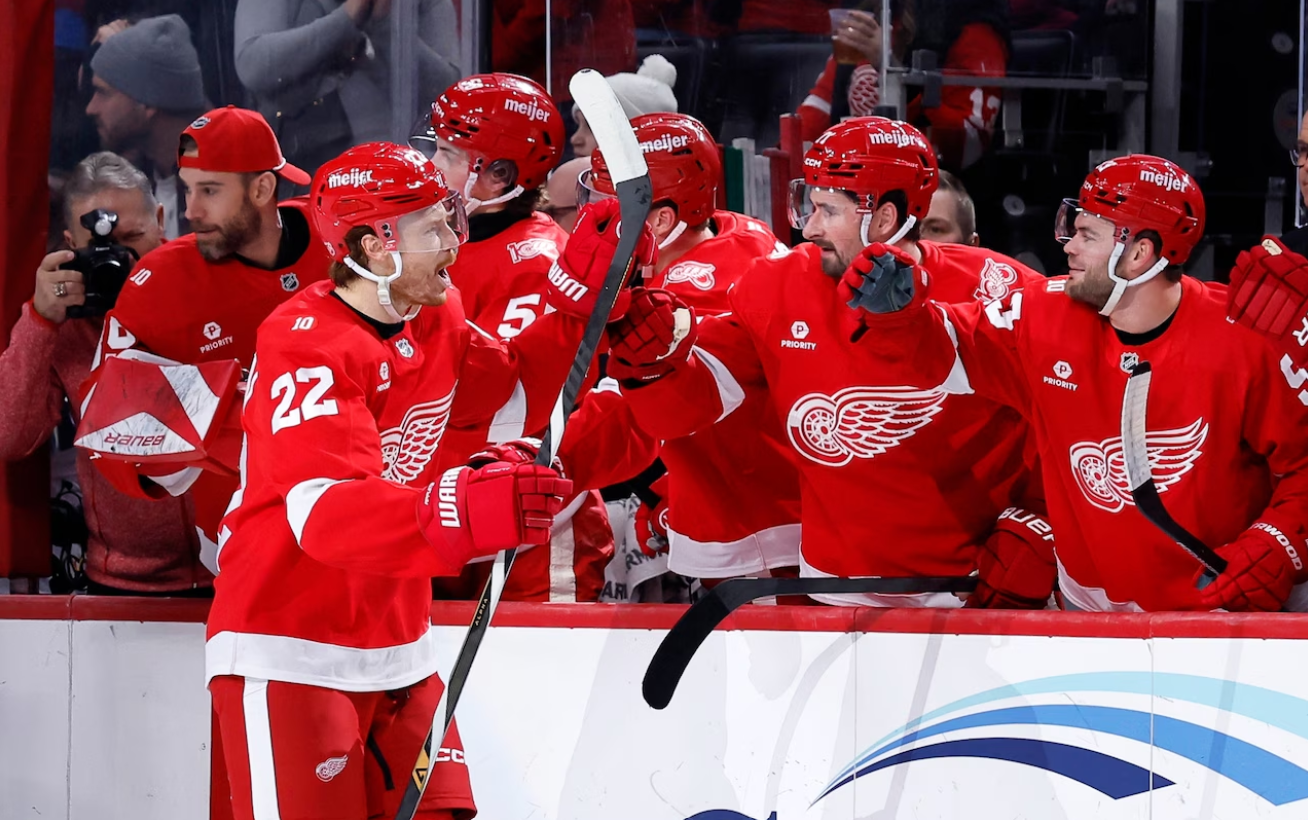
He is now part of the New York Rangers organization, becoming the latest addition to the roster after the club claimed him off waivers from the Seattle Kraken. The move may not have generated the kind of buzz that accompanies a blockbuster trade or a marquee free agent signing, but it is nonetheless a notable development for a team that has been carefully managing its depth chart.
With the Rangers already stocked with several players who typically fill bottom six forward roles, the decision by President and General Manager Chris Drury to bring in another player of a similar profile has sparked curiosity about what the front office may have in mind.
His arrival adds another layer to a forward group that is already competitive in its lower lines. While some observers might question why the Rangers would add to an area that appears crowded, roster construction in the NHL is rarely as simple as it seems on the surface.
Injuries, performance fluctuations, and strategic adjustments often create opportunities for players who might otherwise be viewed as surplus. In that sense, Drury’s decision could be interpreted as a proactive move one that ensures the team has options and flexibility as the season unfolds.

It’s also possible that this waiver claim hints at additional transactions yet to come. NHL teams frequently make subtle moves before executing larger ones, and adding a depth forward could provide insurance in case of a trade or other roster shake up.
Whether this signals confidence in Kartye’s upside, concern about current depth pieces, or preparation for a separate deal remains to be seen. For now, fans can only speculate about how this addition fits into the Rangers’ broader plans.
Kartye himself brings attributes that align with the typical mold of a bottom six forward; energy, physicality, and a willingness to play a hard nosed game. Players in these roles are often tasked with grinding out shifts, forechecking aggressively, and providing defensive reliability.
While they may not always light up the scoreboard, they can have a significant impact by setting the tone and creating momentum. If Kartye can establish himself in that capacity, he could carve out a meaningful role in New York’s lineup.
From the Rangers’ perspective, claiming a player off waivers is a relatively low risk move. It requires no trade assets and offers the chance to evaluate a player in a new environment. Sometimes a change of scenery can unlock untapped potential or allow a player to better showcase skills that may have been underutilized elsewhere. The organization may see something in Kartye’s game that they believe can translate effectively within their system.
For supporters of the Blueshirts, the key question will be how quickly Kartye can adapt and what role he ultimately earns. Will he slot in as a regular contributor on the fourth line? Could he push for more ice time if he impresses the coaching staff? Or is he simply depth insurance in case circumstances demand it? These are the questions that will be answered over the coming weeks.

At this stage, the move may appear modest, but depth often plays a crucial role over the course of a long NHL season. Injuries are inevitable, slumps occur, and having reliable options can make a difference when games tighten and competition intensifies. By adding Kartye, the Rangers are reinforcing their forward group and keeping their options open.
As things stand, the Rangers have added another piece to their puzzle. Whether this is a minor tweak or the first domino in a sequence of roster changes remains unclear. For now, fans should familiarize themselves with Tye Kartye and watch closely to see how he fits into the team’s evolving plans.
Who is Tye Kartye
Tye Kartye stands at 6 foot 1 and weighs 198 pounds, bringing a sturdy, well built frame to the forward position. Over the course of his young professional career, he has already accumulated 180 games of experience at the NHL level. In that span, he has produced 20 goals and 21 assists, totaling 41 points. While those numbers may not immediately jump off the page, they reflect a player who has carved out a role and found ways to contribute at the sport’s highest level.

Before establishing himself in the NHL, Kartye also logged significant time in the American Hockey League with the Coachella Valley Firebirds, appearing in 75 games. During that AHL stretch, he compiled an impressive 30 goals and 31 assists for 61 points, showcasing a more dynamic offensive side to his game.
His breakout professional campaign came during the 2022/23 season, when he earned AHL Rookie of the Year honors. That season, he led all first year players in scoring, a testament not only to his offensive instincts but also to his ability to adjust quickly to the professional game. Achievements like that do not come easily, especially for a player who entered the professional ranks without the pedigree of being a high draft selection.
In fact, Kartye went undrafted altogether, a detail that underscores both his perseverance and his development arc. After completing his junior career with the Soo Greyhounds of the Ontario Hockey League, he earned an opportunity with the Seattle Kraken organization and worked his way up from there.
Kartye’s path to the NHL is a reminder that development is rarely linear. He was not a highly touted prospect with draft day fanfare or long standing hype. Instead, he built his case through steady growth, consistent effort, and a willingness to embrace the grind required to stand out in competitive environments.
His junior career with the Soo Greyhounds provided him with foundational experience, allowing him to round out his game before transitioning to the professional level. Once in the Kraken system, he proved capable of not only holding his own but thriving in a league filled with experienced professionals.
However, the current season has presented its own set of challenges. Through 40 games, Kartye has logged 378 minutes at five on five. During that time, his underlying metrics have painted a complicated picture. He has posted a 38.52 percent goals for percentage (GF%), a 46.89 percent Corsi for percentage (CF%), and a 39.17 percent expected goals for percentage (xGF%).

These numbers suggest that, at even strength, his line has been outscored and often out chanced during his minutes on the ice. Compared to the previous season, the statistical story shows some variation. Last year, across 63 games and 576 five on five minutes, he recorded a 34.67 GF%, a 47.44 CF%, and a significantly stronger 49.34 xGF%.
The contrast between seasons is noteworthy. While his raw goals for percentage was actually lower last year, his expected goals share hovered near the break even mark, indicating that the underlying process may have been stronger than the results.
This season, however, the gap between possession, expected goals, and actual outcomes suggests that both performance and results have dipped. That can be influenced by numerous factors quality of teammates, level of competition, usage, and team wide struggles among them. It is rarely as simple as isolating one player and assigning full responsibility.
What Kartye does bring to the table is a clear and identifiable style of play. He adds a physical presence to the lineup, playing with a noticeable edge. He is comfortable finishing checks, battling along the boards, and occupying the hard areas of the ice. In many ways, he fits the mold of a classic grinder someone willing to do the unglamorous work that often goes unnoticed on the score sheet.
He is not afraid to forecheck aggressively, disrupt opposing breakouts, or sacrifice his body to maintain possession. Those attributes can be valuable, particularly in playoff style hockey, where space tightens and physical engagement becomes more pronounced.
Defensively at five on five, his metrics have generally indicated reliability. While the overall percentages this season are underwhelming, his game is rooted in responsible positioning and a willingness to backcheck.
Coaches tend to appreciate players who can be trusted in their own zone, especially in late game situations or when protecting a lead. Kartye’s physicality and effort level help stabilize depth lines that might otherwise struggle to maintain structure.

That said, it is important to contextualize what he offers relative to the broader needs of a team. A grinding, high effort winger has value, but only to a point. If a team’s primary issue is a lack of scoring punch, then adding more grit does not necessarily address the core problem.
Physical play and defensive reliability are complementary pieces. They support a roster; they do not typically transform it. If a lineup is starved for goals, the solution usually lies in acquiring or developing players who can generate consistent offense rather than simply increasing sandpaper and edge.
Still, there is minimal downside in taking a chance on a player with Kartye’s résumé, particularly given the circumstances of acquisition. As a former AHL Rookie of the Year who has already demonstrated the ability to produce at that level, he carries some upside beyond what his current NHL stat line might suggest.
Claiming or adding a player like that at a low cost such as through waivers represents smart asset management. It is the kind of low risk move that front offices make to reinforce depth without sacrificing meaningful capital.
Cost-controlled players with NHL experience are valuable commodities. Even if Kartye ultimately settles into a bottom six role, having a dependable, physical forward under team control can provide flexibility.
Injuries are inevitable over the course of an NHL season, and depth often determines whether a team can weather those storms. A player who can step into the lineup, contribute defensively, and avoid being a liability has tangible worth, even if he is not driving offensive production.

Expectations, however, must remain realistic. Kartye is unlikely to suddenly evolve into a top line scoring threat. His track record suggests he is most effective when deployed in a defined, energy oriented role. Hoping for a dramatic offensive breakout at the NHL level may set the stage for disappointment. The smarter approach is to appreciate what he is an undrafted success story who fought his way into the league and provides honest, physical minutes.
Meanwhile, roster dynamics continue to shift. With Brendan Brisson still in consideration for a role, organizational decisions must account for ice time distribution and development priorities. Young prospects benefit most from meaningful minutes, particularly in offensive situations.
In that context, Brennan Othmann’s reassignment to Hartford ensures he continues to play in a top line capacity rather than sitting idle as a healthy scratch. For a developing forward, consistent ice time in a scoring role is far more beneficial than sporadic fourth line usage at the NHL level.
Such moves highlight the balancing act teams face between immediate needs and long term growth. Kartye represents a present day depth option someone who can fill a role and contribute now.
Othmann, by contrast, remains an investment in the future, best served by playing significant minutes and refining his game. Maintaining that developmental pipeline is critical, particularly for organizations looking to build sustainable success rather than chasing short term fixes.

In the broader picture, adding a player like Kartye is not a headline grabbing move. It does not signal a dramatic shift in competitive trajectory. Instead, it reflects practical roster management; identifying undervalued or underutilized assets and integrating them where they fit.
In a season where larger structural issues may loom whether in scoring, defensive consistency, or special teams this type of addition addresses depth without complicating future flexibility.
Ultimately, Kartye’s story remains one of persistence. From undrafted junior player to AHL standout to NHL regular, he has steadily proven doubters wrong. While this season’s numbers indicate room for improvement, his style of play and work ethic continue to offer tangible benefits. He may not be the answer to a scoring drought, but he can reinforce the foundation of a lineup that values effort, physicality, and responsible five on five play.
In a league where margins are razor thin and roster spots are fiercely contested, there is always room for players who embrace the grind. Kartye fits that mold. As long as expectations align with reality, his presence can be viewed not as a cure all, but as a sensible, low risk addition that strengthens organizational depth while leaving room for bigger moves elsewhere.