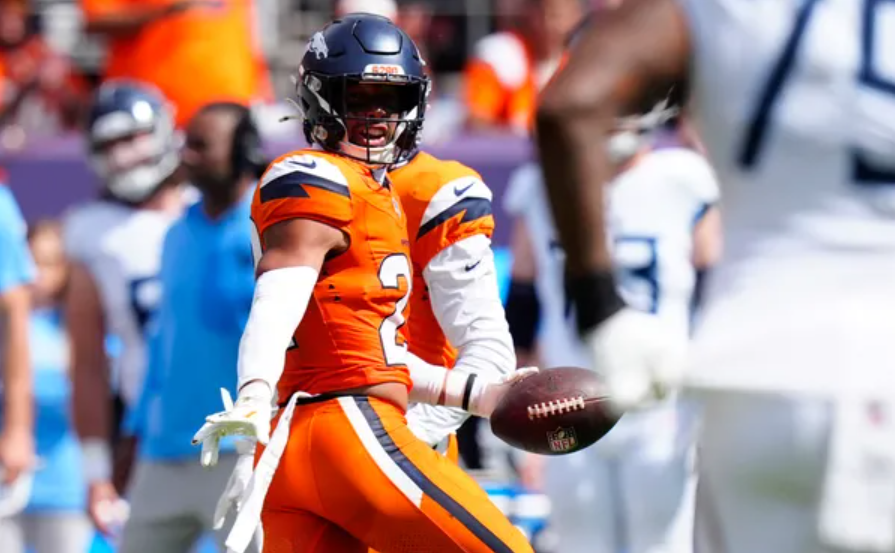
The Denver Broncos head into the upcoming season boasting what many evaluators believe is the premier safety tandem in professional football. With two time NFL All-Pro Talanoa Hufanga anchoring one side and the dynamic Brandon Jones patrolling the other, Denver’s last line of defense has been both dependable and disruptive.
Their complementary skill sets Hufanga’s instincts and physicality paired with Jones’ range and versatility have given opposing quarterbacks plenty to think about.
In fact, there’s a compelling case to be made that Jones’ unfortunate season ending pectoral injury in Week 14 altered the course of Denver’s postseason. When he went down with a torn pec, the ripple effects were felt immediately. The defense lost not only a playmaker but also a key communicator in the secondary.
Some observers believe his absence played a meaningful role in the Broncos’ eventual defeat to the New England Patriots in the AFC Championship Game. While no single injury can fully explain a playoff loss, the timing and impact of Jones’ setback were impossible to ignore.
As strong as Denver’s safety pairing appears today, the organization must confront an uncomfortable reality about the near future. Jones is entering the final year of his contract in 2026, and Hufanga’s deal runs only through 2027.
That timeline means the front office cannot afford to simply admire what it has; it must begin preparing for what might come next. Whether that involves extensions, restructures, or eventual replacements, the Broncos’ leadership knows that long term roster health depends on forward thinking.
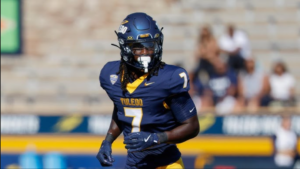
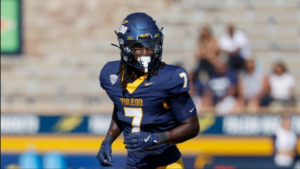
This is precisely why draft analysts see Denver as a team likely to invest in the position sooner rather than later. In his latest mock draft for ESPN, draft expert Mel Kiper Jr. projects the Broncos selecting Emmanuel McNeil-Warren with the 30th overall pick in the first round of the 2026 NFL Draft. The 6 foot 2, 202 pound All American safety would represent both a luxury and a necessity a player who may not start immediately but could become a cornerstone in short order.
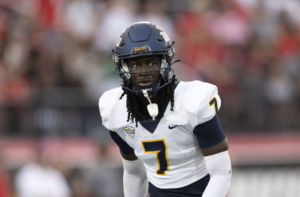
McNeil-Warren’s rise has been one of the more intriguing storylines in college football scouting circles. Playing at University of Toledo, he has showcased a blend of size, athleticism, and instincts that has drawn the attention of evaluators across the league.
His physical profile alone stands out, but it’s his on field awareness and ability to close ground quickly that have made him a legitimate first round candidate. Adding him to an already talented secondary would give Denver enviable depth while also creating a succession plan.
If McNeil-Warren were to hear his name called in the first round, he would follow in the footsteps of Quinyon Mitchell, another Toledo defensive back who made history when he was selected in the opening round and went on to earn All-Pro honors and capture a Super Bowl title with the Philadelphia Eagles. T
hat development has shined a brighter spotlight on Toledo’s program. Remarkably, before Mitchell’s selection, the school had produced just one first round pick over an 85 year span. To potentially have two in a three year window speaks volumes about the program’s growth and scouting validation.
Kiper acknowledged that selecting a safety might not deliver immediate dividends for Denver. After all, with Hufanga and Jones entrenched as starters, a rookie would likely begin his career in a rotational role.
But the analyst pointed to a similar situation the previous April, when Denver invested in defensive back Jahdae Barron despite already having talent in the secondary. That pick was about planning ahead rather than plugging an urgent hole. The same philosophy would apply with McNeil-Warren.
According to Kiper, head coach Sean Payton remains committed to maintaining a dominant defense as a foundation for sustained success. In today’s NFL, where offensive firepower often steals headlines, having a deep and versatile secondary can be the difference between contending and falling short. By adding another high upside safety, Denver would be signaling its intention to keep that unit among the league’s elite.
Kiper also suggested that McNeil-Warren may be flying slightly under the radar simply because he did not play at a traditional powerhouse program. Had he suited up for a so called Power 4 school, the analyst believes he might already be viewed as a top 15 prospect. That assessment underscores how highly some talent evaluators regard his skill set. For Denver, landing such a player at No. 30 could represent tremendous value.
Ultimately, the Broncos find themselves in an interesting position. They currently possess one of the NFL’s most formidable safety duos, yet contractual timelines demand foresight. Rather than waiting for uncertainty to become a crisis, Denver appears poised to address the future proactively. Drafting a player like McNeil-Warren would not be about fixing what’s broken; it would be about ensuring that nothing breaks at all.
In a league defined by razor thin margins, organizations that anticipate change often stay ahead of it. For the Broncos, balancing present strength with future security at safety could prove to be one of the defining strategies of the coming offseason.
McNeil-Warren Put Up Incredible Numbers
Although much will ultimately hinge on how McNeil-Warren tests at the NFL scouting combine with defensive backs scheduled to work out on Friday a glance at what he accomplished over four seasons with the Toledo Rockets makes one thing abundantly clear: he is a legitimate difference maker. His production alone paints the picture of a defender who consistently impacted games in multiple ways and thrived in high pressure moments.
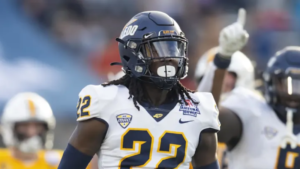
Across his collegiate career, McNeil-Warren forced an impressive 12 fumbles, a remarkable total that underscores both his physicality and his knack for attacking the football. For a defensive back, creating turnovers at that rate is no small feat.
It speaks to his timing, awareness, and willingness to initiate contact. Rather than simply bringing ball carriers to the ground, he routinely sought to jar the ball loose, creating extra possessions for his team and swinging momentum in critical situations.
His senior season in 2025 was particularly outstanding and served as the pinnacle of his time at Toledo. That year, he amassed 77 total tackles, showcasing his reliability and steady presence in the secondary. In addition to those stops, he recorded three forced fumbles and recovered two loose balls, further highlighting his instinctive play and ability to capitalize on chaos.
He also demonstrated his ball skills in coverage, intercepting two passes and breaking up six more. One of those interceptions he returned for a touchdown, turning defense into instant offense and providing a signature moment that encapsulated his playmaking ability.
That all around performance did not go unnoticed. McNeil-Warren’s exceptional campaign earned him All American honors, solidifying his reputation as one of the top defensive backs in the nation. The accolade reflected not just his statistics, but also his leadership, physical edge, and consistent impact on games throughout the season. He wasn’t simply compiling numbers; he was shaping outcomes and establishing himself as a tone setter on defense.
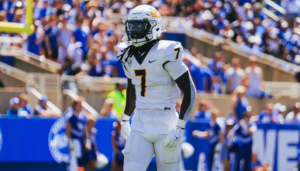
Evaluators have taken note of his particular skill set and how it translates to the professional level. NFL draft analyst Lance Zierlein offered a detailed assessment in his pre draft report, describing McNeil-Warren as a long, downhill safety with the ability to strengthen a team’s run defense and serve as an intimidating presence patrolling the middle of the field. That description captures the essence of his game; physical, decisive, and aggressive.
According to Zierlein, McNeil-Warren is at his best when he lines up close to the line of scrimmage or operates in a robber role, where he can read the quarterback and react quickly to developing plays.
In those alignments, his instincts and anticipation shine. He shows a natural feel for diagnosing routes, recognizing patterns, and breaking on the football with urgency. When he sees an opportunity, he closes ground rapidly, limiting yards after the catch and delivering firm, authoritative tackles.
However, the evaluation also notes areas where he may need schematic support at the next level. While he has solid range and speed, there are concerns about potential mismatches against faster receivers in space.
To maximize his effectiveness, defensive coordinators may need to structure coverages that protect him from being isolated in situations where pure speed becomes the deciding factor. In the right system, though, his strengths can be accentuated while minimizing exposure to those vulnerabilities.
One of his defining traits is his urgency in run support. McNeil-Warren wastes little time diagnosing rushing plays and attacking downhill. He displays a keen sense for slipping past blocks or engaging them at the right angle to meet ball carriers early in their runs.
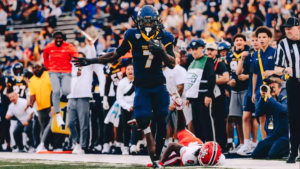
Rather than waiting for plays to come to him, he actively inserts himself into the action, often stopping runners before they can build momentum. That proactive approach makes him especially valuable against teams that rely heavily on the ground game.
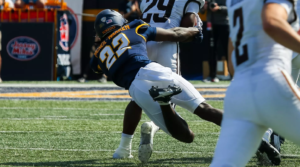
As a tackler, he covers ground effectively and brings a wide tackling radius to the field. His length allows him to wrap up ball carriers even when he isn’t perfectly squared up, and his physical mindset ensures he rarely shies away from contact.
Still, evaluators have pointed out that he can improve his footwork when diagnosing plays and flowing downhill. At times, his feet get a bit busy as he reads and reacts, which can slightly delay his trigger. Refining that aspect of his technique could help him become even more efficient and consistent at the next level.
Despite potential limitations that might pigeonhole him into certain schemes, the overarching takeaway from scouting reports is that McNeil-Warren excels at what he does best.
He may not be the prototypical center field safety who spends most of his time deep in coverage, but as a physical presence near the line of scrimmage and a disruptor in intermediate zones, he offers tangible value. Teams looking for a safety who can enforce the middle of the field, bolster run defense, and create turnovers will likely find his résumé compelling.
Ultimately, while his performance at the combine will provide additional data points including measurable traits like speed, agility, and explosiveness the foundation of his draft profile is already well established.
Four years of consistent production, highlighted by a dominant All American season, demonstrate that McNeil-Warren is more than just an intriguing athlete. He is a proven playmaker whose instincts, toughness, and knack for forcing turnovers could translate into a meaningful role at the professional level.
Breaking Down Hufanga & Jones Contracts
Considering their on field impact, both Hufanga and Jones have more than justified the investments made in them.
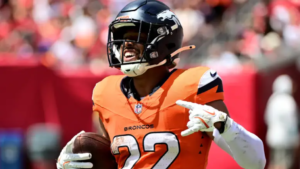
Hufanga agreed to a three year, $39 million deal in March 2025, and he wasted little time proving his value. From the moment he arrived, he emerged as a cornerstone of the defense, bringing intensity, instinct, and leadership to the unit.
His presence was felt not just in the stat sheet but in the overall tone and identity of the team. Teammates gravitated toward his energy, and coaches trusted him in key situations.
Over the course of the season, his consistent high level play and knack for making momentum shifting plays elevated the defense’s performance. By year’s end, his efforts were recognized at the highest level when he earned NFL All-Pro honors, cementing his status as one of the league’s premier defenders and validating the sizable financial commitment the organization made to secure him.
Jones, meanwhile, has been equally impactful relative to his contract. Prior to the 2024 season, he signed a three year, $20 million agreement, a deal that has proven to be a bargain given his durability and steady production. Across the last two seasons, he has started 28 of a possible 30 games, demonstrating both reliability and resilience.
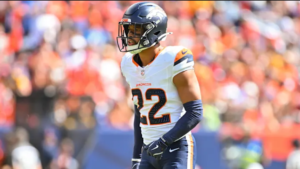
His availability alone has been crucial, but it’s his performance that has truly stood out. Jones has been a stabilizing force within the defensive front, consistently executing his assignments while also making plays that disrupt opposing offenses.
As a result of contributions from players like Jones, Denver has transformed into one of the NFL’s top defensive units. The team’s rise among the league’s elite on that side of the ball has been fueled by disciplined play, physicality, and a collective commitment to excellence qualities that Jones exemplifies.
His ability to anchor his position, support teammates, and perform at a high level week after week has played a significant role in the defense’s sustained success.
In the end, both contracts have delivered strong returns. Hufanga’s leadership and All-Pro caliber play have made him a foundational piece moving forward, while Jones’ consistency and durability have provided exceptional value. Together, their performances underscore how strategic investments in the right players can pay off in a major way, both individually and for the team as a whole.