The Boston Red Sox have quietly ushered in a new chapter this spring, and one of the most telling signs of that transition can be found not on the practice fields or in Grapefruit League box scores, but inside the clubhouse at their spring training complex in Fort Myers.
Subtle though it may seem, the reorganization of lockers within the team’s spring home speaks volumes about shifting hierarchies, evolving leadership, and a franchise recalibrating after a busy and transformative offseason.
In a detailed report published Sunday, Jen McCaffrey of The Athletic highlighted the new locker arrangements and what they might symbolize for the club heading into the upcoming season. While locker assignments may appear trivial to outsiders, within a Major League clubhouse they often reflect stature, tenure, leadership, and expectations.
Prime locker locations especially the largest or most centrally positioned stalls are traditionally reserved for franchise cornerstones, veteran leaders, or players expected to anchor the team both on and off the field.

One of the most notable changes involves veteran infielder Trevor Story. Story has assumed control of the largest locker in the clubhouse a spacious setup that even includes an additional empty stall to provide him with extra room. That particular piece of real estate carries considerable historical weight.
In previous years, it was occupied by Red Sox icons such as David Ortiz and more recently by All-Star third baseman Rafael Devers. For Story to inherit that space signals more than just a rearrangement of furniture; it suggests that the organization views him as a central figure in this new era.
Ortiz, of course, remains one of the most revered players in franchise history, a postseason hero and cultural pillar whose presence defined a generation of Red Sox baseball.
Devers, meanwhile, represented the next wave of offensive firepower and was long seen as a foundational player. With Devers now gone following a dramatic offseason reshaping, the symbolism of Story stepping into that physical space underscores the team’s shift in leadership identity.
Behind Story in the locker pecking order is catcher Willson Contreras, another veteran presence expected to play a significant role this year. His proximity to the largest locker suggests he is also regarded as an important voice in the clubhouse.

Contreras brings experience, intensity, and a reputation for competitive fire qualities the Red Sox will need as they attempt to redefine themselves in a challenging American League landscape.
Following Contreras is a sequence of emerging and established players who reflect the club’s blend of youth and experience. Outfielder Jarren Duran, whose development has been closely watched over the past few seasons, is next in line.
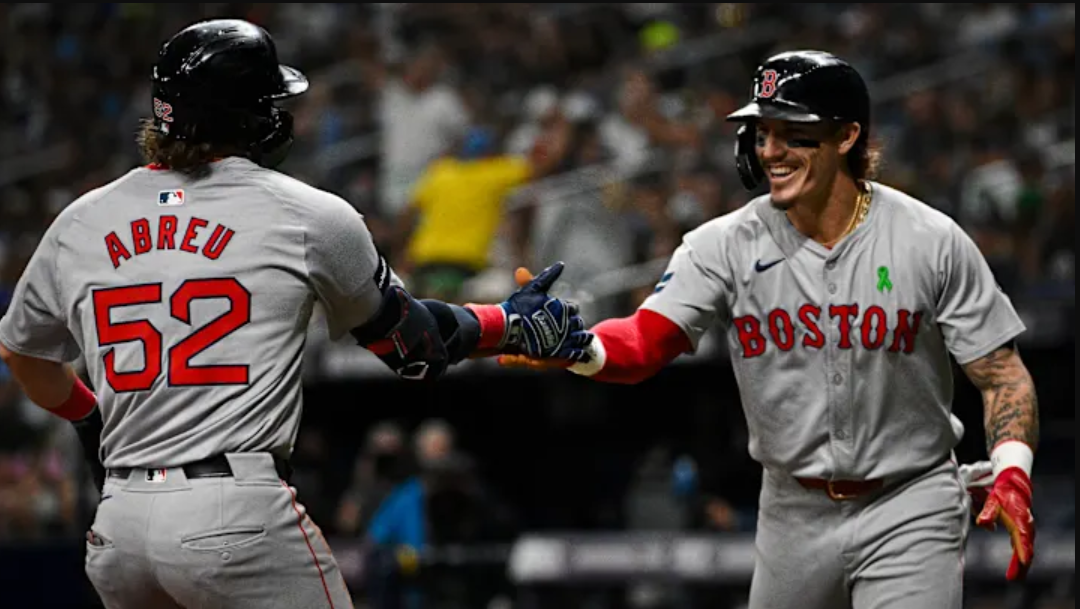
Duran’s placement hints at the organization’s belief in his continued growth and potential impact. After Duran comes utility infielder Romy Gonzalez, followed by promising outfielder Wilyer Abreu and dynamic young talent Ceddanne Rafaela.
Each of those players represents a different facet of Boston’s evolving roster construction. Abreu and Rafaela, in particular, are seen as part of the club’s long term core athletic, versatile players capable of contributing in multiple ways. Their elevated locker positioning may reflect both performance and projected importance moving forward.

The list continues with Caleb Durbin, Nate Eaton, and two of the most highly regarded prospects in the organization: Marcelo Mayer and Roman Anthony. Mayer and Anthony, both considered potential franchise cornerstones down the line, occupying prominent locker space signals the team’s confidence in their futures. Kristian Campbell rounds out this sequence, further emphasizing the youth movement taking shape inside the clubhouse.
While the position player side of the room experienced significant reshuffling, the pitching staff saw its own notable changes. Veteran left hander Aroldis Chapman now occupies the most desirable locker among pitchers.
That stall previously belonged to accomplished starters such as Chris Sale and David Price both former Red Sox stars who carried ace level expectations during their tenures in Boston.

Chapman’s new spot at the top of the pitching hierarchy suggests that, despite his role primarily as a reliever, his experience and track record command significant respect. Known for his overpowering fastball and postseason résumé, Chapman adds a veteran edge to the bullpen. By taking over that locker, he symbolically assumes a leadership mantle once held by starting rotation anchors.
Following Chapman among the pitchers is Garrett Crochet, whose upside and potential breakout loom large in the team’s plans. Next in line is Sonny Gray, a seasoned starter expected to provide stability and innings.
Ranger Suárez, Patrick Sandoval, and Brayan Bello follow in that order, forming a rotation group that blends experience with promise. After them come the remainder of the relievers, rounding out the pitching staff’s layout.
The sheer volume of locker changes underscores just how much turnover the Red Sox experienced during the offseason. The departures of several high profile players left both physical and metaphorical vacancies within the clubhouse. Among those who moved on were Rafael Devers, Alex Bregman, Rob Refsnyder, Lucas Giolito, Walker Buehler, and Liam Hendriks.

Devers’ exit alone marked a seismic shift. As a cornerstone bat and one of the most recognizable faces of the franchise, his absence necessitated not only lineup adjustments but also a recalibration of clubhouse leadership.
Bregman’s departure further reshaped the infield dynamic, while the exits of Giolito and Buehler thinned the rotation depth that had once been considered a strength. Hendriks, a fiery bullpen presence, also left behind a leadership void.
When veteran players depart en masse, the ripple effects extend beyond on-field production. Clubhouse culture, daily routines, mentorship structures, and team chemistry all undergo transformation.
Locker assignments become one of the first visible indicators of that change. In many ways, the new configuration serves as a visual roadmap of the franchise’s current hierarchy and future ambitions.
Spring training clubhouses are unique ecosystems. Unlike regular season home clubhouses, spring facilities often feel more intimate. The proximity of lockers fosters interaction, mentorship, and camaraderie.
For young players like Mayer and Anthony, being positioned near established veterans could accelerate their assimilation into the big league environment. For veterans such as Story and Chapman, occupying prime locations carries an implicit expectation to lead by example.
The question lingering over these changes, however, is whether the new occupants of the prime locker real estate can replicate or at least approximate the impact of their predecessors. It is one thing to inherit a locker once used by a franchise legend; it is another to match that legend’s productivity and influence.
Story’s health and consistency will be pivotal. Injuries have limited his availability in recent seasons, and stepping into a more prominent leadership role places additional scrutiny on his performance. Similarly, Chapman’s ability to stabilize the bullpen and provide high-leverage reliability will shape perceptions of the pitching staff’s transition.
The infusion of youth adds another layer of intrigue. Boston’s willingness to elevate young talents within the clubhouse hierarchy suggests confidence in their maturity and readiness. Yet development is rarely linear, and the pressure of expectations can weigh heavily on emerging players.
Ultimately, the reshuffling of lockers at the Red Sox’ Fort Myers facility is emblematic of a broader organizational pivot. It reflects a team in flux, one that has said goodbye to several familiar faces and is now positioning a new cast to take center stage.
While locker assignments do not determine wins and losses, they often mirror internal evaluations about who the franchise believes will define its next chapter.
As the season approaches, attention will naturally shift to batting averages, earned run averages, and standings in the American League East. But within the walls of the clubhouse, these early symbolic moves reveal a deeper story one about leadership, renewal, and the ongoing evolution of a storied franchise seeking its next era of success.