As the calendar turns toward the end of January, the Atlanta Braves find themselves in a familiar yet uneasy position. Spring training is rapidly approaching, pitchers and catchers are just weeks away from reporting, and the roster on paper looks close to complete. The lineup is deep, the bullpen is largely set, and the front of the rotation boasts star power that can match any team in baseball. And yet, there remains a single unresolved issue hovering over the organization like a storm cloud, the lack of dependable starting pitching depth.
The Braves’ offseason has been productive by most measures. They have addressed key needs, retained core contributors, and avoided the kind of roster erosion that often follows prolonged contention. Still, beneath that surface level success lies a persistent and increasingly urgent concern. The rotation, while impressive at the top, does not offer the kind of reliable innings base required for a team with championship aspirations. October has a way of punishing clubs that rely too heavily on health optimism and best case scenarios, and Atlanta has learned that lesson repeatedly in recent years.
For a franchise that expects to compete for a World Series every season and that missed the postseason for the first time in seven years just one year ago this is not a question of raw talent. The Braves have no shortage of arms with upside. What they lack is certainty. They need pitchers who can take the ball every fifth day, absorb innings, and stabilize the rotation when injuries inevitably strike. In short, the Braves’ problem is not quality; it is durability.
With spring training looming, the opportunity to meaningfully address that issue is shrinking. Free agency options have thinned, and the market has largely settled. However, one clear path remains available: a targeted trade that converts roster surplus into rotational stability without compromising long-term flexibility. The solution is not flashy, nor does it require mortgaging the future. It simply requires decisiveness.
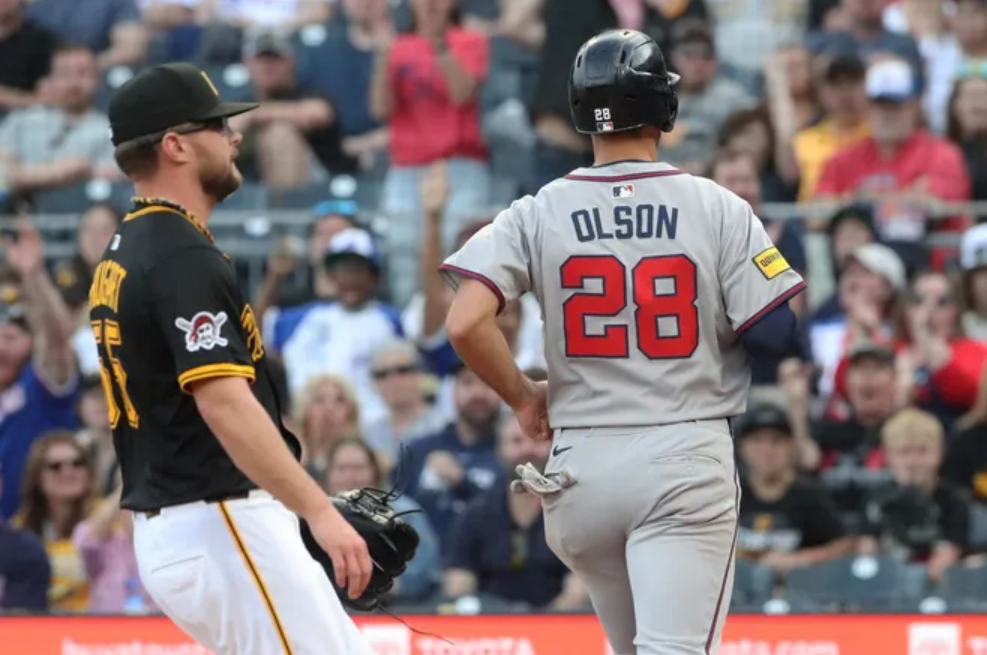
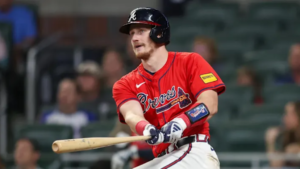
The proposed move is straightforward and unusually clean in its construction. Atlanta sends catcher Sean Murphy to the Pittsburgh Pirates in exchange for right handed starter Mitch Keller in a one for one deal. On the surface, it may appear unconventional catcher for starter swaps are rare but when examined closely, the trade aligns perfectly with the competitive timelines, roster compositions, and financial realities of both organizations.
From Atlanta’s vantage point, the reasoning begins with roster balance and resource allocation. When Murphy arrived in Atlanta three years ago, he represented exactly what the Braves were seeking at the position, a premium defensive catcher with power, leadership, and postseason experience. At the time, he looked like a long term fixture, a cornerstone piece capable of anchoring the pitching staff and contributing meaningfully in the middle of the lineup.
That context has changed dramatically.
During the 2025 season, rookie Drake Baldwin didn’t merely make his major league debut he took ownership of the job. Baldwin seized the everyday catching role, provided consistent offense, and ultimately captured National League Rookie of the Year honors. His emergence reshaped the Braves’ depth chart and rendered Murphy’s role redundant. Baldwin’s left handed bat also added a layer of lineup balance that Murphy, a right handed hitter, could not provide.
With Baldwin entrenched as the starter, Murphy’s $15 million annual salary became increasingly difficult to justify. Paying that figure for a backup catcher is a luxury few teams can afford, and even fewer should prioritize especially a team with clear needs elsewhere on the roster. For the Braves, continuing to carry Murphy is no longer an efficient use of resources. The roster surplus at catcher now stands in stark contrast to the uncertainty in the rotation.
Moving Murphy answers a question that has haunted Atlanta in recent postseasons: who can reliably shoulder innings behind the rotation’s elite arms?
This is where Mitch Keller enters the equation.
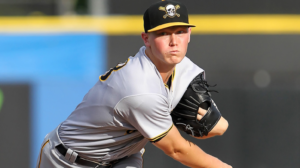
Keller may not carry the star power of a true ace, but he represents something just as valuable to a contending team reliability. He is not a boom or bust arm, nor is he a developmental project. Keller is a proven major league starter who has answered the bell consistently, making at least 29 starts in four straight seasons and handling substantial workloads in each of the last three. That kind of dependability is increasingly rare in today’s game.
For Atlanta, Keller would immediately slot into the middle of the rotation, providing much needed stability behind Spencer Strider and Chris Sale. His presence would be especially valuable given the uncertainty surrounding Strider’s health. While Strider remains one of the most electric pitchers in baseball, his 2025 return from elbow surgery was uneven, and expecting him to immediately shoulder a full, high-leverage workload in 2026 carries inherent risk.
The broader health profile of the Braves’ pitching staff only heightens the urgency. Reynaldo López is coming off a shoulder injury suffered in 2025, and while the organization remains hopeful, clearer updates will not come until spring training is underway. Grant Holmes battled elbow inflammation late last season, and although his offseason progress has been encouraging, he remains far from a lock for a full season of durability.
Spencer Schwellenbach is working his way back from a June 2025 elbow fracture and is projected to be ready for Opening Day, but projecting innings for a pitcher returning from that kind of injury always involves uncertainty. Meanwhile, AJ Smith-Shawver underwent Tommy John surgery for a torn UCL in June 2025 and is expected to miss the bulk of the 2026 season.
Taken together, the Braves’ rotation is filled with talent but riddled with health related question marks. Without additional insulation, the team risks overextending pitchers who are either returning from injury or still developing. That scenario has played out before, often with costly consequences in September and October.
Adding Keller changes that dynamic. His ability to consistently take the ball every fifth day reduces pressure across the staff. It allows the Braves to manage workloads more carefully, avoid rushing pitchers back prematurely, and preserve bullpen arms for the stretch run. In essence, Keller provides the innings floor Atlanta has been missing a stabilizing force that transforms uncertainty into structure.
From Pittsburgh’s perspective, the logic behind the trade is equally compelling.
The Pirates have quietly assembled one of the more impressive collections of young pitching in the league. At the forefront is Paul Skenes, a Cy Young winner whose dominance has redefined expectations for the franchise. Behind him, Jared Jones has emerged as a legitimate rotation piece, showcasing the kind of upside that can anchor a staff for years to come.
Even more help is on the way. Bubba Chandler, widely regarded as one of the top pitching prospects in baseball and a potential 2026 Rookie of the Year candidate, is nearing major league readiness. With that level of talent pushing upward, Keller’s role in the rotation becomes less essential to Pittsburgh’s long term plans.
That surplus makes Keller an ideal trade chip. While he remains a valuable and reliable starter, his rotation spot could soon be claimed by a higher upside arm at a lower cost. Moving him now allows the Pirates to convert pitching depth into help at a position of need.
That need is catcher.
Catching was a significant weakness for Pittsburgh in 2025, both offensively and defensively. The position produced below replacement level offense, offered limited pitch framing value, and failed to provide consistent leadership for a young and evolving pitching staff. For a team built around developing arms, that deficiency is particularly damaging.
Sean Murphy addresses those issues immediately.
When healthy, Murphy offers Gold Glove caliber defense, elite pitch framing, and genuine power capable of impacting the middle of a lineup. Beyond the tangible tools, he brings experience, preparation, and leadership qualities that are invaluable for a pitching staff headlined by young arms still learning the demands of the major leagues.
The timing of the trade is what makes it realistic.
Murphy’s offseason hip surgery and abbreviated 2025 campaign have dampened his market value just enough to make the exchange viable. Under normal circumstances, a fully healthy Murphy would command a return greater than Keller. However, the temporary uncertainty surrounding his health levels the playing field and creates an opportunity for both teams to act.
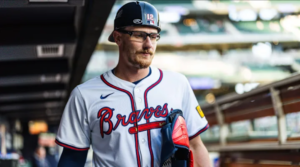
For Pittsburgh, acquiring Murphy represents a calculated bet. The risk is mitigated by his track record, and the upside a dramatic improvement at catcher is substantial. For Atlanta, the risk of moving Murphy is minimal given Baldwin’s emergence and the pressing need for pitching stability.
Every offseason produces a handful of moves that seem obvious only in hindsight. This has the potential to be one of them.
If the Braves stand pat, they risk replaying a familiar narrative, a rotation stretched thin by injuries, an overworked bullpen, and a team scrambling for answers when the games matter most. Acting now allows Atlanta to proactively address its most significant weakness using a surplus asset that no longer fits cleanly into the roster construction.
The alignment is there. The contracts make sense. The competitive incentives point in the same direction. For general manager Alex Anthopoulos and the Braves’ front office, this is the type of calculated, forward thinking move that has defined their success in the past.
With spring training just around the corner, the window is closing but it remains open. Turning excess into certainty now could be the difference between another season of what ifs and a return to October relevance.