The Baltimore Orioles entered the offseason with a strong sense of purpose and urgency. Following a disappointing and uneven 2025 campaign, the organization understood that standing pat was not an option. The front office was determined to turn the page quickly, reshaping the roster with the clear intention of reestablishing the club as a legitimate contender when the 2026 season arrives.
That commitment to winning became obvious almost immediately. Baltimore sent a loud message to the rest of the league by landing one of the most recognizable power hitters in baseball. The Orioles reached an agreement with Pete Alonso on a five year, $155 million deal, a move that instantly altered the perception of the franchise.
Alonso’s arrival not only added a proven middle of the order bat, but also signaled that Baltimore was willing to spend aggressively to address its shortcomings. After years of building primarily through internal development, this was a clear shift toward supplementing that core with star level talent.
Yet the Alonso signing was only the beginning. The Orioles followed it up with another eye catching addition by bringing in Taylor Ward, who is coming off a breakout 2025 season. Ward’s recent performance made him one of the more sought after offensive players on the market, and Baltimore wasted no time securing his services. His combination of power, on base ability, and defensive versatility gives the Orioles another dynamic piece in their lineup and further deepens an offense that struggled with consistency last year.
Beyond the headline grabbing moves, Baltimore also focused on addressing other areas of need across the roster. The bullpen, which proved unreliable at times in 2025, received a major boost with the signing of Ryan Helsley. Known for his ability to miss bats in high leverage situations, Helsley provides the Orioles with a dependable late inning option and helps stabilize a relief corps that often faltered under pressure.
The outfield also received attention, as the Orioles added Leody Taveras to the mix. Taveras brings speed, defensive range, and a switch hitting profile that adds balance to the lineup. His presence gives Baltimore more flexibility in how they construct their everyday outfield and provides a skill set that complements the team’s more power oriented hitters.
Baltimore also took a chance on upside by signing Jhonkensy Noel, a player with significant raw power and the potential to develop into a valuable offensive contributor. While Noel may not be a finished product, the Orioles clearly see an opportunity to unlock his strengths within their system, adding another intriguing element to their long term plans.
The pitching staff was another major point of emphasis throughout the offseason. In addition to bolstering the bullpen, the Orioles added veteran stability to the rotation by signing Zach Eflin. Eflin’s track record as a reliable starter gives Baltimore a steady presence capable of eating innings and providing consistency every fifth day, something the team sorely lacked at times during the previous season.
Perhaps the most intriguing pitching move came via trade, as the Orioles acquired Shane Baz from the Tampa Bay Rays. Baz, a former top prospect with electric stuff, represents a high upside addition to the rotation. While injuries have slowed his development in the past, Baltimore is betting that a fresh start and careful workload management can help him realize his considerable potential.
Taken together, these moves paint a clear picture of an organization unwilling to accept mediocrity. The Orioles addressed their needs across the board, adding star power, depth, and upside in equal measure. After a turbulent 2025, Baltimore has reshaped its roster with the intent of competing immediately, sending a strong signal that the franchise expects to be firmly back in the playoff conversation in 2026.
Even after the roster shuffling Baltimore has already done, the Orioles may not be finished tinkering with their club as they look toward the upcoming season. While their lineup continues to project as one of the deeper and more dynamic groups in the American League, the pitching staff specifically the starting rotation still stands out as an area that could use reinforcement.
When stacked up against the rotations of other postseason hopefuls, Baltimore’s group doesn’t quite inspire the same level of confidence, particularly at the very top. Because of that, it would not be surprising to see the front office explore the addition of one or even two more starting pitchers before Opening Day.
The challenge, of course, is that the free agent market has largely been picked clean. Most of the premium arms have already found new homes, and the remaining options come with notable question marks, whether related to health, inconsistency, or limited upside.
As a result, attention around the league has begun to shift toward trades, where teams with surplus talent in one area can attempt to address weaknesses elsewhere. In Baltimore’s case, that surplus clearly exists on the infield, where a wave of young, controllable players has created both enviable depth and difficult decisions.
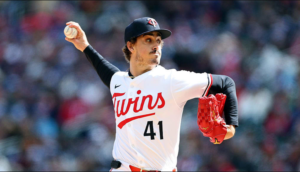
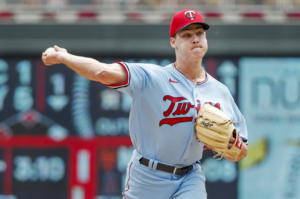
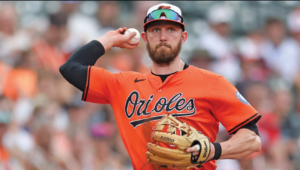
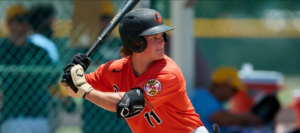
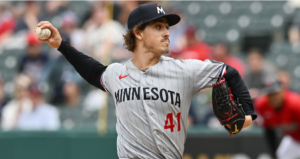
According to Bleacher Report’s Kerry Miller, the Orioles could leverage that infield abundance in a potential trade with the Minnesota Twins. Miller floated the idea of Baltimore acquiring right handed starter Joe Ryan along with pitcher Cole Sands in exchange for infielder Jordan Westburg and prospect Nate George. While purely hypothetical, the proposal highlights the type of bold move that could significantly reshape Baltimore’s outlook and balance the roster more effectively.
Letting go of Westburg would be far from painless. He has quickly become a fan favorite and a steady presence in the Orioles’ lineup, offering defensive versatility, solid on base skills, and timely power. Moving on from a player like that is never easy, especially when he has already proven he can contribute at the major league level. However, as Miller points out, the Orioles are operating from a position of strength in the infield. With multiple young players knocking on the door and others already established, Baltimore may be uniquely equipped to absorb the loss.
Miller framed the situation as a classic case of sacrificing from surplus to address need. If the Orioles truly believe that Colby Mayo is ready to step in as the everyday third baseman, the offensive drop off from Westburg to Mayo might be relatively modest. Mayo has long been regarded as one of the organization’s most promising bats, and while there may be some growing pains, his upside could soften the blow of losing Westburg. When viewed through that lens, the trade off becomes more palatable, especially if it results in a dramatic upgrade to the pitching staff.
Joe Ryan, in particular, would represent a substantial addition. He has established himself as a reliable and high quality starter, capable of anchoring a rotation and matching up against the best pitchers in the league. For a Baltimore team that has often relied on depth and matchups rather than a clear cut ace, Ryan could immediately slot in as the number one starter. His presence would not only stabilize the rotation but also reduce pressure on the rest of the staff, allowing younger pitchers to settle into more comfortable roles.
Adding Ryan could have a ripple effect throughout the pitching staff. With a true frontline starter taking the ball every fifth day, the Orioles could better manage innings, avoid overexposing back end starters, and improve their chances in critical series against top tier opponents. In a division as unforgiving as the AL East, those marginal gains can be the difference between sneaking into the playoffs and falling just short.
Cole Sands, while not the headline piece of the deal, would also bring value. Whether used as depth, a swingman, or bullpen support, he would give Baltimore additional flexibility and insurance over the course of a long season. Depth is often tested more than teams expect, and having an extra arm who can step in when needed can quietly save a season from unraveling.
Of course, the cost of such an upgrade is significant. Beyond Westburg, the inclusion of Nate George would mean parting with future potential as well. While prospects are inherently uncertain, giving up young talent always carries risk, especially for a team that has built its resurgence on player development and long term planning. Baltimore’s front office would have to weigh whether the immediate boost from Ryan justifies sacrificing some of that future depth.
There is also no guarantee that Minnesota would agree to such a deal. The Twins, like the Orioles, have their own competitive goals and roster considerations. They may value Ryan as a cornerstone of their rotation and demand an even stronger return, or they could find a more appealing package elsewhere.
Miller himself notes that other contenders, including the New York Yankees and Philadelphia Phillies, could be in the mix. Both teams have their own motivations to bolster their rotations and may be willing to outbid Baltimore if the Twins open the door to negotiations.
That external competition adds another layer of complexity. If multiple teams are vying for Ryan’s services, the asking price could rise quickly, forcing Baltimore to decide how aggressive it truly wants to be. Overpaying in a trade can create long term headaches, particularly for a club that has prided itself on patience and efficiency. At the same time, standing pat carries its own risks, especially if the rotation struggles to keep pace with division rivals.
Ultimately, the decision may come down to timing and confidence. If the Orioles believe their current rotation can hold its own, they may opt for smaller, less costly additions or simply trust internal improvements. However, if they see a clear opportunity to transform a good team into a legitimate World Series contender, a bold move like acquiring Joe Ryan could be worth the gamble.
What makes this situation especially intriguing is that Baltimore is no longer operating from a place of desperation. This is a team on the rise, with a strong core and a pipeline of talent that gives it flexibility. Trading from that position is far different than making a move out of panic. It allows the front office to be selective, weighing not just the immediate impact but also the long term implications.
In the end, any deal would require alignment between two organizations with different needs and priorities. The Orioles can propose compelling packages, but the Twins control the final outcome. If Minnesota believes it can extract more value elsewhere, Baltimore may have to pivot to other options or accept the roster as is. Still, the mere fact that such conversations are plausible speaks volumes about how far the Orioles have come.
Whether or not a trade with Minnesota ever materializes, the broader point remains: Baltimore has the pieces to make a meaningful upgrade if it chooses to do so. The rotation may not yet be elite, but the pathway to improvement is clear. With an excess of infield talent and a competitive window wide open, the Orioles are positioned to be one of the more fascinating teams to watch as the trade market continues to heat up.