There are certainly moments in sports when a head coach or manager deserves to shoulder the blame for a team’s poor showing. Leadership comes with accountability, and when things go wrong, it’s often appropriate for the person in charge to answer for it. However, not every loss can reasonably be traced back to decisions made in the dugout or locker room.
Some defeats simply come down to execution on the field, the opponent’s performance, or circumstances that are beyond any single individual’s control. Saturday’s game seemed to fall more into that latter category, even though one person was willing to take responsibility anyway.
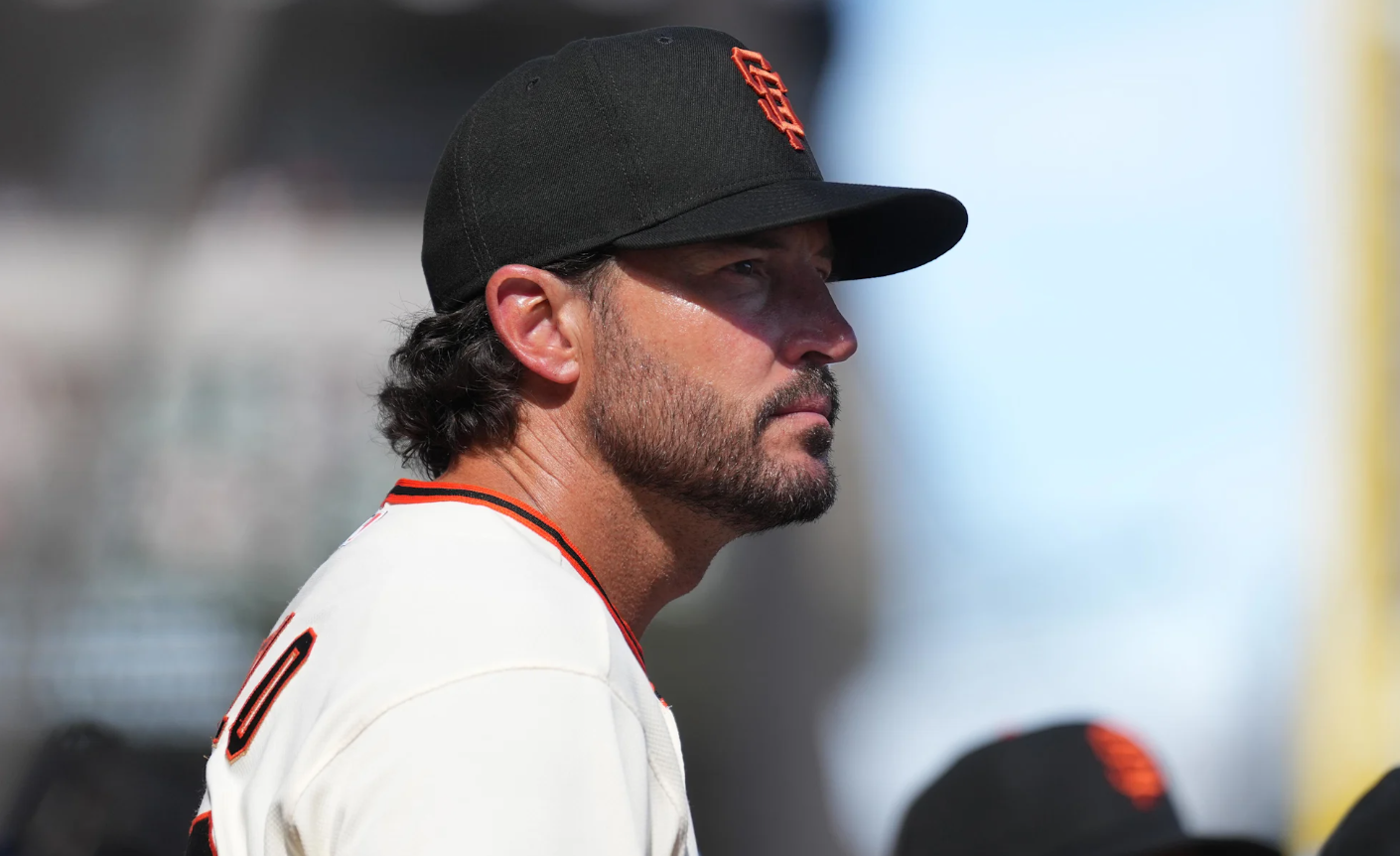
Following a 3-0 defeat at the hands of the New York Yankees, San Francisco Giants manager Tony Vitello stepped in front of reporters and did something that not every leader would be willing to do; he publicly pointed the finger at himself. Despite the fact that the game’s outcome likely hinged on factors far more complex than a single speech or motivational tactic, Vitello openly wondered whether his own actions before the game may have inadvertently contributed to the team’s struggles.

In his post game remarks, he suggested that a pre game speech he delivered might have had the unintended consequence of putting too much pressure on his players. The address, which he described as intense and emotionally charged, was intended to inspire and energize the team ahead of the matchup. Instead, he now believes it may have had the opposite effect, leaving players feeling tense rather than focused and confident.
Vitello’s comments revealed a level of self reflection that is not always common in high level sports environments. Rather than deflecting blame or pointing to missed opportunities by players, he chose to examine his own role in the team’s preparation. He acknowledged that his delivery may have leaned too heavily into passion and intensity what he described as a “fire and brimstone” approach when perhaps a calmer, more measured tone might have been more beneficial.
According to Vitello, the atmosphere in the clubhouse leading up to the game may have become overly emotional as a result. While emotion can often serve as a powerful motivator, there is a delicate balance between being energized and being overwhelmed. Too much intensity can lead to players pressing too hard, overthinking situations, or trying to do too much in key moments. In this case, he sensed that his players may have crossed that line.
He also noted that there seemed to be an element of players trying too hard once the game got underway. That kind of mindset can be counterproductive, especially in a sport like baseball, where success often depends on maintaining composure and sticking to fundamentals. When athletes start forcing things swinging for the fences instead of taking what the game gives them, or rushing plays instead of trusting their instincts it can lead to mistakes and missed opportunities.
Despite the loss, it’s important to recognize that Vitello’s willingness to accept responsibility does not necessarily mean that his speech was the primary cause of the team’s performance. Baseball games are influenced by a wide range of variables, from pitching matchups to defensive execution to simple luck. The Yankees, for their part, played well enough to secure the shutout victory, and credit must be given where it is due.
Still, Vitello’s comments highlight an important aspect of leadership; the ability to look inward and consider how one’s actions might impact others. By acknowledging the possibility that his approach may not have been ideal, he set an example for accountability within the organization. It sends a message to players that everyone, regardless of their role, is responsible for contributing to the team’s success or failure.
At the same time, his remarks also underscore the challenges that come with motivating a group of professional athletes. There is no one size fits all approach when it comes to preparing a team for competition.

What works in one situation may not work in another, and what resonates with one group of players may fall flat with another. Managers must constantly adjust their strategies, not only in terms of in game decisions but also in how they communicate and inspire their teams.
In this instance, Vitello appears to be taking the experience as a learning opportunity. Rather than doubling down on his approach, he is reflecting on it and considering how he might better strike the right balance moving forward. That kind of adaptability is crucial for long term success, particularly in a sport where the season is long and filled with ups and downs.
Ultimately, while Saturday’s loss was disappointing for the Giants, it also provided a glimpse into the mindset of their manager. Vitello’s candid admission may not change the result of the game, but it does offer insight into how he views his role and responsibilities. By being willing to question himself and take accountability, he demonstrates a level of humility and awareness that could serve the team well over the course of the season.
Whether or not his pre game speech truly had a significant impact on the outcome is something that may never be fully known. What is clear, however, is that Vitello is committed to doing whatever he can to put his players in the best possible position to succeed even if that means acknowledging when he might have gotten it wrong.
Why Vitello Can’t Blame Himself for Giants Offense
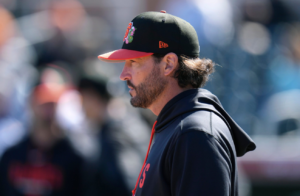
The San Francisco Giants’ unusually sluggish and historically rare start to the season remains difficult to fully explain. Through the first two games, the club has failed to score a single run while also managing five or fewer hits combined something no team in the long history of Major League Baseball has ever done, according to the Associated Press. That stark statistic underscores just how abnormal and frustrating this opening stretch has been, especially for a franchise with expectations of competitiveness.
Friday’s 3-0 defeat at the hands of the New York Yankees added another layer of historical context this time on the managerial side. The loss placed Tony Vitello among a small group of managers who have begun their tenure with consecutive shutout losses.
According to SportRadar, he became just the ninth manager in MLB history to be blanked in his first two games with a new team, and only the seventh to endure that fate in his first two games ever as a big league manager. These numbers highlight not just the team’s struggles but also the difficult initiation for a manager still finding his footing at the professional level.
Still, the circumstances surrounding those losses offer some context. The Yankees’ pitching staff has been nothing short of dominant to begin the season. In the opener, New York handed the ball to ace Max Fried, who delivered a performance befitting his reputation as one of the game’s top starters. In the second contest, rookie standout Cam Schlittler took the mound and continued that excellence.
Schlittler, who posted an ERA under 3.00 during his debut season, showed no signs of regression, effectively silencing the Giants’ lineup. Beyond the starters, the Yankees’ bullpen also played a crucial role, maintaining the shutout streak and preventing any late game rally attempts. Altogether, it was a comprehensive display of pitching dominance that would challenge even the most potent offenses.
From the Giants’ perspective, however, the offensive output has been particularly underwhelming. In Friday’s contest, Heliot Ramos accounted for the team’s lone hit, a stark indicator of just how limited their production has been. The lineup managed to draw only two walks, both credited to Matt Chapman, but those small moments of patience at the plate did little to generate momentum or scoring opportunities.

The struggles were not confined to a single game. In the season opener, San Francisco recorded just three hits, with Ramos again contributing one, alongside Luis Arraez and Rafael Devers. That game also saw the team draw only two walks.
When viewed collectively, the numbers paint a troubling picture; across two games, the Giants have managed a mere four hits and four walks. Even more concerning is their inability to capitalize on scoring chances they are hitless in seven at bats with runners in scoring position and have left ten runners stranded on base.
This combination of factors elite opposing pitching, lackluster hitting, and missed opportunities has created a perfect storm for offensive futility. The Giants have not generated many chances to score, but when those opportunities have arisen, they have failed to convert. It’s a frustrating dynamic, yet one that is not entirely unfamiliar in the unpredictable rhythm of baseball. Slumps, cold starts, and stretches of poor execution are all part of the game’s long grind.
Inside the clubhouse, players have responded with a measured perspective. While they appreciated Vitello’s willingness to take responsibility for the team’s early struggles, there was no attempt to deflect accountability. Veteran players, in particular, recognized the situation for what it is a rough start rather than a defining trend. Many of them have experienced similar stretches before and understand how quickly fortunes can change over the course of a long season.
Pitcher Robbie Ray offered a grounded viewpoint in comments to NBC Sports Bay Area reporter Alex Pavlovic. He emphasized the importance of maintaining composure and perspective, noting that every player on the roster is a seasoned professional capable of handling both success and adversity.
Ray acknowledged that the first two games have not gone as planned but stressed that they represent only a tiny fraction of a 162 game schedule. His message was clear; what matters most is how the team responds moving forward, not the setbacks already behind them.

This mindset reflects a broader understanding within the organization. At the professional level, accountability is shared, and responsibility extends beyond the manager. While Vitello’s inclination to shoulder the blame may have resonated in a collegiate environment, where players are often younger and still developing, the dynamic is different in Major League Baseball.
The Giants’ roster is filled with experienced players who are accustomed to navigating the highs and lows of a demanding season. They do not need a single figure to absorb all criticism; instead, they recognize their collective role in both victories and defeats.
Despite the disappointing results, there has been little sense of panic within the team. Frustration and disappointment are natural reactions to losing, especially when wins have proven elusive, but those emotions have not escalated into concern about the season’s trajectory.
As one member of the coaching staff has often remarked, the nature of baseball is such that fortunes can shift rapidly. A team that struggles one week can find its rhythm the next, stringing together wins and regaining confidence.
In that context, Vitello’s postgame remarks can be viewed as a well-intentioned, if somewhat misplaced, gesture. His desire to protect his players and take responsibility speaks to his leadership style and commitment to the team.
However, it may also reflect the learning curve associated with transitioning to the major leagues. Managing professionals requires a different approach than coaching amateurs, and part of that evolution involves understanding when to step back and allow players to own both their successes and their shortcomings.
Ultimately, the Giants’ early season struggles are the result of multiple converging factors rather than a single cause. Outstanding pitching from the Yankees has played a significant role, but so too have the Giants’ own offensive shortcomings and missed opportunities. It is a reminder of how difficult the game can be, even for talented teams, and how thin the margin for success often is.
As the season progresses, the expectation is that the Giants will find their footing. The talent within the roster suggests that the current performance is not indicative of their true capabilities. For now, the focus remains on making adjustments, staying patient, and trusting that the results will improve over time. In a sport defined by its length and unpredictability, two games no matter how historically unusual are merely the beginning of a much longer journey.