The Los Angeles Angels entered spring training with a fairly clear picture of what their starting rotation might look like when Opening Day arrived. Out of the five spots available in the rotation, three already appeared to be firmly in place before camp even began.
That early clarity gave the team a solid foundation to build on while leaving a few positions open for competition during the spring. As the preseason unfolded, however, things have not developed exactly as expected, and a new, unexpected challenger has emerged in the battle for the final starting roles.
One of the pitchers expected to play a key role in the Angels’ rotation this season is Jose Soriano. The right hander has been steadily improving and is viewed as a pitcher whose trajectory continues to trend upward. After demonstrating flashes of strong potential in recent seasons, the Angels are hoping Soriano can take another step forward and establish himself as a dependable starter in their lineup.
His growth has been one of the encouraging storylines for the organization, and the team believes that continued development could make him an important piece of their pitching staff.
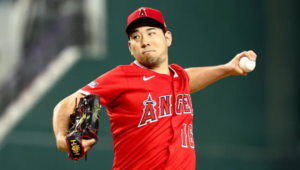
Another starter penciled into the rotation is Yusei Kikuchi, who has earned a reputation as a steady and reliable presence on the mound. While he may not always dominate headlines, Kikuchi has proven capable of providing consistent innings and stability for a team that values dependability from its starters.
For the Angels, having a veteran pitcher like Kikuchi offers a sense of reassurance, particularly during a long and demanding season in which durability and reliability are critical qualities.
Meanwhile, Reid Detmers is slated to rejoin the starting rotation after spending a significant amount of time working out of the bullpen. Detmers’ move back into a starting role follows a particularly impressive campaign as a reliever, where he showcased an ability to dominate opposing hitters in shorter outings.
His performance out of the bullpen helped rebuild confidence in his pitching arsenal, and the organization now believes he can translate that success back into the rotation. If Detmers can carry over the effectiveness he displayed in relief appearances, he could become a major contributor to the Angels’ starting staff.
With those three pitchers expected to secure spots in the rotation, attention turned toward filling the remaining two openings. Before spring training began, the assumption around the league and within the organization was that those spots would be claimed by two notable arms; Grayson Rodriguez and Alek Manoah.
Rodriguez joined the Angels after being acquired in a trade with the Baltimore Orioles. His arrival was viewed as a significant addition to the team’s pitching depth, given his reputation as a highly talented young starter with considerable upside.
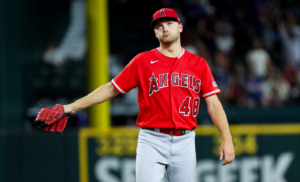
Rodriguez has long been regarded as one of baseball’s more promising pitchers, and the Angels hoped that a change of scenery would allow him to flourish in Anaheim. With his powerful fastball and sharp secondary pitches, Rodriguez appeared to be a natural candidate to lock down one of the open spots in the rotation.
Alongside Rodriguez, Manoah was widely expected to round out the group of starters. The right hander previously enjoyed a standout season that earned him recognition as a finalist for the prestigious Cy Young Award.
During that campaign, Manoah established himself as one of the more formidable pitchers in the league, displaying command, composure, and an ability to dominate opposing lineups. Although his performance has fluctuated since that peak season, the Angels believed that Manoah still possessed the talent necessary to rebound and reclaim his form as a frontline starter.
Given their track records and reputations, it seemed almost inevitable that Rodriguez and Manoah would secure the final two spots in the Angels’ rotation. As long as both pitchers remained healthy, most observers assumed the competition for those roles would be minimal. The expectation was that spring training would simply serve as an opportunity for them to prepare for the regular season rather than fight for their places on the roster.
But the reality of the preseason has complicated that narrative.
As spring training games have progressed, both Rodriguez and Manoah have struggled to deliver the type of performances the team hoped to see. Through their early outings, each pitcher has posted an earned run average exceeding seven. While spring training statistics do not always predict regular season success, such numbers have raised concerns about their readiness heading into the year.
Rodriguez, in particular, has had difficulty maintaining consistency from inning to inning. Despite flashes of the electric stuff that made him a coveted acquisition, he has also been prone to lapses that allow opposing hitters to capitalize. Meanwhile, Manoah has also encountered issues with command and effectiveness, leading to outings that have been far from the dominant performances the Angels envisioned when they brought him into the fold.
Because of these struggles, what once seemed like a straightforward decision for the Angels’ coaching staff is now much less certain. Instead of simply confirming Rodriguez and Manoah as members of the Opening Day rotation, the team may need to carefully evaluate all available options before making a final determination.
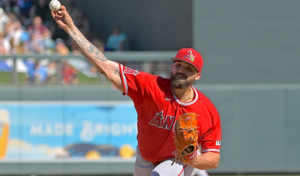
Adding another layer of intrigue to the situation is the emergence of an unexpected contender for those remaining rotation spots. A pitcher who was not widely projected to challenge for a starting role has begun to attract attention with impressive showings during the preseason. What initially appeared to be a routine competition has now transformed into a legitimate battle for opportunity.
In fact, this unlikely candidate may end up presenting the biggest challenge to Rodriguez and Manoah as the Angels finalize their pitching plans. Strong performances during spring training can sometimes reshape a roster outlook, and the Angels may find themselves reconsidering earlier assumptions about how their rotation should be structured.
As Opening Day draws closer, the situation in Anaheim remains fluid. Soriano, Kikuchi, and Detmers still appear positioned to anchor the rotation, but the final pieces of the puzzle have yet to fall into place. Whether Rodriguez and Manoah can regain their form in time or whether a surprise challenger ultimately claims one of those coveted spots will be one of the more compelling storylines to watch as the Angels prepare for the upcoming season.
Could Angels turn to Jack Kochanowicz to fill out rotation?
Heading into the 2025 season, Jack Kochanowicz appeared to be a young pitcher on the rise for the Los Angeles Angels. He had just wrapped up what many considered a promising rookie campaign, one that suggested he could grow into a dependable part of the club’s starting rotation.

In 11 starts during that debut stretch, Kochanowicz delivered results that were more than respectable for a newcomer adjusting to the demands of the major leagues. His earned run average stayed below the 4.00 mark, a benchmark often used to judge whether a starting pitcher is providing solid value to his team.
Even more encouraging were the underlying metrics that illustrated how he was achieving those results. Kochanowicz showed remarkable command of the strike zone, limiting free passes at an elite level.
His walk rate ranked in the 98th percentile among pitchers, an indication that very few arms across the league were better at avoiding unnecessary baserunners. At the same time, he excelled at generating ground balls, with a groundball rate that sat in the 94th percentile. This combination of precision and contact management formed the backbone of his pitching style.
Because of these strengths, Kochanowicz did not need to rely heavily on strikeouts to be effective. Many modern pitchers lean on overpowering stuff and high strikeout totals to dominate hitters, but Kochanowicz succeeded in a different way.
By pounding the strike zone and keeping the ball on the ground, he forced hitters to put the ball in play under less than ideal circumstances. That strategy often resulted in routine outs and kept his pitch counts manageable, allowing him to work deeper into games. For a rookie trying to establish himself, it was a formula that worked extremely well.
However, the optimism that surrounded him entering the following year did not carry over into the results of the 2025 season. Instead of building on the momentum from his debut, Kochanowicz endured a dramatic regression that caught both fans and analysts off guard. The most glaring issue was the sudden collapse of the control that had once been his greatest strength. His walk rate, which had been among the best in the sport, plunged all the way down to the ninth percentile.

That shift represented a massive drop in effectiveness. Where he once avoided giving hitters free passes, Kochanowicz suddenly struggled to consistently locate his pitches. Walks piled up, innings extended, and opposing lineups were able to generate more scoring opportunities than before. When pitchers lose their command, everything becomes more difficult, and Kochanowicz experienced that reality firsthand.
As the walks increased, the overall performance numbers deteriorated as well. By the end of the season, Kochanowicz’s ERA had ballooned to 6.81. Among pitchers who spent the year as regular starters, that figure stood as the highest in all of Major League Baseball. Instead of being a reliable rotation piece, he found himself fighting just to stay in the majors.
Eventually, the Angels made the difficult decision to send him down to Triple A in an effort to allow him to regroup and work through his struggles away from the intense spotlight of the big leagues. The demotion was a clear sign that the organization believed he needed time to rediscover the form that had made him so effective during his rookie year. For a young pitcher, such setbacks can be both humbling and instructive.
Now, as the Angels prepare for another season, Kochanowicz has once again entered the conversation for a spot in the team’s starting rotation. In fact, based on his early spring performances, he may currently be one of the leading candidates to claim one of those openings.
Through his first three appearances in spring training, Kochanowicz has looked sharp and confident on the mound. He has compiled a 2.08 ERA during that span, an impressive figure that suggests he is beginning to rediscover the rhythm that defined his earlier success. While spring training statistics should always be interpreted cautiously due to small sample sizes and varying levels of competition, the signs have nonetheless been encouraging.
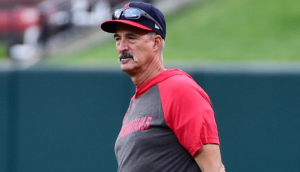
Perhaps the most notable improvement has been his control. In those three outings, Kochanowicz has issued only a single walk. That dramatic turnaround hints that he may have regained the command that previously allowed him to dominate hitters despite not being a high strikeout pitcher. The restoration of that skill has coincided with the arrival of a new pitching coach for the Angels, Mike Maddux.
Maddux, who has a long track record of helping pitchers refine their mechanics and approach, appears to have played a role in guiding Kochanowicz back toward the style that once made him effective. Whether through mechanical adjustments, strategic pitch usage, or a renewed focus on attacking the strike zone, the early results suggest that Kochanowicz is benefiting from the new coaching influence.
In addition to improved control, Kochanowicz has also managed to record a handful of strikeouts during his spring appearances. While strikeouts have never been the centerpiece of his game, the ability to miss bats at key moments can provide an extra layer of security when facing tough hitters. The combination of fewer walks and occasional strikeouts indicates that he is operating at a higher level than he did at any point during the difficult 2025 season.
Another promising development has been the uptick in his velocity. Even though spring training often features pitchers gradually building up their arm strength, Kochanowicz has already shown noticeable improvements in the speed of several pitches. His fastball and sinker are each averaging roughly one mile per hour faster than they did last season. Meanwhile, his slider has experienced an even larger increase, coming in about two miles per hour quicker than its 2025 average.
These velocity gains may not seem dramatic at first glance, but even small increases can make a meaningful difference at the major league level. A slightly faster fastball can help disrupt a hitter’s timing, while a sharper slider can create more deception and swing and miss potential. Together, those adjustments could make Kochanowicz’s overall arsenal more effective.
The improvements in both command and velocity suggest that his current pitch mix is working well. By combining better control with slightly more power behind his offerings, Kochanowicz has been able to keep hitters off balance during his spring outings. If those trends continue, he could once again become the type of pitcher who efficiently induces weak contact and navigates lineups without relying heavily on strikeouts.
Given the circumstances surrounding the Angels’ rotation, Kochanowicz’s resurgence could not have come at a better time. The team is currently dealing with inconsistent performances from other pitchers who were expected to secure spots in the starting staff. Two such arms are Alek Manoah and Grayson Rodriguez, both of whom have encountered difficulties during the spring.
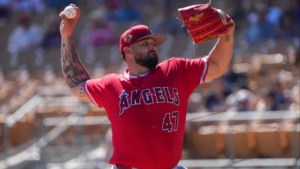
Their struggles have created a clear opportunity for someone else to step forward and claim a role. Kochanowicz appears to be doing exactly that. If the Angels ultimately decide to include a reclamation project in their rotation as the season begins, choosing a pitcher who is currently performing well could be the most logical path forward.
At the moment, Kochanowicz fits that description perfectly. His early spring results demonstrate tangible progress compared with last season, and his underlying improvements offer reasons for cautious optimism. While it remains to be seen whether he can sustain this level of performance once the regular season begins, the signs so far indicate that he has put the disappointing 2025 campaign behind him.
For Kochanowicz, the upcoming season represents an opportunity to rewrite the narrative of his young career. Instead of being remembered for the struggles that forced him back to Triple A, he now has a chance to reestablish himself as a reliable major league starter. With improved velocity, renewed command, and the guidance of a respected pitching coach, the ingredients for a successful comeback appear to be in place.
If he continues pitching the way he has during spring training, the Angels may soon find themselves giving him another shot in the big leagues this time with the hope that he can once again deliver the kind of steady performances that first put him on the map.