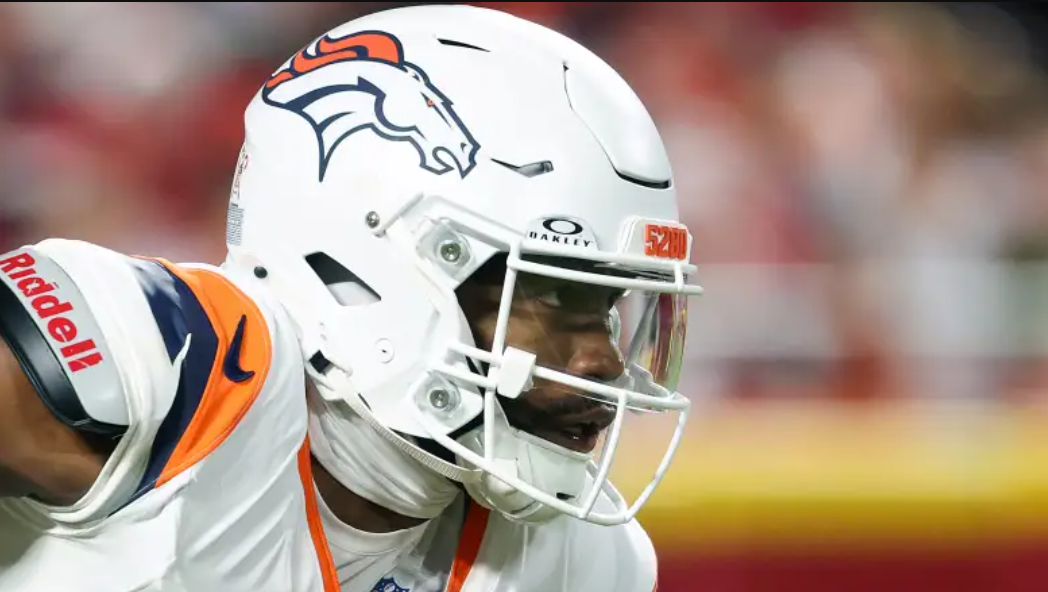
The Denver Broncos appear poised to bring back running back Tyler Badie for the 2026 campaign, according to a report published Friday by Denver Gazette beat writer Chris Tomasson. While the move has not yet been formally finalized, Tomasson indicated that the expectation is for the team to tender Badie as an exclusive rights free agent. If completed, the deal would lock him in on a one year contract worth $1.075 million.
Though Tomasson noted that nothing has been made official at this stage, all signs suggest that the organization intends to keep the young back in the fold. For a player in Badie’s position, an exclusive rights tender essentially ensures he will remain with the club, provided he signs the offer. It reflects a level of trust from the front office and coaching staff, particularly for someone who originally entered the league without being selected in the NFL Draft.
Badie began his professional journey as an undrafted player in 2022, facing the uphill climb that comes with trying to carve out a role without the pedigree of a draft selection. Despite that challenge, he has managed to stick within the Broncos organization for most of his young career. Over the past three seasons, he has appeared in 25 games, steadily building experience and demonstrating his versatility whenever called upon.
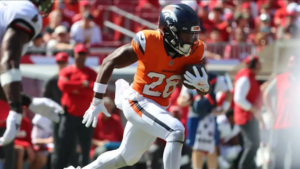
From a statistical standpoint, Badie’s workload has been modest but meaningful. He has logged 20 career rushing attempts, gaining 109 yards on the ground. While he has yet to score a rushing touchdown, his impact has been felt in other areas of the offense.
In the passing game, he has contributed 23 receptions for 169 yards and one touchdown. Those numbers underscore his primary value as a third down option a role that often demands reliability in pass protection and route running rather than high volume rushing production.
Most of Badie’s contributions came during the 2025 season, when circumstances thrust him into a more prominent role in the backfield. After the Broncos lost their leading rusher, J.K. Dobbins, to injury, the depth chart shifted and opportunities opened up. Badie stepped into the expanded role and delivered steady performances in key situations, particularly on passing downs. His ability to adapt and handle additional responsibility did not go unnoticed by the coaching staff.
Head coach Sean Payton spoke highly of Badie last September, emphasizing the skill set that makes him valuable within the offense. Payton described him as a well rounded player capable of executing multiple assignments effectively.
According to the coach, Badie runs the ball efficiently, understands his responsibilities in pass protection, and contributes positively to the passing attack. That combination is especially important in high pressure game situations where blitz recognition and protection schemes can dictate success or failure.
Payton also highlighted the significance of preparation, particularly in weeks when the Broncos face opponents known for aggressive defensive looks. In those matchups, the ability of a running back to diagnose pressure and execute proper pickups becomes critical.
The coach noted that there was substantial time devoted to working on third down scenarios and even second down situations because of the variety of exotic blitz packages Denver anticipated seeing. Badie’s understanding of those responsibilities made him a dependable option.
The head coach further explained that one of the most valuable traits a player can possess is predictability in a positive sense knowing exactly what that individual will provide when placed in specific situations. With Badie, the staff feels confident about what he brings to the table. That clarity allows the coaching staff to design packages and concepts that highlight his strengths rather than forcing him into roles that don’t fit his skill set.
In many ways, Badie’s potential return reflects the broader philosophy of building depth with players who understand the system and can execute specialized tasks. He may not headline the rushing attack or command national attention, but his consistency in defined roles adds stability to the offense. Particularly in an era when defensive coordinators frequently dial up complex pressure schemes, having a running back who can handle pass protection assignments is invaluable.
Should the expected tender become official, Badie would enter the 2026 season with an opportunity to continue developing his role. Injuries, roster changes, and in season adjustments often create new openings, as they did in 2025. Having already shown he can step up when needed, Badie would once again position himself as a reliable depth option with upside in situational packages.
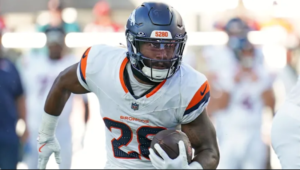
Ultimately, the anticipated move signals that the Broncos see tangible value in retaining him. While the contract figure is modest, the decision to keep him underscores the coaching staff’s belief in his versatility and football intelligence. If the paperwork is finalized as projected, Badie will have another year to further establish himself and potentially expand his contributions within the Denver offense.
Depth Chart in Flux?
It comes as no great shock that the Denver Broncos are unwilling to stand pat at running back after their crushing defeat to the New England Patriots in the AFC Championship Game. Falling just short of the Super Bowl clearly exposed areas the organization believes must be strengthened, and the backfield sits high on that list.
Rather than simply hoping for internal improvement, league observers widely expect Denver to take an assertive approach this offseason, actively searching for ways to elevate the talent and production at the position.
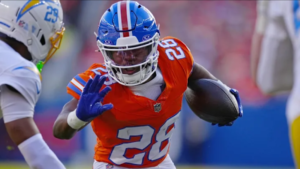
The first clear indication of that mindset surfaced on Friday. According to ESPN, the Broncos opted not to extend a restricted free agent tender to running back Jaleel McLaughlin. That decision immediately pushed him onto the open market, where he will now be free to negotiate with any interested team.
While a reunion in Denver remains possible, the move signals that the front office is unwilling to commit significant financial resources to a depth piece without carefully weighing its broader roster building strategy.
Had the Broncos placed the right of first refusal tender on McLaughlin, it would have cost the team $3.5 million for the upcoming season. For a player who functioned primarily as a reserve and was inactive for much of the first half of the year, that figure was apparently deemed too steep.
As Tomasson noted on social media, the organization still values McLaughlin and would be open to bringing him back at a more team friendly price. However, declining to tender him underscores a larger philosophical shift, Denver appears intent on reshaping the running back room rather than preserving it as is.
This approach makes sense in the context of how the AFC Championship unfolded. Against a disciplined and opportunistic Patriots defense, the Broncos struggled to generate consistent rhythm on the ground.
In high leverage moments, they lacked the explosive element or dependable bell cow presence that can tilt postseason matchups. When margins are razor thin in January football, a dynamic runner can be the difference between advancing and going home. Denver’s front office seems acutely aware of that reality.
Complicating matters further is the status of J.K. Dobbins, who is set to hit unrestricted free agency. Without a guaranteed return from Dobbins and with McLaughlin now untendered, Denver’s depth chart suddenly feels far less settled.
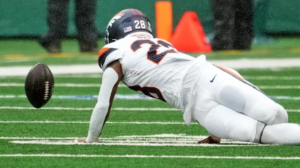
Even if one or both players ultimately re-sign, the Broncos are expected to explore higher end options on the market to ensure they are not caught short again next winter.
If Denver truly intends to “swing big,” several high profile names could come into play. Among the most intriguing possibilities is Breece Hall of the New York Jets. Hall has demonstrated game breaking ability as both a runner and receiver, offering versatility that aligns well with modern offensive schemes. His blend of speed, vision, and pass catching skill would instantly add a new dimension to the Broncos’ attack.
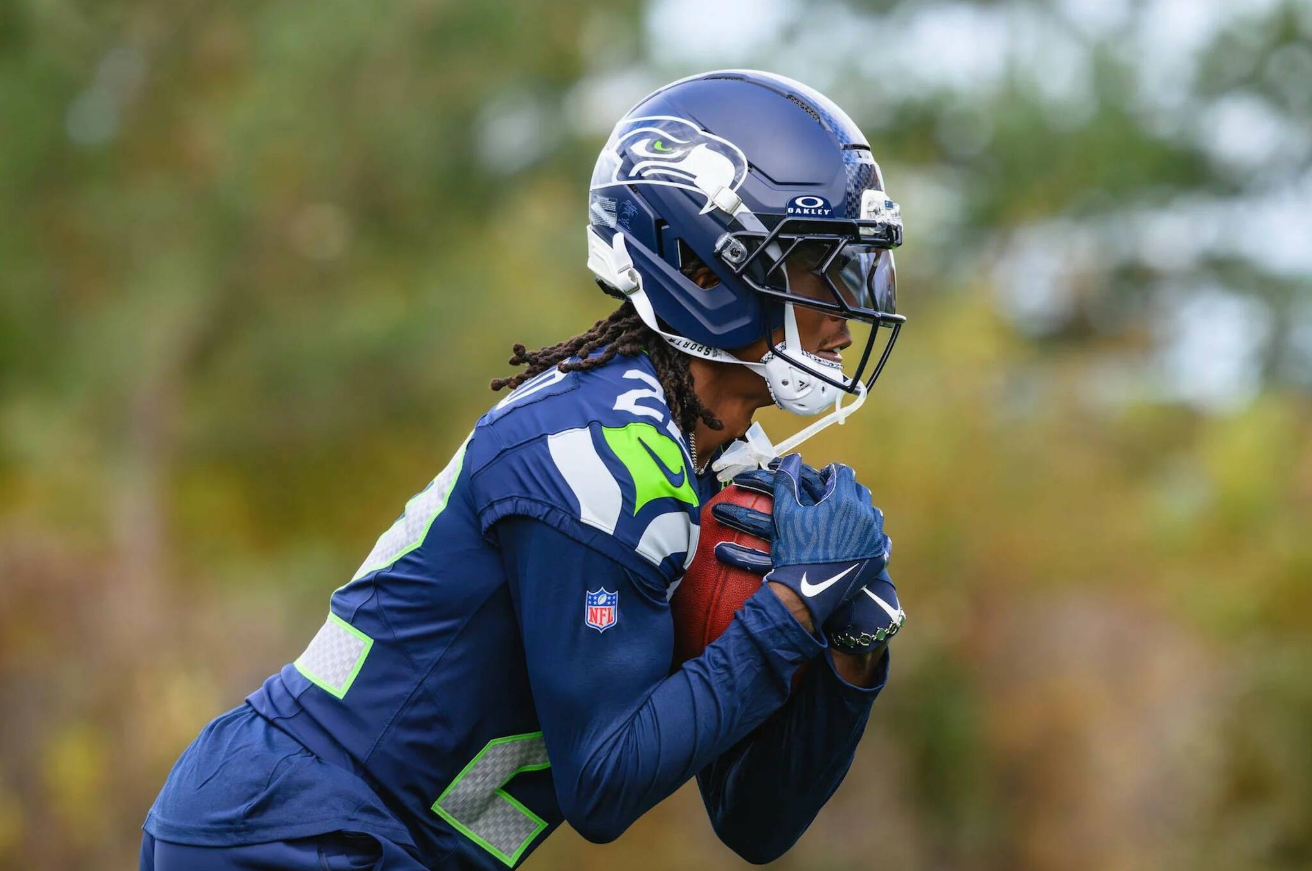
Another compelling target could be Kenneth Walker of the Seattle Seahawks. Walker’s downhill style and knack for explosive chunk plays have made him one of the more dangerous young backs in the league.
He thrives between the tackles but also has the acceleration to bounce runs outside and turn modest gains into highlight reel touchdowns. Adding a runner of his caliber would not only bolster Denver’s rushing efficiency but also lighten the burden on the passing game.
Tyler Allgeier of the Atlanta Falcons also stands out as a potential option. While perhaps not as flashy as Hall or Walker, Allgeier has built a reputation as a reliable, physical runner who excels at wearing down defenses. His toughness and consistency could be particularly valuable in cold weather playoff environments, where establishing the run often becomes paramount.
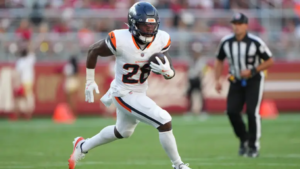
Of course, pursuing any of these names would require careful cap management and likely stiff competition from other franchises seeking similar upgrades. The running back market can be unpredictable, with values fluctuating based on supply, demand, and draft depth. Denver’s front office will need to strike the right balance between aggression and fiscal prudence, ensuring they do not overextend themselves in pursuit of a splash.
Still, the early signals are clear: complacency is not part of the Broncos’ plan. Coming within one game of the Super Bowl only to fall short can be both motivating and sobering. It forces teams to confront uncomfortable truths about roster construction and competitive gaps. For Denver, the takeaway appears to be that the running back position must be strengthened if they are to take the final step.
In that sense, the decision regarding McLaughlin is less about one individual player and more about organizational direction. By declining to commit $3.5 million to a reserve option, the Broncos have preserved flexibility. That flexibility could prove crucial as they navigate free agency and potentially the draft, exploring every avenue to upgrade.
Ultimately, this offseason could redefine Denver’s offensive identity. Whether through a marquee free agent addition like Hall, Walker, or Allgeier, a creative draft selection, or a reshaped committee approach, change seems inevitable.
After a bitter playoff exit at the hands of New England, the Broncos appear determined to ensure that next time they find themselves on the cusp of a championship, their ground game will be an unquestioned strength rather than a lingering concern.