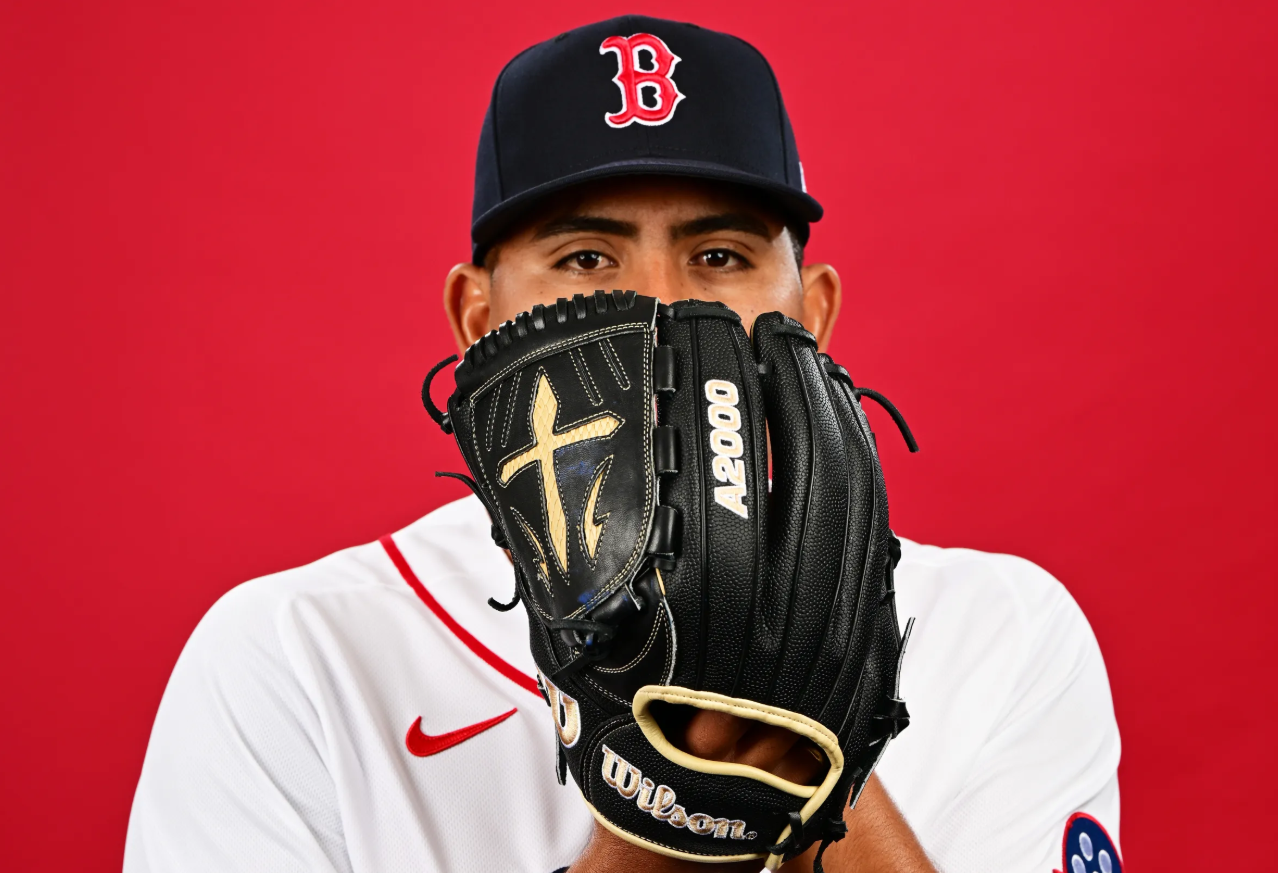
The Boston Red Sox didn’t commit five years and $130 million to Ranger Suárez because of what he might accomplish in a handful of spring training outings. They didn’t make that kind of financial and competitive investment so he could top early Grapefruit League stat sheets in late February or early March.
The organization made that move with something far bigger in mind, October. Stability. Postseason reliability. A pitcher capable of anchoring meaningful games when the lights are brightest and the margins are razor thin.
Still, first impressions always carry a certain weight.
Suárez’s debut in a Red Sox uniform wasn’t disastrous by any stretch, but it also wasn’t the kind of seamless, dominant introduction that instantly erases all curiosity. Taking the mound against the Pittsburgh Pirates, he logged just 1.2 innings of work. Over that short stint, he threw 33 pitches, and 22 of them were strikes. From a purely statistical standpoint, that strike percentage appears solid. It suggests control. It suggests command. It hints at efficiency.
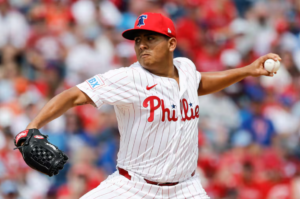
But baseball rarely tells its full story through surface numbers alone.
While Suárez limited the damage to just three hits, the outing carried moments of unevenness. There were flashes of sharpness pitches that darted to the edges, sequences that hinted at the veteran poise the Red Sox are counting on. Yet there were also stretches where his rhythm looked slightly out of sync. The command was there at times, but not consistently locked in. It felt less like a finished product and more like a work in progress still calibrating.
The most notable blemish came in the form of a two run home run surrendered to highly regarded prospect Konnor Griffin. For a young hitter trying to make an impression, it was a loud statement swing.
For Suárez, it was a reminder that even experienced arms can get caught when location misses by inches. The pitch wasn’t wildly off target, but it drifted into a zone that allowed Griffin to unleash the kind of powerful, confident swing that turns routine outings into headline moments.
Beyond that homer, there were a few other hard hit balls that suggested Suárez’s stuff, while competitive, wasn’t yet in midseason form. Some contact came off the bat with authority. At the same time, there were also weakly struck balls and routine outs that reflected the craftiness that has defined his career. That duality moments of sharp execution paired with brief lapses captured the essence of the appearance.
And that’s where the conversation becomes more nuanced.
Spring training, especially in the early going, is rarely about dominance. It’s about progression. Pitchers experiment with sequences. They test secondary offerings. They prioritize getting ahead in counts or working on specific mechanics rather than obsessing over run prevention. Suárez’s 33 pitches were less about immediate results and more about building a foundation. Fine tuning arm slot. Sharpening movement. Establishing feel.
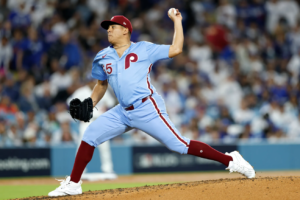
The calm that surrounds him remains intact. Suárez has long been known for his composed demeanor on the mound. There’s a quiet intensity to his game never overly animated, rarely rattled. That temperament is part of what made him so attractive to Boston’s front office. They weren’t just paying for velocity or spin rate. They were investing in resilience. In a pitcher who has navigated postseason pressure before and emerged steady.
His résumé backs that up. Over the years, Suárez has developed a reputation for grinding through tough lineups, for adjusting mid game, for refusing to let a single mistake spiral into something bigger. That mental fortitude doesn’t vanish because of one early spring homer. If anything, outings like this are part of the annual ramp up process.
Still, expectations follow big contracts. When a team spends nine figures, fans and analysts alike anticipate immediate dominance even in exhibition play. There’s a natural tendency to scrutinize every pitch, every swing, every radar reading. A 1.2 inning sample suddenly feels symbolic. A two run blast feels magnified.
But context matters.
Suárez isn’t being evaluated on February box scores. He’s being measured against what he can provide across 162 games and, ideally, deep into October. The Red Sox need durability. They need a steady hand atop or near the top of the rotation. They need someone who can halt losing streaks and absorb pressure without flinching. None of that hinges on one spring appearance.
In many ways, his debut felt like exactly what it was, an early checkpoint. The strike percentage was encouraging. The workload was controlled. The mistakes were visible but correctable. There was no panic in his body language, no unraveling after the home run. He continued to compete, continued to throw strikes, continued to work.
That’s the understated drama of Suárez’s first outing in Boston colors. On the surface, everything felt calm. The veteran presence. The measured pace. The composed expressions. Beneath that serenity, however, there was clear evidence that the process is still unfolding. The edges need sharpening. The sequences need tightening. The timing needs syncing.
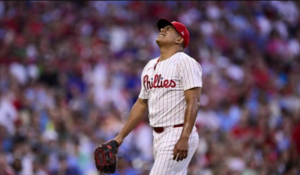
And that’s perfectly normal.
The Red Sox didn’t sign Suárez for a flawless Grapefruit League ERA. They signed him for meaningful innings when the stakes are highest. His debut wasn’t a masterpiece, but it also wasn’t a warning sign. It was a reminder that even proven pitchers require time to settle into new surroundings, new catchers, new rhythms.
If anything, the outing underscored the difference between expectation and reality. The expectation might have been instant dominance. The reality was something more grounded: a veteran arm taking its first measured steps toward what the organization truly cares about.
In the end, Suárez’s initial appearance can be summarized in three words; steady, imperfect, promising. The serenity remains. The competitive résumé remains. And the fine-tuning? That’s still very much in progress.
The Data Behind the Uneasy Debut
When asked recently about the calm, easygoing way he carries himself on the mound, Suárez responded with a joke. He said he might have to ask his parents where that unshakable composure comes from. It was a light moment, but it revealed something essential about who he is as a pitcher. His laid back presence isn’t an act; it’s woven into his personality. No matter the situation, he rarely appears rattled.
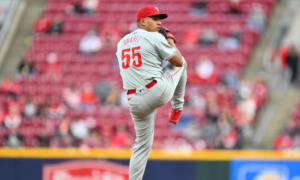
That temperament has earned admiration from those around him. His current manager, Alex Cora, has openly commended Suárez for being steady and dependable. There’s a trust that comes with knowing your pitcher won’t be overwhelmed by the stage.
Meanwhile, Phillies president Dave Dombrowski reportedly emphasized the same point, even joking that Suárez barely seems to have a pulse in tense moments. In high pressure environments where adrenaline can cause mechanics to unravel, Suárez’s even keeled approach is seen as a competitive advantage.
Still, while the mental side of his game appears intact, the early numbers from his first outing in Fort Myers suggest there’s room for refinement. It’s only spring training, and pitchers are notoriously at different stages of readiness in February. Arms are still building strength, timing isn’t fully locked in, and velocity often ticks up gradually as camp progresses. Even so, the data provides a snapshot that’s difficult to ignore.
Statcast readings from the appearance showed his four seam fastball averaging 90.3 mph, a slight dip from what he produced last season. His sinker wasn’t far behind at 89.4 mph. Velocity alone doesn’t define Suárez’s effectiveness he has never been a flamethrower but neither offering generated a swing and miss in that outing. For a pitcher who relies heavily on precision and movement, that absence of whiffs stands out.
More concerning than the radar gun readings, however, were the shape metrics. His four seam fastball spin rate dropped by more than 60 RPM compared to last year’s average. Spin rate influences how a pitch behaves in flight how it resists gravity, how sharply it breaks, and how deceptive it appears to hitters.
A reduction of that magnitude, even in a small sample, can affect the quality of contact allowed. The cutter also saw a noticeable decline, with spin down by nearly 200 RPM. Across his repertoire, the induced vertical break measurements fell well short of his 2025 norms.

Context matters, of course. It’s February baseball. Pitchers are experimenting with grips, fine-tuning mechanics, and gradually ramping up intensity. For someone like Suárez, whose success is built more on craft than raw power, early fluctuations can be part of the process.
He doesn’t overpower hitters; he outmaneuvers them. He survives on pinpoint command, subtle movement, and the ability to generate weak contact. If those elements are slightly off, his margin for error shrinks considerably.
That narrow margin was visible in the contact profile from the outing. Five balls were put into play against him. Three were struck with authority. The average exit velocity he allowed was 96.7 mph, a figure well above what Boston likely envisioned when they brought him aboard. Hard hit balls tend to translate into damage over time, and suppressing that type of contact is critical for a pitcher with his profile.
Yet the performance wasn’t without positives. Suárez struck out two hitters and did not issue a single walk. His control, a hallmark of his game, appeared sharp. He consistently worked ahead in counts, delivering first pitch strikes across the board. That kind of sequencing reflects preparation and intent. Even if the raw stuff wasn’t overpowering, he demonstrated the ability to execute a plan.
That plan seemed purposeful. Against right handed batters in particular, he leaned heavily on his breaking pitches, especially the sweeper. The pitch underperformed for him last season, and this outing appeared to serve as a testing ground to reestablish its shape and effectiveness. Spring training often functions as a laboratory, and Suárez appeared to be in experimentation mode rather than full attack mode.
The result was a methodical, controlled appearance that lacked flash. There were no eye popping strikeout totals or dominant swings and misses. Instead, it was a measured effort focused on building blocks. The command was there. The composure was evident. What was missing was the crisp movement and sharpness that typically elevate his arsenal.
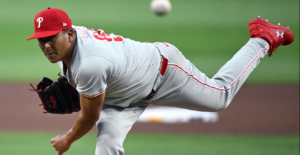
For Boston, the hope is that these early readings are simply part of the ramp up period. Suárez’s game has always been about precision over power. When his pitches have the proper life when the four seamer carries just enough ride, when the cutter bites late, when the sweeper sweeps with conviction he can frustrate lineups and induce soft, manageable contact. But if the movement lags, hitters gain a clearer look, and solid contact follows.
There’s no panic in late February, especially for a pitcher known more for steadiness than volatility. The mental makeup remains a strength. Coaches and executives alike continue to believe in his poise. The statistical indicators from one outing don’t override years of demonstrated reliability. Still, the data underscores the importance of fine tuning.
In essence, Suárez’s debut this spring was a study in contrasts. The mindset was calm and controlled. The command was intact. The strike throwing ability was evident. Yet the raw characteristics of his pitches the velocity, spin, and movement didn’t quite align with last year’s standards. It was a clean outing in terms of walks and composure, but not one defined by dominance.
As camp progresses and his arm strength builds, the expectation is that those underlying metrics will trend upward. If they do, his natural steadiness and tactical approach should once again make him a reliable piece of the rotation. For now, the outing can be viewed as a deliberate step in the process encouraging in its control, but still searching for the sharper edge that transforms calm efficiency into true effectiveness.
October Is the Real Evaluation
What makes this situation particularly compelling is that Suárez’s entire narrative with the Red Sox revolves around one thing, October.
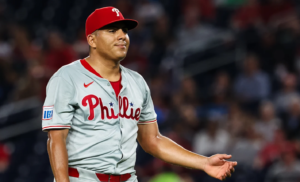
His reputation wasn’t built on dominant Grapefruit League outings or eye popping regular season stat lines. It was forged under postseason pressure. Across 11 career playoff appearances, he has compiled a sparkling 1.48 ERA, consistently delivering when the stakes are highest. He has stared down elite lineups on baseball’s biggest stage and come away unshaken.
That résumé is precisely why Boston pivoted toward him after losing Alex Bregman in free agency. The decision wasn’t about star power or headlines. It was about identifying someone who could handle October innings alongside Garrett Crochet and Sonny Gray when every pitch carries the weight of a season.
Suárez himself admitted that he felt a hint of nervous energy before taking the mound in a Red Sox uniform for the first time. That honesty was refreshing. No matter how seasoned a pitcher may be, debuting for a franchise steeped in history carries an emotional charge. The buzz that surrounds Fenway Park doesn’t simply vanish during spring training; it travels south to JetBlue Park and lingers there as well. The expectations are immediate and unmistakable.
Yet when you zoom out and assess the outing as a whole, it didn’t feel like a statement performance. It felt more like a checkpoint. Suárez threw 33 pitches and dipped into a six-pitch mix, methodically working through his arsenal. The radar gun offered modest encouragement.
His changeup ticked up slightly in velocity. His curveball showed a more noticeable jump over two miles per hour faster than his average from last season. Those are subtle but meaningful indicators. They suggest there may be incremental growth underway, small signs that adjustments are taking hold.
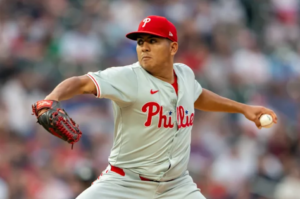
Still, this wasn’t the type of debut that silences doubts or electrifies a fan base. It wasn’t meant to be. March success doesn’t hinge on Suárez being at full throttle. The Red Sox can navigate early season games without leaning heavily on him.
What they truly need will reveal itself months from now. They need the version of Suárez who can induce a critical double play in the eighth inning of a postseason game. They need the competitor who halts rallies before they spiral out of control. They need the pitcher who thrives when chaos threatens.
Right now, the numbers suggest he’s still finding his rhythm. The outing hinted at progress but also at rust. That’s hardly surprising for this time of year. Spring training is about refining mechanics, rebuilding feel, and gradually increasing intensity. It’s rarely about dominance.
What remains intact, however, is his demeanor. Suárez carried himself with the same steady presence that has defined his playoff appearances. There were no visible cracks in composure. No overreactions. No frantic adjustments. That calm exterior has long been part of his identity, and Boston is counting on it translating seamlessly when pressure mounts.
The lingering question the one that can’t be answered in February is whether the “bulldog” mentality will surface when it truly matters. Postseason baseball exposes every weakness. It demands conviction and resilience. Suárez has demonstrated those traits before, but he will need to prove it again in a new uniform, under brighter lights and heightened scrutiny.
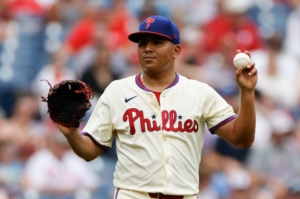
For a team with championship aspirations, this debut landed somewhere in the middle. It didn’t spark concern. There were no glaring issues with velocity, mechanics, or health. But it also didn’t provide overwhelming reassurance. Instead, it underscored a simple truth: even the most logical free agent additions require a period of adjustment.
Boston didn’t sign Suárez to dominate February box scores. They invested in the pitcher who has excelled in October. They signed the version of him that neutralizes dangerous hitters in postseason matchups, that pairs with Crochet and Gray to form a formidable playoff trio, that embraces the moment rather than shrinking from it.
At the moment, though, that version feels like it’s still loading. The February edition of Suárez is a project in motion experimenting with pitch speeds, rediscovering command, fine tuning sequencing. It’s a necessary phase, even if it lacks spectacle.
The Red Sox are betting that when autumn arrives, the refinement will be complete. They’re wagering that the postseason track record isn’t a fluke but a preview. For now, patience is required. The foundation appears stable, but the finishing touches are still being applied.
Boston didn’t buy a spring training headline. They bought an October weapon.
And as of now, that weapon is still being sharpened.