It has become widely recognized around the National Football League that the Buffalo Bills are still searching for a true No. 1 wide receiver. While the team remains competitive and boasts a talented roster, the absence of a dominant, game changing presence on the outside has been noticeable.
In today’s NFL, having a premier pass catcher who can consistently stretch the field, win contested catches, and draw extra defensive attention is often the difference between a deep playoff run and falling short. For Buffalo, that missing element has lingered since their decision to move on from their previous star.
The Bills’ last bona fide elite wide receiver was Stefon Diggs, who provided explosive production and reliability during his time with the team. His chemistry with the quarterback elevated the offense and made Buffalo one of the league’s most feared passing attacks.
However, in 2024, the organization made the surprising choice to trade Diggs to the Houston Texans, signaling a shift in direction. While the move may have made sense from a financial or long term roster building standpoint, it left a significant void in the receiving corps that has yet to be fully addressed.
Now, as another offseason unfolds, the Bills find themselves at a critical juncture. This period offers a legitimate chance to secure a high impact wide receiver who can immediately upgrade the offense. There are typically two primary avenues for acquiring that kind of talent, the draft or the trade market.
Each path carries its own risks and rewards. Selecting a receiver in the draft can provide long term value and cost control, but it also requires patience and development. Even highly touted prospects can take time to adjust to the speed and complexity of the professional game.
On the other hand, pursuing a proven veteran via trade offers more certainty. An established wide receiver with a track record of success can step in right away and command defensive respect from Week 1. The challenge, of course, lies in the compensation required.
Trading for a star often means parting with valuable draft capital or key contributors. The front office must carefully weigh whether sacrificing future assets aligns with their championship aspirations in the present.
If Buffalo chooses to explore the trade route, one intriguing possibility could involve the Minnesota Vikings. The Vikings have consistently featured dynamic offensive weapons, and depending on their own roster strategy, they could be open to discussions involving one of their standout receivers. While such a move would depend on many factors contract situations, team direction, and asking price it is the type of bold transaction that could reshape Buffalo’s offensive outlook.
Ultimately, the Bills understand that competing at the highest level requires more than just solid depth; it demands difference makers. A true top tier wide receiver can alter defensive game plans, create opportunities for teammates, and tilt close games in Buffalo’s favor.
Whether through a carefully calculated draft selection or a headline grabbing trade, this offseason represents a pivotal opportunity. If the Bills are serious about maximizing their championship window, addressing the wide receiver position will likely remain at the top of their priority list.
Bills Trade Proposal to Land Jordan Addison
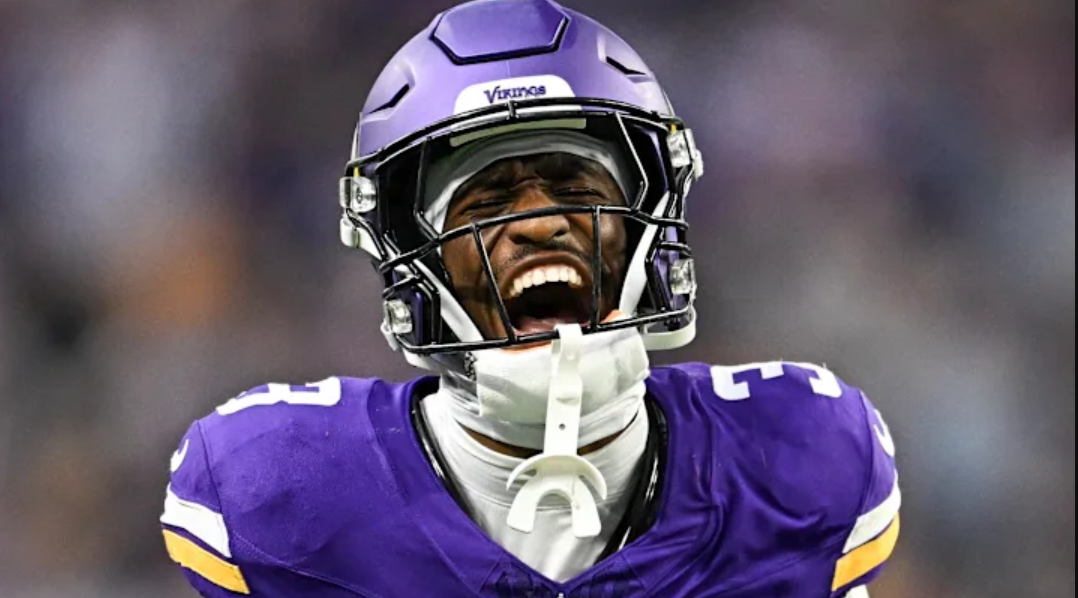
The Minnesota Vikings are not expected to entertain the idea of dealing star wideout Justin Jefferson under any realistic circumstances, but the situation may not be quite as clear when it comes to Jordan Addison.
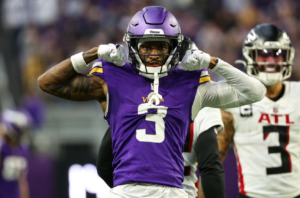
While Jefferson remains the unquestioned focal point of Minnesota’s passing attack and a foundational piece of the franchise, there is at least some speculation that the organization could evaluate its options with Addison if the right offer presented itself.
If the Minnesota Vikings were to test the market for Addison, one proposed scenario has already begun circulating. On Friday, Alex Ballentine of Bleacher Report outlined a hypothetical trade framework that would send the young receiver to the Buffalo Bills.
In this suggested deal, Minnesota would receive a 2026 second round draft pick (No. 60 overall) along with a conditional 2027 selection. That future pick would begin as a fifth rounder but could improve depending on Addison’s performance and other potential benchmarks. In return, Buffalo would acquire Addison, adding another playmaker to its offense.
The idea behind the proposal is rooted in roster construction and long-term planning for both franchises. From Minnesota’s perspective, the front office must soon make a decision regarding Addison’s fifth year option. That deadline forces teams to weigh a player’s production, development, off field considerations, and projected salary against the broader salary cap outlook.
Addison has flashed high level talent and playmaking ability during his time in Minnesota, but he has also encountered multiple off field issues that could influence how the organization evaluates his future. The Vikings must determine whether his overall value on and off the field aligns with their long term vision.
On the other side of the equation, Buffalo has an obvious motivation to explore adding another dynamic target. Ballentine argued that the Bills’ need for a difference maker at receiver is more pressing than the team publicly acknowledged in the previous offseason.
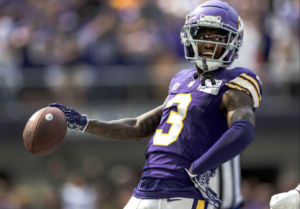
Despite internal confidence and outward messaging that downplayed concerns, the offense has at times lacked a consistent separator who can defeat tight man coverage and create explosive plays outside of structure.
The Bills have invested in young talent, including Keon Coleman, but early returns have not fully met expectations. Coleman has shown flashes of promise, yet he has struggled with consistency and has not developed into the type of receiver who can reliably win one on one against top defensive backs. Even at his peak, he profiles more as a complementary option than as a true coverage breaker who can consistently tilt coverage in his quarterback’s favor.
That dynamic becomes especially important when considering Buffalo’s offensive identity. Quarterback Josh Allen thrives when he has weapons capable of creating separation and extending plays.
His ability to improvise, move outside the pocket, and fire the ball into tight windows is maximized when receivers can uncover quickly or make defenders miss after the catch. Without a steady, explosive presence beyond the team’s primary target, opposing defenses can crowd passing lanes and apply greater pressure.
Adding Addison would theoretically address that concern. He has demonstrated an ability to stretch the field vertically while also showing refined route running skills in intermediate areas.
His quickness off the line and natural body control allow him to challenge defensive backs in a variety of ways. In Buffalo’s offense, he could slot into a role that demands speed, agility, and the capacity to punish single coverage. For a team looking to keep pace in a competitive AFC landscape, that kind of addition could prove significant.
From Minnesota’s standpoint, however, the calculus is more nuanced. Trading a young receiver with proven production is never a simple decision. Addison has already displayed chemistry within the offense and has contributed meaningfully opposite Jefferson. Moving on from him would likely signal confidence in other pass catching options on the roster or a belief that the draft capital acquired could be leveraged to address multiple needs.
The inclusion of a second round pick in 2026 gives Minnesota a valuable asset with flexibility. Second round selections often produce impact starters at a fraction of veteran market cost.
Coupled with a conditional 2027 pick that could escalate based on Addison’s success in Buffalo, the proposed package offers both immediate and future value. That structure allows the Vikings to hedge risk: if Addison thrives elsewhere, they are compensated more substantially; if he struggles, the cost to Buffalo remains modest.
Ultimately, much of this discussion remains speculative. There has been no firm indication that Minnesota is actively shopping Addison, and the team may very well decide that retaining him is the best course of action. Yet proposals like the one floated by Ballentine highlight how fluid roster building can be in today’s NFL. Financial decisions, contract timelines, locker-room considerations, and schematic fits all intersect when front offices evaluate talent.
For Buffalo, the appeal lies in accelerating its championship window by surrounding its quarterback with as much firepower as possible. For Minnesota, the question centers on sustainability and long term roster balance. Whether or not such a trade ever gains real traction, the concept underscores the delicate decisions teams face when weighing potential against stability.
As the offseason progresses and option deadlines approach, Minnesota will have to clarify its stance. Addison’s talent is undeniable, but so is the complexity of the situation. In a league where timing and asset management are critical, even a player with clear upside can become part of broader strategic conversations.
Buffalo Could Look to Get Addison Back to His Rookie Self
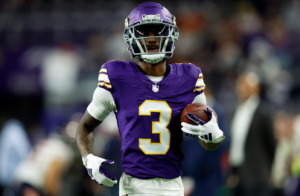
Over the last three seasons, Addison has been a steady contributor for the Minnesota Vikings, compiling 2,396 receiving yards and finding the end zone 22 times across 46 appearances. Those numbers reflect the kind of early promise that made him one of the more intriguing young wideouts in the league. Yet, while his overall production since entering the NFL remains respectable, his trajectory has not been entirely linear.
In the most recent campaign, Addison was limited to 14 games and posted 610 receiving yards with just three touchdowns. That output marked a noticeable dip compared to the impact he made as a rookie. Back in 2023, he burst onto the scene with an eye catching debut season, hauling in 10 touchdown receptions and quickly establishing himself as a dynamic scoring threat.
His ability to stretch the field, separate from defenders, and capitalize in the red zone made him an integral part of the Vikings’ offensive structure. Since that breakout year, however, he has struggled to consistently replicate that same level of production.
A change of scenery could potentially reignite his career. If Addison were to line up with a quarterback of Josh Allen’s caliber in Buffalo, the pairing might unlock the version of the receiver that flashed so brightly in his first season. Allen’s arm strength, improvisational ability, and willingness to push the ball downfield could complement Addison’s route running and playmaking skills.
In the right offensive system, with a passer capable of extending plays and delivering accurate throws into tight windows, Addison could regain the confidence and rhythm that fueled his rookie success.
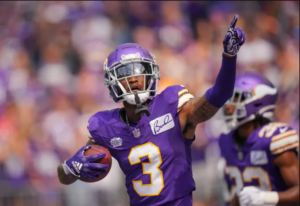
Still, there are contractual considerations that complicate the picture. Addison is entering the final year of his current deal. While the Bills would have the option to exercise a fifth year extension for the 2027 season, that decision would carry long term financial implications.
Committing to him beyond the upcoming season would only make sense if he demonstrates that he can return to, or surpass, the form he displayed earlier in his career. Otherwise, Buffalo might hesitate to tie up future cap space in a player whose recent production has trended downward.
As noted by Ballentine, if the Vikings are uncertain about locking Addison into a long-term extension, he could become an appealing trade piece. For Buffalo, the financial aspect of acquiring him would not be overly burdensome in the short term.
His projected $4.4 million cap hit is manageable, even for a team that must be mindful of its spending. The Bills could absorb that figure without drastic roster reshuffling and then evaluate his fit within their system before making any significant contractual commitments.
That flexibility could prove valuable. Buffalo does not currently enjoy an abundance of salary cap space, and the front office must address several roster needs if it hopes to finally break through in the postseason. The team has repeatedly come close to advancing deep into the playoffs, only to fall short against elite competition.
Adding a talented receiver at a relatively modest cost might represent a strategic way to bolster the offense without sacrificing financial stability. Rather than splurging on a top tier free agent with a hefty price tag, the Bills could pursue a more cost effective option in Addison one who still carries upside and is young enough to grow alongside Allen.
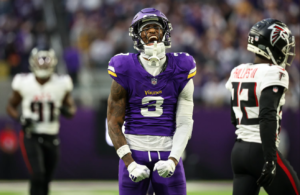
At the same time, Buffalo’s front office might consider other avenues to strengthen the wide receiver position. One possibility would be trading up in the first round of the draft. Currently holding the 26th overall pick, the Bills could package that selection with a second round pick to climb higher and secure one of the draft’s top receiver prospects. Such a move would signal a long term commitment to surrounding Allen with elite playmakers and could provide the team with a young, controllable asset on a rookie contract.
Ultimately, Buffalo has several potential paths to upgrade its receiving corps this offseason. Whether through a trade for a player like Addison, a bold draft day maneuver, or another creative transaction, the organization appears intent on addressing a key offensive need. The decisions made in the coming months will reflect a delicate balance between immediate competitiveness and long term sustainability.
Addison’s situation adds another layer of intrigue to the offseason landscape. He has already shown that he can thrive at the professional level, particularly when given opportunities to operate as a featured red zone threat.
The question is whether his recent dip in production represents a temporary setback or a more permanent plateau. If Buffalo believes in his ability to rebound especially with a quarterback like Allen delivering the football the risk might be worth taking.
In the end, the Bills’ approach will reveal how aggressively they intend to chase a championship window that remains open but demanding. With Allen in his prime, the margin for error is slim.
Acquiring the right wide receiver could be the missing piece that helps the team overcome its playoff frustrations. Addison, with his blend of proven performance and untapped potential, may be one of several options under serious consideration as Buffalo maps out its strategy for the season ahead.