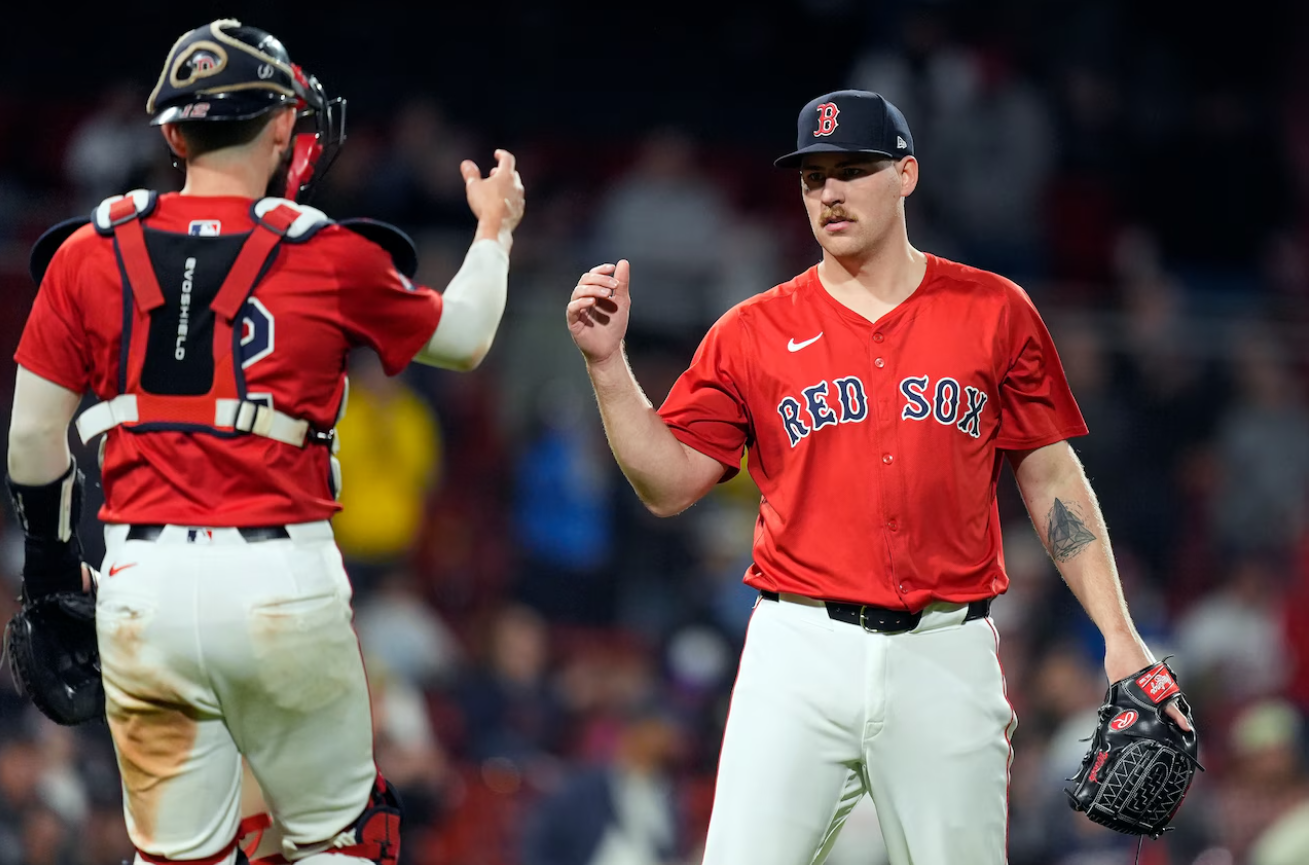
The Philadelphia Phillies experienced a notable change to their pitching staff during the offseason when left handed starter Ranger Suárez signed with the Boston Red Sox. Suárez had been an established part of the Phillies’ rotation, and his departure represented a loss of continuity for the club.
Even so, despite losing a key starter, the Phillies’ starting rotation remains largely intact and continues to be viewed as a solid group entering the upcoming season. While the overall structure of the rotation is still considered stable, the organization may benefit from strengthening its depth to guard against potential issues that could arise over the course of a long season.
One concern facing the Phillies is the health status of Zack Wheeler. Wheeler has been one of the most important pitchers in the rotation, but there is a possibility that he could miss time at the beginning of the season. Any delay in Wheeler’s availability would place additional strain on the rest of the pitching staff, particularly early in the year. Because of this uncertainty, the Phillies may need to prepare for scenarios in which their rotation must function without one of its most reliable arms.
Taijuan Walker is another pitcher whose role carries some uncertainty. Walker showed improvement last season compared to previous performances, but his tenure with the Phillies has been marked by inconsistency. While he was more effective during the most recent campaign, his overall track record with the team suggests fluctuating results. This inconsistency raises questions about how heavily the Phillies can rely on him as a full time starter without additional support in the rotation.
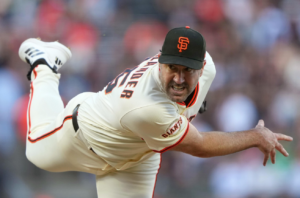
Andrew Painter is expected to make his major league debut next season, and his arrival is anticipated to provide a boost to the pitching staff. However, Painter is still unproven at the major league level. While he is highly regarded, there is no guarantee that he will perform at a star level immediately.
Many young pitchers require time to adjust to major league competition, and the Phillies must consider the possibility that Painter’s transition could involve challenges or limitations. If Painter does not establish himself quickly, the Phillies would need alternative options to cover innings and maintain rotation stability.
Given these factors, the Phillies appear to be in a position where adding pitching depth could be beneficial. However, the team is not necessarily expected to pursue a high cost, top tier starter. An expensive acquisition such as Framber Valdez may not be required to address the team’s needs. Instead, the Phillies could look toward a more cost effective solution that still provides experience and reliability.
One potential option is veteran right hander Justin Verlander. Verlander is entering his 21st major league season, and while he is no longer considered the dominant ace he once was earlier in his career, he remains a capable pitcher. Despite his age, Verlander has continued to contribute effectively at the major league level. During the previous season, he made 29 starts and recorded a 3.85 earned run average, demonstrating that he can still provide quality performances.
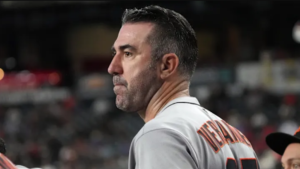
Verlander’s potential fit with the Phillies has been noted by national media outlets. Fox Sports identified Philadelphia as a possible landing spot for the veteran pitcher, citing both roster construction and financial considerations.
According to Fox Sports, signing Verlander could lead to adjustments within the Phillies’ pitching staff. One possible outcome would be shifting Taijuan Walker into a bullpen role on a full time basis. Walker already has experience pitching out of the bullpen, as he made 13 relief appearances last season. This prior usage suggests that a transition to the bullpen could be a feasible option if the Phillies were to add another starter.
From a financial perspective, Verlander is expected to be relatively affordable given his age and stage of career. Fox Sports suggested that he could potentially sign a one year contract valued at approximately $10 million. Such a deal would allow the Phillies to add an experienced pitcher without making a long term financial commitment. This approach would provide flexibility while still addressing the team’s need for additional pitching depth.
The Phillies’ recent postseason results provide additional context for the importance of roster depth. The team has been eliminated in the National League Division Series in each of the past two seasons. While the Phillies have reached the playoffs during that span, advancing further has remained a challenge. Despite these postseason exits, much of the team’s core remains intact. The lineup continues to feature established players such as Bryce Harper, Kyle Schwarber, and Trea Turner, who represent significant positional talent.
In addition to the offensive core, the Phillies’ rotation still includes key contributors capable of supporting a competitive season. With much of the roster structure unchanged, the Phillies remain positioned to contend for a pennant. However, the difference between postseason advancement and early elimination often comes down to execution and preparedness, particularly in high pressure situations.
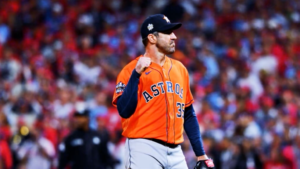
Ensuring that the team has reliable depth across the roster is an important part of that preparation. Pitching depth, in particular, can play a critical role over the course of a season and into the playoffs. Injuries, workload management, and performance fluctuations are common challenges, and having experienced options available can help mitigate their impact.
Verlander’s experience stands out in this regard. He is widely regarded as one of the most accomplished pitchers of his era and is considered a future Hall of Famer. His postseason résumé alone adds to his value as a potential acquisition.
Over the course of his career, Verlander has appeared in 38 postseason games, providing him with extensive experience in playoff environments. He has reached the World Series five times, reflecting sustained involvement in deep postseason runs.
In postseason play, Verlander has posted a career earned run average of 3.58. This performance indicates his ability to compete effectively against high level opponents in high stakes situations. His familiarity with postseason pressure could be beneficial for a Phillies team that has reached the playoffs but has not advanced beyond the Division Series in recent years.
Verlander’s individual accolades further highlight his career accomplishments. He has won the Most Valuable Player Award and has been named a Cy Young Award winner three times. He has also won two World Series championships and has led his league in earned run average on two occasions. Additionally, Verlander achieved the pitching Triple Crown, an honor awarded to pitchers who lead their league in wins, earned run average, and strikeouts in the same season.
Among active players, Verlander ranks at the top in several major statistical categories. He is the active leader in Baseball Reference Wins Above Replacement (bWAR), innings pitched, and strikeouts. These milestones reflect both his longevity and sustained performance over more than two decades in Major League Baseball.
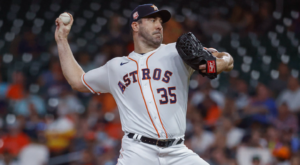
While Verlander is no longer the dominant pitcher he was earlier in his career, his track record suggests he can still contribute in a meaningful role. For the Phillies, his presence could help stabilize the rotation, provide insurance against injuries or underperformance, and offer veteran leadership to a pitching staff that includes younger arms.
As the Phillies evaluate their options, the focus remains on assembling a roster capable of competing deep into the postseason. The team does not necessarily require a marquee signing to achieve this goal. Instead, adding a veteran pitcher who fits both the roster needs and financial parameters could represent a practical solution.
In this context, Justin Verlander aligns with what the Phillies may be seeking. He offers experience, postseason pedigree, and continued effectiveness at a manageable cost. For a team that has maintained its core talent and remains in contention, addressing depth concerns could be a key factor in determining how far it advances in the upcoming season.