Around Major League Baseball, there is a growing belief that the Baltimore Orioles are not finished shaping their roster for the upcoming season. While the team has already made several moves during the offseason, many within the industry assume that additional changes are still coming, particularly when it comes to the pitching staff. More specifically, the organization appears intent on strengthening its starting rotation, which remains an area of focus as front offices across the league continue to explore upgrades wherever possible.
What remains unclear, however, is exactly which direction Baltimore intends to go. Reports and rumors suggest that the Orioles have cast a wide net rather than locking in on one specific pitcher. Instead of aggressively targeting a single arm and closing a deal, they seem to be surveying multiple options, monitoring the market, and weighing how different pitchers might fit into both their short term plans and their long-term vision. This approach has made it difficult to pin down exactly who the Orioles are most serious about pursuing.
One name that continues to surface in connection with Baltimore is Framber Valdez. Widely regarded as the top remaining pitcher on the free agent market, Valdez has been linked to the Orioles for several months. Industry chatter indicates that the team has already made an offer, though the specifics of that proposal have not been publicly confirmed. Details regarding the length of the contract, the average annual value, and any potential incentives remain murky, leaving plenty of room for speculation.
What does seem clear is that Valdez and his representatives may be holding out for something more substantial. Given his track record and status as a proven frontline starter, it would not be surprising if Valdez is waiting to see whether another team steps forward with a stronger offer, either in terms of guaranteed money or overall commitment. From Baltimore’s perspective, patience may be key, as committing significant resources to a single pitcher is not a decision to be made lightly.
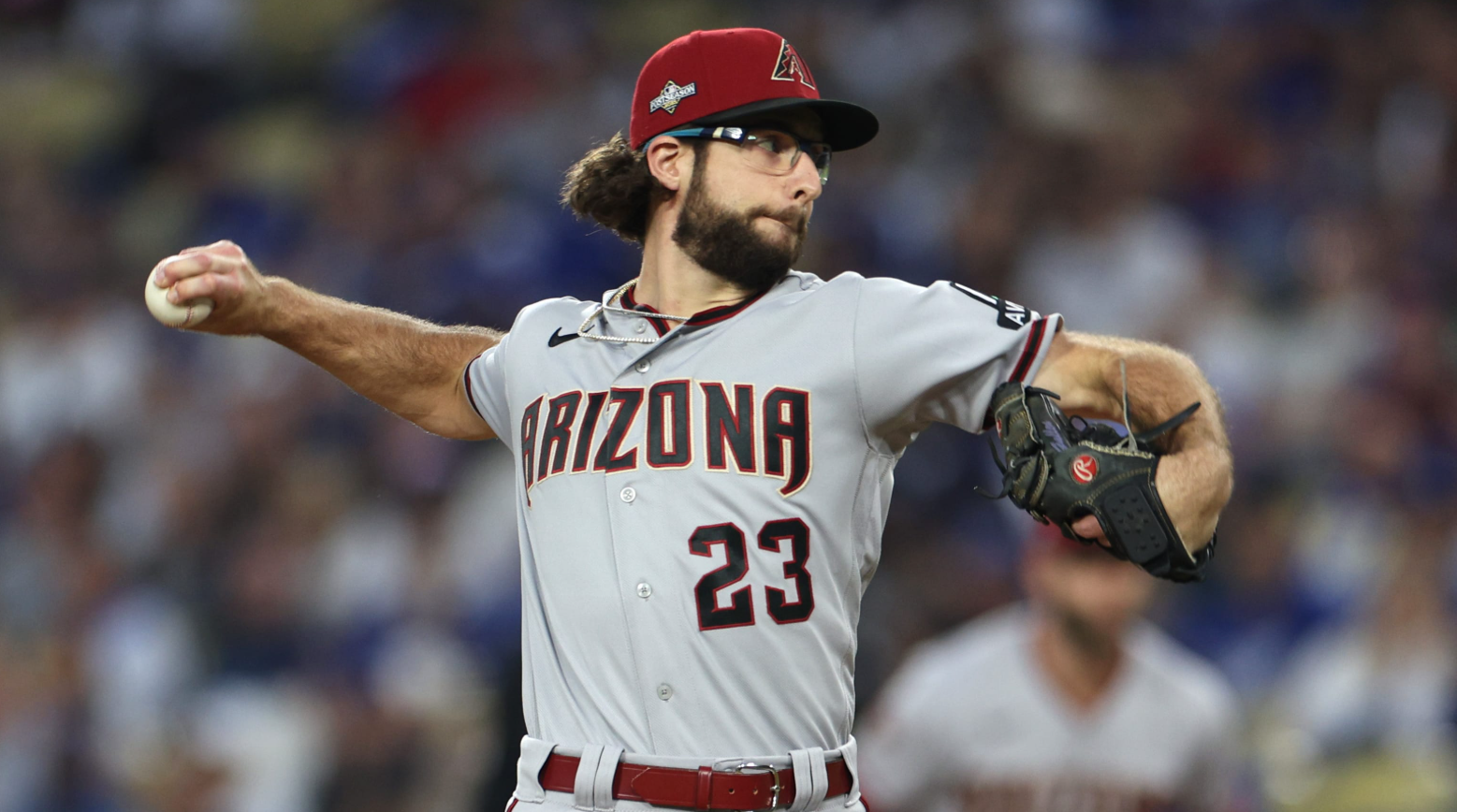
While Valdez remains the most prominent name tied to the Orioles, he is far from the only option being discussed. Hovering quietly in the background of these conversations is another intriguing free agent right hander Zac Gallen. Not long ago, Gallen appeared to be on track for a major payday. Entering the previous season, his résumé suggested he would be one of the most sought after arms available once free agency arrived.
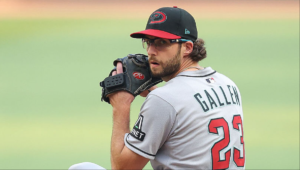
Over the three seasons prior to 2025, Gallen consistently posted earned run averages of 3.65 or better, establishing himself as one of the more reliable starters in the league. His performances during that stretch earned him Cy Young Award votes in three of the previous five years, further reinforcing the perception that he was among the game’s upper tier of starting pitchers. With that level of consistency and recognition, expectations were high that Gallen would command a significant contract once he hit the open market.
However, the 2025 season altered that narrative considerably. Gallen struggled relative to his previous standards, finishing the year with a 4.83 ERA. In addition to the elevated run prevention numbers, his strikeout rate declined for the third consecutive season, raising questions about whether his stuff had diminished or whether opposing hitters had begun to adjust more effectively. These trends introduced an element of uncertainty that was not present earlier in his career.
Complicating matters further was the qualifying offer extended to Gallen by the Arizona Diamondbacks. By attaching a qualifying offer, Arizona ensured that any team signing Gallen would have to forfeit draft compensation, adding another layer of cost to his free agency. For clubs already weighing financial commitments and long-term roster construction, that extra penalty could not be ignored, especially for a pitcher coming off a down year.
Even so, Gallen remains a legitimate major league starter with a strong body of work. Despite the blemishes on his most recent season, his overall résumé is impressive, and many teams may be willing to bet that he can rediscover his previous form. If the contract terms are reasonable, taking a chance on a rebound could prove worthwhile. After all, pitchers with Gallen’s track record do not suddenly forget how to pitch.
There is also reason for cautious optimism based on how his season progressed. While his first half was undeniably rough, during which he posted a 5.40 ERA, his performance improved significantly after the All Star break. In the second half, Gallen recorded a 3.97 ERA, a marked improvement that hinted at underlying adjustments. It is possible that he identified mechanical issues or made changes to his approach that began to pay dividends as the season went on.
If those late season improvements are sustainable, Gallen could be poised for a much stronger campaign in 2026. Teams evaluating him now must decide whether they believe the second half is more representative of what lies ahead than the struggles that defined the early portion of the year. That calculation is at the heart of his free agency and explains why opinions on his value vary so widely.
The winding path of Zac Gallen’s free agency has only added to the intrigue surrounding his market. What once appeared to be a relatively straightforward process has turned into a prolonged waiting game, marked by conflicting reports, shifting expectations, and ongoing speculation about where he might ultimately land. For a pitcher who, not long ago, seemed destined for a lucrative long term deal early in the offseason, the lack of resolution has been notable.
In early December, optimism around Gallen’s market appeared to peak. USA Today’s Bob Nightengale reported that the right hander was close to finalizing an agreement with the Chicago Cubs. According to that report, the deal would have paid Gallen approximately $22 million per season, a figure that aligned with projections based on his previous body of work. For a brief moment, it seemed as though one of the offseason’s more significant pitching dominoes was about to fall.
That narrative, however, unraveled quickly. ESPN’s Jeff Passan soon refuted the report, casting doubt on whether the Cubs were truly on the verge of signing Gallen or whether negotiations had progressed as far as initially suggested. The conflicting information underscored the uncertainty surrounding Gallen’s market and hinted that talks may not have been as advanced as some believed. As days turned into weeks, no deal materialized, and Gallen remained unsigned.
Now, more than a month after those initial reports surfaced, Gallen is still searching for a new team. The prolonged nature of his free agency has prompted questions about how teams are valuing him and whether concerns about his recent performance, declining strikeout numbers, and qualifying-offer attachment are weighing more heavily than expected. For a pitcher with his résumé, lingering on the market this long was not widely anticipated.
The most recent update on Gallen’s status came from Jon Heyman. During an appearance on MLB Network on Tuesday evening, Heyman reported that the Baltimore Orioles are among the teams showing interest in the right hander. He described the Orioles as being “in on Zac Gallen,” while also mentioning the Chicago Cubs and the possibility of a return to the Arizona Diamondbacks. This development added another layer to an already complex free agency picture.
For Baltimore, this represented a slight shift from earlier in the offseason. While the Orioles had been loosely connected to Gallen at various points, those links had generally been more speculative than substantive. Like many teams, they had been associated with nearly every available pitcher to some degree, making it difficult to determine which rumors carried real weight. Heyman’s comments, however, suggested a more concrete level of interest than had previously been indicated.
At the same time, it remains unclear how serious that interest truly is. The Orioles’ involvement could be part of a broader strategy rather than a sign that a deal is imminent. In modern free agency, teams and agents often use reported interest to influence negotiations elsewhere, creating leverage by signaling that alternatives exist. From this perspective, Baltimore’s name appearing in connection with Gallen could serve multiple purposes beyond an actual pursuit.
One possibility is that the Orioles want to send a message to Framber Valdez’s camp. By allowing it to be known that they are considering other high profile starters, Baltimore may be attempting to strengthen its negotiating position. If Valdez and his representatives believe the Orioles have viable alternatives, they may feel increased pressure to engage more seriously with Baltimore’s offer rather than waiting indefinitely for a better one to emerge.
Conversely, Gallen’s representatives could be leveraging reported interest from the Orioles to extract more favorable terms from other teams. The Cubs, who have been linked to Gallen before, might be pushed to add an extra year or increase their financial commitment if they believe another club is closing in. Similarly, the Diamondbacks could feel compelled to improve their offer if a reunion is still under consideration and competition appears to be intensifying.

In that sense, the Orioles and Gallen could be connected more by circumstance than by genuine mutual intent. Each side stands to benefit from the appearance of interest, regardless of whether a deal is truly likely. This dynamic is a familiar feature of the offseason rumor mill, where names are frequently linked as part of a larger negotiating dance rather than as a precursor to an actual signing.
Still, it would be a mistake to dismiss the possibility entirely. The Orioles do have a clear need for rotation help, and Gallen, despite his recent struggles, fits the profile of a pitcher who could benefit from a change of scenery. Baltimore’s front office has shown a willingness to bet on upside and to trust its player development infrastructure, particularly when it believes adjustments can unlock improved performance.
From that standpoint, Gallen could represent an appealing opportunity. If the Orioles’ evaluators believe his second half improvements are sustainable and that his early season struggles were the result of fixable issues, they might view him as a buy low candidate with significant rebound potential. The key, as always, would be price. If Gallen’s market has softened enough, the risk reward calculus could tilt in Baltimore’s favor.
There is also the broader context of where the Orioles currently stand as an organization. Coming off recent seasons in which they have taken meaningful steps forward, Baltimore is no longer simply rebuilding or stockpiling prospects. Expectations have shifted, and the focus has turned toward sustained competitiveness. Strengthening the rotation is a logical next step, particularly in a division that features several teams capable of scoring runs in bunches and applying constant pressure over the course of a long season.
Adding a pitcher like Gallen could help stabilize the middle or upper portion of the rotation, depending on how the rest of the staff is constructed. While he may no longer be viewed as a guaranteed ace, his ceiling remains high enough to justify serious consideration. For a team that believes it can contend, supplementing existing arms with a pitcher who has demonstrated the ability to perform at a high level in the past could make a meaningful difference.
At the same time, Baltimore must balance ambition with caution. Committing significant resources to a pitcher coming off a down year always carries risk, particularly when draft compensation is involved. The Orioles have worked hard to build organizational depth, and sacrificing future assets for a short term upgrade may not align perfectly with their long term philosophy. These competing priorities make any decision regarding Gallen especially complex.
The uncertainty surrounding Gallen’s market also reflects broader trends in how teams evaluate pitching. As front offices increasingly rely on advanced metrics and long term projections, recent performance trends can weigh heavily in contract negotiations. A declining strikeout rate, even for a pitcher with an otherwise strong résumé, raises red flags in an era where swing and miss stuff is highly valued. Teams must decide whether those indicators are warning signs or simply temporary fluctuations.
For Gallen, the challenge is convincing potential suitors that his best days are not behind him. His second half rebound offers some evidence that adjustments can still yield positive results, but skepticism remains. Teams will scrutinize his pitch usage, velocity trends, and underlying data to determine whether the improvements were meaningful or merely cosmetic. Those evaluations will ultimately shape both the length and value of any contract he receives.
Meanwhile, the Orioles continue to operate in an environment dominated by speculation. With spring training approaching, fans and analysts alike are eager for clarity. Every new report fuels debate, and every mention of Baltimore’s involvement in negotiations invites fresh interpretations. In that sense, the team’s apparent interest in multiple pitchers may be as much about optics as it is about actual roster construction.
It is also worth noting that the Diamondbacks’ presence in these discussions adds another wrinkle. A return to Arizona would offer Gallen familiarity and continuity, potentially appealing after an uneven season. For the Diamondbacks, retaining a pitcher they know well could make sense if the terms are favorable. However, the qualifying offer complicates matters, as both sides must weigh the cost of maintaining that relationship against the potential benefits of moving on.

As the offseason drags on, leverage continues to shift. Pitchers who remain unsigned face increasing pressure as opportunities narrow and teams finalize their plans. At the same time, clubs looking to upgrade may become more willing to compromise as alternatives disappear. This delicate balance creates the conditions for late signings that can reshape expectations just weeks before Opening Day.
For Baltimore, patience may ultimately be rewarded. Whether the outcome involves Valdez, Gallen, or another arm entirely, the Orioles appear content to let the market play out rather than forcing a decision prematurely. That approach carries its own risks, but it also preserves flexibility and ensures that any move made aligns with the organization’s broader strategy.
Of course, there is always the possibility that much of the reported interest amounts to little more than smoke. Free agency is notorious for generating connections that never materialize, and fans are often left sorting through rumors that lead nowhere. The constant churn of information can be exhausting, especially as spring draws closer and anticipation for actual baseball grows.
In the end, the simplest resolution would be the arrival of the regular season itself. Once games begin, speculation gives way to performance, and rumors are replaced by results. Until then, the Orioles, like many teams, remain caught in the cycle of negotiations, leverage, and uncertainty that defines the winter months.
Whether Baltimore ultimately signs Zac Gallen, lands Framber Valdez, or pivots in an entirely different direction, one thing is clear, the search for pitching help is not over. For now, all that can be done is wait, sift through reports, and hope that clarity arrives sooner rather than later. With spring training looming, many would gladly trade one more rumor for the certainty of baseball being back on the field.