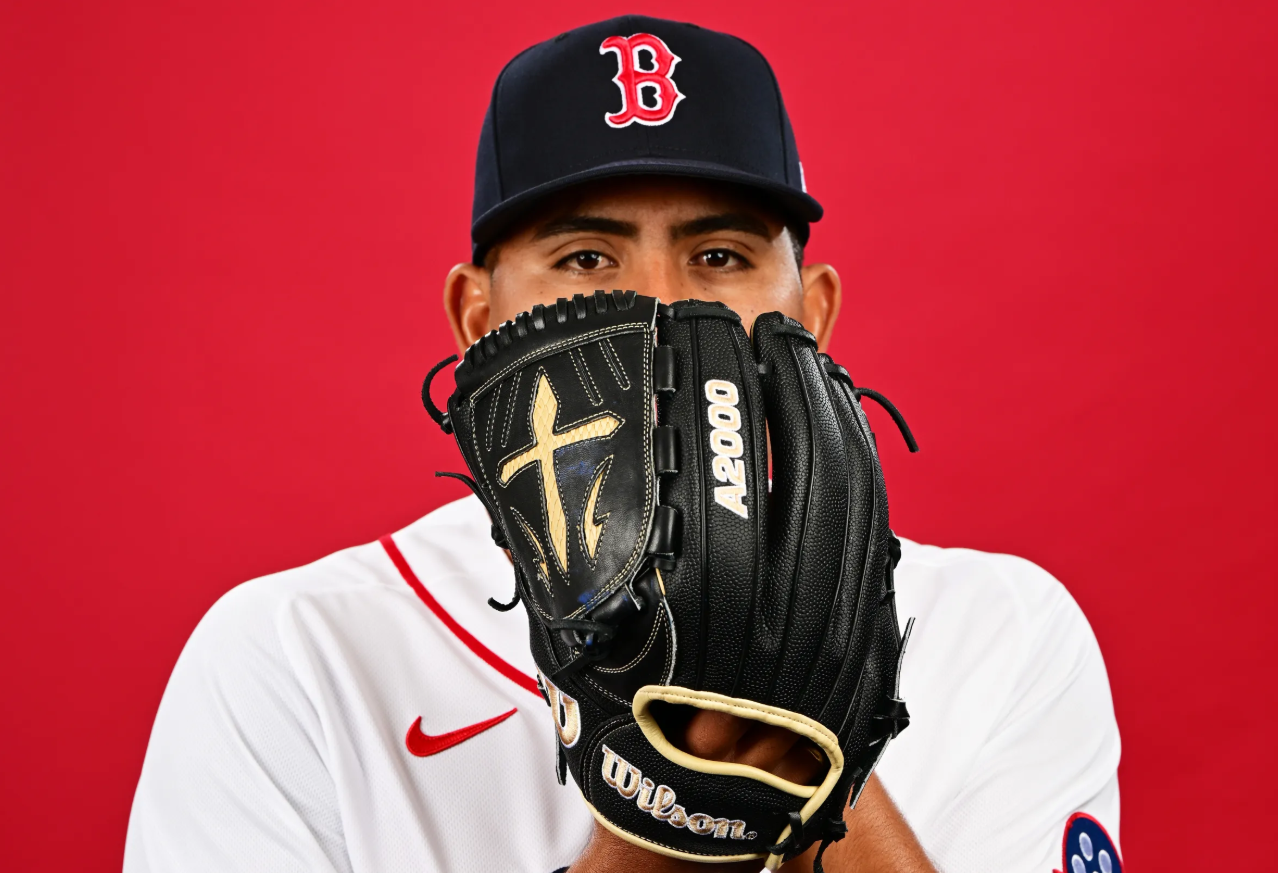
Boston Red Sox official transactions, He may not be a household name yet, but he is already drawing attention for a few notable reasons starting with a name that is only marginally simpler to say than Jhostynxon “The Password” Garcia, the player he was dealt for in a trade that also included Johan Oviedo. While Samaniego has yet to make his Major League debut, there are several factors that suggest his opportunity could be coming sooner rather than later.
At this stage of his career, He remains untested at the highest level, but his raw tools stand out in a significant way. As a left handed pitcher capable of reaching 98 miles per hour with his fastball, he brings an element that is not easy to find, particularly within a pitching group that lacks that type of power from the left side. Velocity like that immediately separates him from the pack and gives him a clear calling card as he works his way up the organizational ladder.
Another key detail fueling speculation about his future is the way the Red Sox acquired him. Boston made the trade fully aware that He would need to be placed on the 40 man roster, a commitment that teams do not make lightly.
That roster spot carries real value, and clubs are generally cautious about using it on players they do not see as having a legitimate chance to contribute in the near future. The fact that Pittsburgh had already protected Him from the Rule 5 Draft only reinforces the idea that multiple organizations view him as more than just a depth arm.
All of this context has led to growing belief that Samaniego could be on track to break through to a Major League roster as early as 2026. While nothing is guaranteed especially for a pitcher who has not yet faced big-league hitters his combination of handedness, elite velocity, and roster status places him in an intriguing position. If his development continues and he shows he can harness his stuff consistently, the path to the majors may open quickly.
In short, Samaniego’s name may still be unfamiliar, but the circumstances surrounding him suggest he is very much on the radar. With the Red Sox already investing a valuable roster spot and his power lefty profile standing out, it would not be surprising to see him emerge as a legitimate Major League option in the near future.
At this point, the answer is still uncertain, but there are several encouraging elements in his profile that make him intriguing. For starters, his fastball stands out, and when paired with his ability to generate exceptional extension, it helps explain why evaluators continue to view him as a legitimate prospect. That extension allows his velocity to play up, making the pitch more deceptive and difficult for hitters to square up. It’s a subtle trait, but one that often separates effective pitchers from ordinary ones, particularly at higher levels of competition.
Beyond pure stuff, his track record in the minor leagues provides additional reasons for optimism. He has been remarkably consistent at missing bats, finishing with fewer than one strikeout per inning only once throughout his minor league career. Even in that lone season, back in 2022, he still posted a respectable 8.84 strikeouts per nine innings, which is far from alarming. That kind of sustained swing and miss ability suggests his arsenal can challenge hitters even as he climbs the organizational ladder.
Another key strength is his ability to keep the ball on the ground. He boasts an impressive ground ball rate, an attribute that pairs well with his power fastball and helps limit damaging contact. Since being drafted in 2021 out of South Alabama, he has surrendered just nine home runs, an eye opening number that speaks to his effectiveness at suppressing hard airborne contact. In today’s game, where home runs often decide outcomes, that skill alone carries significant value.
His handedness also works in his favor. As a left hander, he belongs to a relatively small group within the Boston Red Sox organization. He is one of only five lefty pitchers on the Red Sox’s 40 man roster with relief experience, and he is the second youngest among them, trailing only Payton Tolle. That combination of youth and rarity can increase his organizational importance, especially as teams place a premium on left handed bullpen arms who can neutralize tough matchups late in games.
What further separates him from his peers is his experience pitching in high leverage situations. Aside from the veteran presence of Aroldis Chapman widely viewed as a potential closer option in 2026 he was the only left hander in the organization to log any closing experience during the 2025 season. That exposure to pressure filled innings could prove valuable as he continues to develop and adjust to more advanced competition.
Of course, there are valid concerns. He has yet to pitch above the Double A level, leaving questions about how his stuff and command will translate against more disciplined hitters. Control has also been an ongoing issue throughout much of his minor league career, occasionally limiting his efficiency and consistency. Still, not every player develops on the same timeline. It’s possible he’s simply a late bloomer, one who could take a meaningful step forward as he gains experience and refines his command.
A closer look at some of his standout offerings helps explain why there is growing intrigue around Samaniego’s future. His fastball is the obvious headliner. It already shows impressive life, and there is a realistic belief that he could eventually touch triple digits as he continues to mature physically and refine his mechanics.
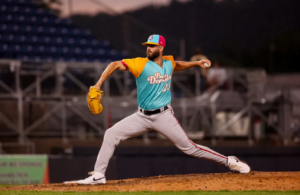
The pitch jumps on hitters in a way that immediately puts them on the defensive, and the angle created by his three quarter arm slot only adds to the deception. That arm action gives the fastball natural movement, making it difficult for opposing hitters to square up consistently. Even when batters make contact, the ball tends to stay in the yard, as the pitch’s combination of velocity and movement prevents clean, elevated contact.
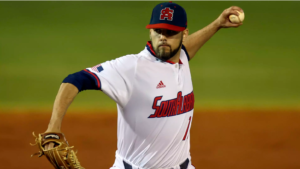
That arm slot is a major reason why Samaniego’s arsenal plays up beyond the raw radar gun readings. The ball appears to come from an uncomfortable angle, particularly for left handed hitters, who often struggle to pick it up early. The late life on his fastball creates weak contact, late swings, and plenty of off balance at bats. When paired with his secondary pitches, the fastball becomes even more effective, as hitters are forced to respect multiple movement patterns while dealing with premium velocity. Taken together, it is easy to see why evaluators believe he has the potential to become a difficult matchup at the major league level.
Given the current construction of the Red Sox roster, especially the limited number of established left handed relievers, it would not be surprising if Samaniego quickly puts himself on the team’s radar during spring training. Facing less experienced hitters in exhibition games could allow him to showcase his strengths and build confidence against near major league competition. A strong showing in camp could position him as a depth option early in the season, even if the organization ultimately decides that Triple A is the best place for him to open the year.
If Samaniego proves himself in Triple A, the path to meaningful major league innings becomes much clearer. A scenario in which he makes roughly 20 to 30 appearances over the course of the season feels realistic, provided his performance warrants it. A useful comparison might be the role Chris Murphy filled in 2023, where he wasn’t necessarily a centerpiece of the bullpen but became a valuable, flexible arm capable of handling a variety of situations. That type of usage would allow Samaniego to contribute without being overwhelmed, while also giving the team a better sense of what he can handle at the highest level.
How Samaniego performs in that kind of role could carry real significance as the season progresses toward its final months. If the Red Sox find themselves in contention late in September, having a reliable left handed option who can absorb innings could prove invaluable. Even modest contributions covering a few extra frames here and there can have a ripple effect over a long season, keeping other relievers fresh and providing matchup flexibility in tight games. In that sense, Samaniego’s development could quietly influence the club’s overall pitching stability during the stretch run.
At the same time, it is important to keep expectations grounded. If Samaniego is asked to shoulder a much larger workload or take on a significantly higher leverage role than anticipated, it may point to broader issues within the organization’s depth planning.
That would suggest shortcomings in how the roster was constructed or how previous options were evaluated, particularly considering pitchers who may have moved on to other teams by 2026. Ideally, Samaniego’s emergence would complement an already solid pitching staff rather than serve as a stopgap for unforeseen deficiencies.
For his part, Samaniego is in an excellent position to focus on refining the aspects of his game that already stand out. Continuing to harness his velocity, sharpening his command, and most importantly keeping his walk rate under control will be key factors in determining how quickly he can establish himself. His raw stuff gives him a margin for error, but consistency will ultimately decide whether he can be trusted in meaningful situations. If he can limit free passes and stay ahead in counts, his natural ability should allow him to thrive against big league hitters.
Ultimately, Samaniego has a clear opportunity in front of him. The combination of his power arsenal, deceptive arm angle, and organizational need creates a pathway for him to become a legitimate contributor down the stretch for a team with postseason aspirations. If everything breaks right, he could evolve from an intriguing arm into a dependable option out of the bullpen, quietly playing an important role when games matter most.