The Minnesota Twins made a modest but telling roster move on Wednesday, completing a trade with the Boston Red Sox that underscores both clubs’ differing offseason priorities. Minnesota acquired versatile infielder Tristan Gray in exchange for minor league catcher Nate Baez, a deal that reflects the constant churn of depth pieces that occurs on the margins of Major League Baseball rosters.
While the transaction did not generate national headlines, it represents the type of calculated maneuver front offices rely on to maintain flexibility, particularly as spring training approaches and roster decisions become increasingly urgent. For the Twins, the move adds another option to an already crowded infield mix. For Boston, it creates immediate roster clarity while bringing in a younger player with developmental upside at a premium defensive position.
Tristan Gray’s Winding Road to Minnesota
At 29 years old, Gray is no stranger to organizational change. His journey to Minnesota marks yet another chapter in a professional career defined by adaptability, resilience, and positional versatility. Since making his major league debut in 2023, Gray has suited up for multiple franchises, including the Tampa Bay Rays, Miami Marlins, and Athletics, before landing briefly with Boston and now moving on to the Twins.
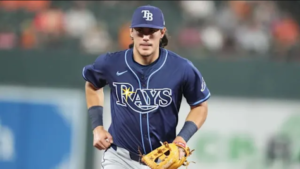
Across 47 career MLB games, Gray has produced a combined slash line of .207/.264/.369, with four home runs and 10 runs batted in. Those numbers reflect limited opportunities and sporadic playing time rather than a sustained everyday role. Still, they also hint at occasional power and the ability to contribute offensively in short bursts.
Gray’s most extensive big league exposure came during the 2025 season, when he appeared in 30 games for Tampa Bay. In that stint, he hit .231 and accounted for three home runs and nine RBIs, showing marginal improvement with increased reps. While the sample size remains small, it reinforced the idea that Gray can provide competent offense when used strategically.
His value becomes more apparent when examining his recent minor league production. Last season, Gray spent considerable time at Triple A Charlotte within the Chicago White Sox system, where he delivered one of the stronger offensive performances of his career. Over 72 games, he posted a .270 batting average, launched nine home runs, and drove in 44 runs, numbers that helped reestablish him as a legitimate depth option rather than organizational filler.
Draft Pedigree and Minor League Track Record
Gray was originally selected by the Pittsburgh Pirates in the 13th round of the 2017 MLB Draft out of Rice University, where he developed a reputation as a disciplined hitter with emerging power. Though he never ranked among top organizational prospects, his steady improvement and positional flexibility allowed him to remain relevant within multiple systems.
Over eight minor league seasons, Gray has compiled a cumulative slash line of .241/.313/.456, with 136 home runs, 165 doubles, 26 triples, and 498 RBIs across 808 games. Those totals reflect consistent power production, particularly for a player who has often been tasked with moving around the diamond rather than settling into one position.
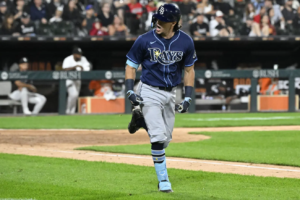
There are also clear swing and miss concerns in his profile. Gray has struck out 831 times in the minors, compared to 283 walks, a ratio that partially explains why his offensive game has not fully translated at the major league level. Even so, teams continue to value him because he combines power, experience, and defensive versatility an appealing mix for clubs seeking reliable depth.
Defensively, Gray has started games at all four infield positions in the majors. That flexibility significantly boosts his chances of sticking on a roster, especially for teams that prioritize matchup based bench usage and late inning substitutions.
A Crowded Infield in Minnesota
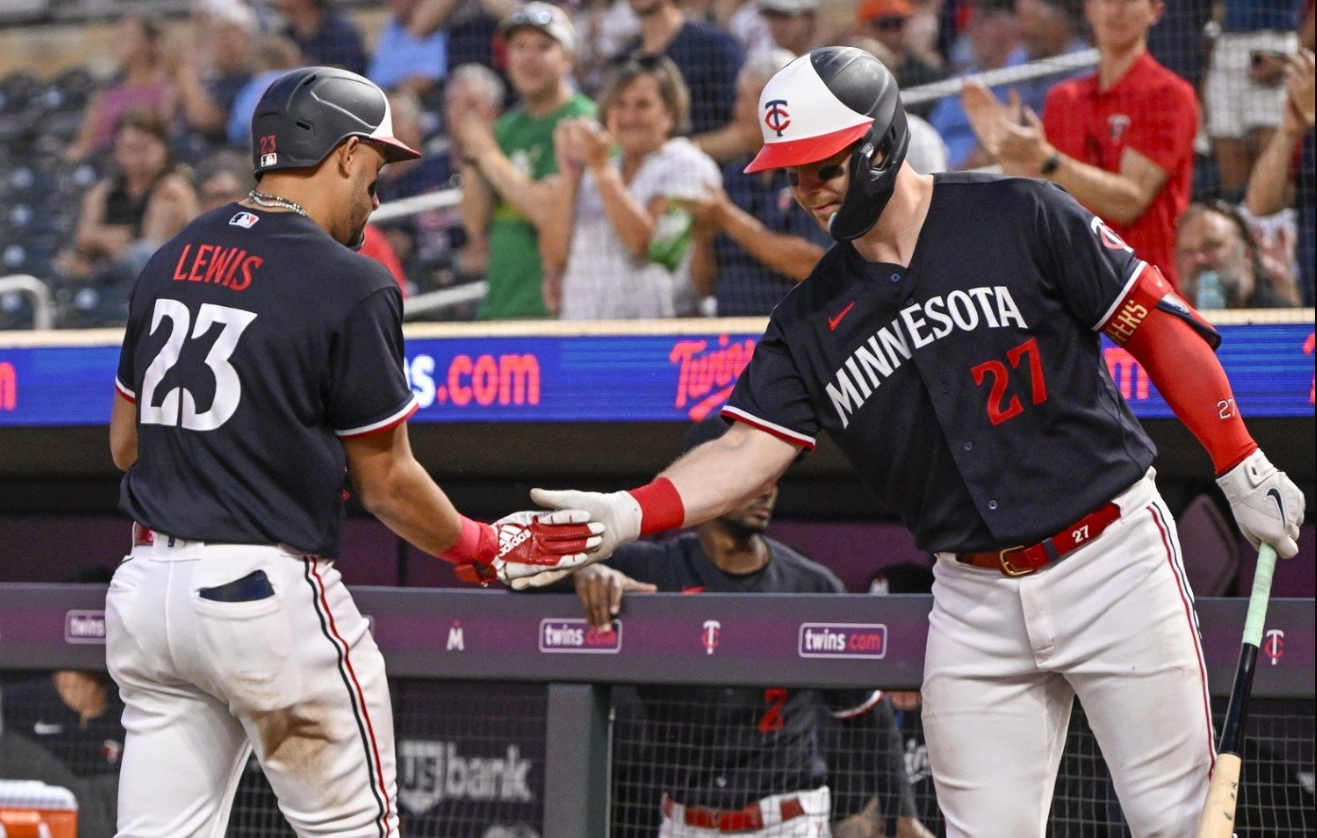
While Gray’s versatility gives him a fighting chance, the path to regular playing time in Minnesota is far from clear. The Twins’ projected infield alignment appears largely settled entering the season. First base is expected to be manned by Josh Bell, while Luke Keaschall is slated for second base duties. At shortstop, Brooks Lee remains a foundational piece, and Royce Lewis continues to anchor third base when healthy.
That established group leaves limited room for additional infielders, particularly those without minor league options or a clear everyday role. Kody Clemens is widely expected to secure one of the team’s utility spots, further tightening the competition for remaining bench positions.
As a result, Gray will enter spring training competing with a crowded group of infield capable players, including Orlando Arcia, Edouard Julien, Eric Wagaman, and Ryan Kreidler. Each brings a different skill set, whether it be defensive reliability, left handed power, or prior familiarity with the Twins’ system.
Gray’s best argument lies in his ability to cover multiple positions without significantly weakening the defense at any one spot. That trait could prove decisive if Minnesota prioritizes roster flexibility over specialized skill sets when final cuts are made.
Spring Training Will Decide His Fate
Gray’s roster status is far from guaranteed. Like many players acquired in similar transactions, his immediate future will be determined by performance during spring training rather than past accomplishments. Strong at bats, dependable defense, and situational effectiveness could push him into a bench role, while a slow start might send him back to Triple A or expose him to waivers.
The Twins have shown a willingness in recent seasons to cycle through depth options until they find the right fit. Gray’s experience across multiple organizations may help him adjust quickly, but it also means he has little margin for error.
Vidal Brujan Designated for Assignment
To make room for Gray on the 40 man roster, Minnesota designated infielder Vidal Brujan for assignment. Brujan had been claimed off waivers from the Atlanta Braves just weeks earlier, on January 14, but never appeared in a game for the Twins before being removed from the roster.
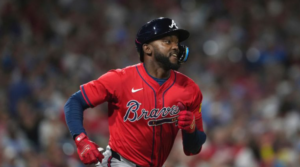
The move highlights the volatility faced by fringe roster players during the offseason. Brujan, once considered a promising speed and defense prospect, now finds himself searching for yet another opportunity to reestablish his value at the major league level.
For Minnesota, the decision reflects a preference for Gray’s positional versatility and power potential over Brujan’s speed oriented profile. It also underscores how quickly roster evaluations can change as teams reassess their depth charts.
Boston’s Motivation: Roster Mechanics and Financial Commitments
From Boston’s perspective, the trade was less about Gray’s on field contributions and more about roster logistics. The Red Sox had acquired Gray from Tampa Bay on November 18 in a straight up swap for right handed reliever Luis Guerrero, who had posted a 2.63 ERA across 22 bullpen appearances.
At the time, Boston added Gray to its 40 man roster as a depth piece, but he never appeared in a regular season game for the club. As the offseason progressed, however, the Red Sox faced mounting roster pressure while finalizing major contractual commitments.
Gray’s departure ultimately cleared the necessary space for Boston to formalize a significant addition to its rotation: a five year, $130 million contract with left handed starter Ranger Suárez. In that context, Gray became a casualty of financial and roster prioritization rather than performance evaluation.
By trading Gray, the Red Sox avoided having to designate him for assignment while recouping value in the form of a young catcher.
Nate Baez Brings Catching Depth to Boston
The return piece in the deal, Nate Baez, offers Boston a different kind of value. At 24 years old, Baez was selected by Minnesota in the 12th round of the 2022 MLB Draft out of Arizona State and has steadily progressed through the minor leagues.
Across parts of four professional seasons, Baez has produced a .263 batting average with 25 home runs and 115 RBIs, numbers that reflect consistent offensive output for a catcher. During the most recent season, he split time between High A Cedar Rapids and Double A Wichita, finishing with a .278 average, a .794 OPS, and eight home runs over 96 games.

Baez’s defensive versatility adds to his appeal. In addition to making regular starts behind the plate, he has logged time at first base and designated hitter, giving Boston multiple ways to deploy him as he continues to develop.
For an organization always seeking catching depth particularly at the upper levels of the minors Baez represents a low risk acquisition with potential long term payoff.
A Trade That Reflects Organizational Needs
Ultimately, this deal reflects the differing priorities of the two organizations involved. The Twins, aiming to reinforce their major league depth ahead of a competitive season, opted for an experienced utility infielder who can contribute immediately if needed. The Red Sox, balancing roster constraints and long term development, chose to move a depth infielder in exchange for a younger player at a more demanding defensive position.
Neither team is likely to view this transaction as transformative. Instead, it fits squarely into the category of pragmatic roster management a move that may not register in April but could quietly influence depth and flexibility over the course of a long season.
For Gray, the trade represents another opportunity to establish himself in the majors after years of movement and uncertainty. For Baez, it opens the door to a new organization that may provide a clearer developmental path.
As spring training unfolds, the true impact of the deal will come into focus. Whether Gray secures a bench role in Minnesota or Baez climbs Boston’s catching depth chart, the trade serves as a reminder that even minor transactions can carry meaningful implications when viewed through the lens of roster construction and long term planning.