The Atlanta Braves quietly made a modest but interesting roster move in recent days, one that largely flew under the radar amid a busy offseason. According to the organization’s transaction records, the Braves signed right handed pitcher Sean Reid-Foley to a minor league contract roughly a week ago. While the move doesn’t carry much immediate fanfare, it does add another layer of depth to the club’s pitching reserves as they prepare for the upcoming season.
At this stage, the signing appears to be a low risk addition for Atlanta. Reports surrounding the deal suggest that Reid-Foley was not extended an invitation to major league spring training, which is not entirely surprising given the current makeup of the Braves’ bullpen. Atlanta already has a fairly crowded relief corps, filled with established arms and younger pitchers competing for limited spots. As a result, Reid-Foley will likely begin the year in the minor leagues, tasked with proving he deserves a longer look.
Financially, the agreement is expected to be minimal. Given that Reid-Foley did not log a single inning at the major league level last season, the contract is almost certainly a league minimum or near minimum deal with little guaranteed money. From the Braves’ perspective, this type of signing represents a classic “buy low” gamble one that costs very little but could pay off if the pitcher is able to rediscover previous form.
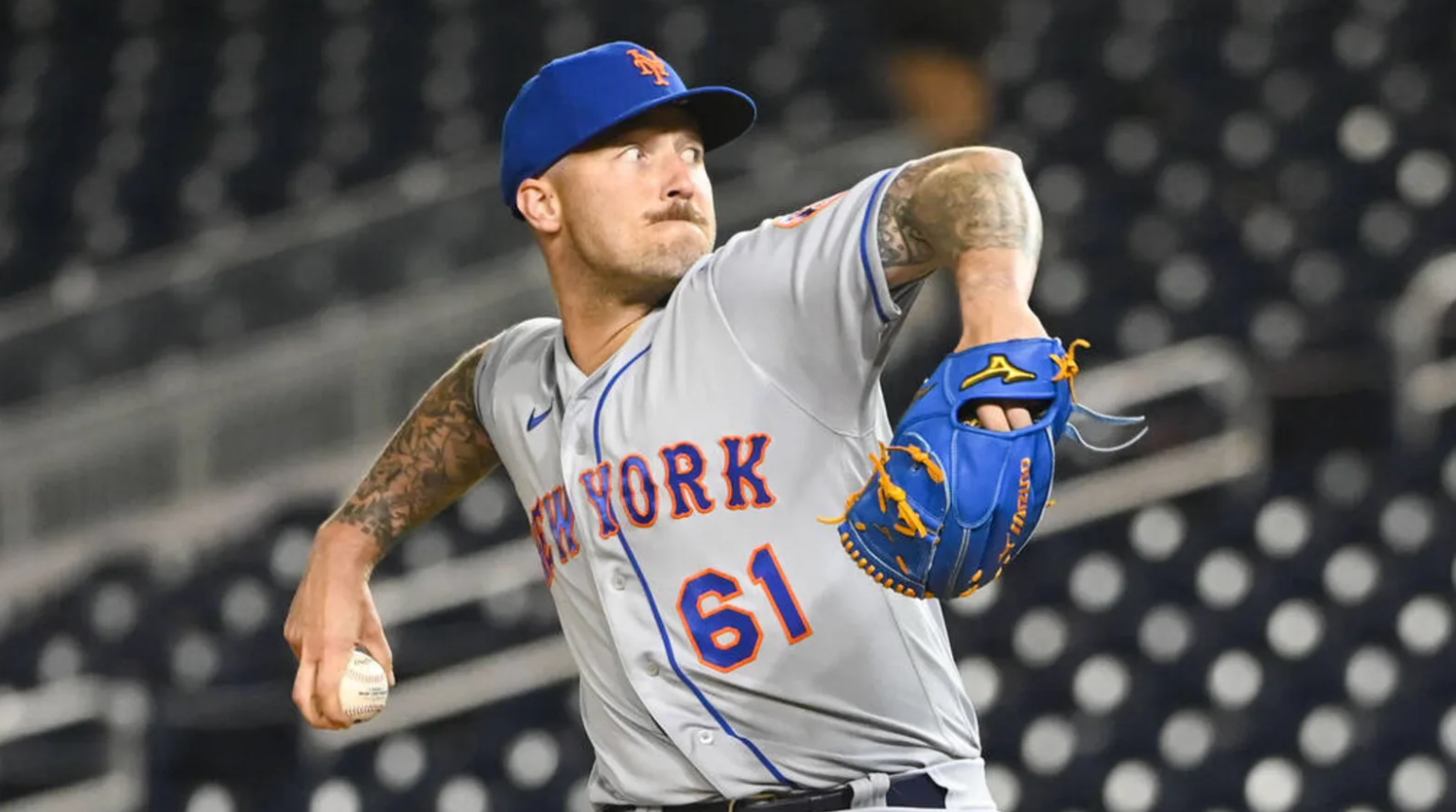
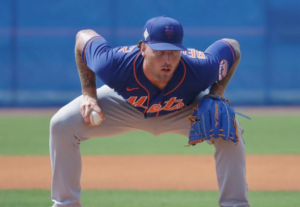
Reid-Foley’s most recent time in the majors came with the New York Mets in 2024. During that stint, he struggled to secure a consistent role and ultimately fell out of the big league picture. Before that, his professional journey began with the Toronto Blue Jays, the organization that originally drafted and developed him. Reid-Foley worked his way through Toronto’s farm system in the late 2010s and eventually made his MLB debut in 2018, at a time when he was viewed as a pitcher with intriguing raw stuff and upside.
Despite those early opportunities, Reid-Foley’s career has been marked by inconsistency, particularly when it comes to command. While he possesses the velocity and movement that teams covet in modern pitchers, his inability to consistently locate his pitches has been a persistent problem. Walks have plagued him at nearly every stop in his professional career, making it difficult for him to stay ahead of hitters and work efficiently through innings. Those command issues have ultimately limited his staying power at the highest level.
The 2025 season proved especially damaging to his standing around the league. Pitching primarily in Triple-A, Reid-Foley endured a rough campaign that did little to convince teams he was ready for another major league opportunity. Control problems resurfaced, results were uneven, and his overall performance failed to generate much interest once the offseason arrived. As a result, his market was extremely quiet, with few clubs willing to offer even a minor league deal.
That context helps explain why Atlanta appears to be one of the only teams willing to take a chance on him this winter. For the Braves, this signing is less about immediate contribution and more about organizational depth and upside. If Reid-Foley can make adjustments whether mechanical tweaks or changes in pitch usage there is at least a theoretical path for him to work his way back into relevance. However, the odds are steep, and he will have to outperform expectations simply to climb the depth chart.
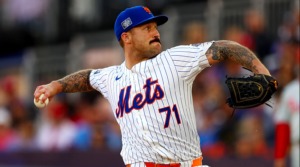
In the end, this move reflects Atlanta’s willingness to explore low cost options with some prior big-league experience. There is no guarantee Reid-Foley ever throws a pitch for the Braves at the major league level, but the commitment required from the team is minimal. For the pitcher, though, the opportunity represents another chance to revive a career that once showed promise but has been derailed by control issues and inconsistent results.
Braves Sign Sean Reid-Foley
Barring a handful of minor moves on the margins, the Atlanta Braves appear to have their bullpen picture largely settled as they move toward the 2026 season. Relief pitching was clearly the area of greatest emphasis for the front office this winter, with significant resources devoted to reinforcing the unit. As a result, what was once a question mark has now become one of the roster’s most reliable and stable components, at least on paper.
That reality, however, creates a challenging environment for pitchers on the outside looking in particularly those attempting to work their way back into a major league role. One such arm is right hander Sean Reid-Foley, whose chances of breaking camp with the big league club seem slim given the depth and experience currently ahead of him.
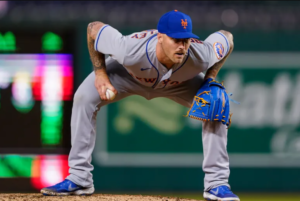
The situation was first highlighted by MLBTradeRumors.com, where analyst Steve Adams offered a sobering assessment of Reid-Foley’s outlook in Atlanta. Adams noted that even if Reid-Foley had secured a deal that included a major league invitation, the odds would still be stacked against him. The Braves’ bullpen is not only crowded, but filled with established veterans who already have defined roles. That combination leaves very little room for a reclamation project to force his way onto the roster without extraordinary circumstances.
Instead, the expectation is that Reid-Foley will begin the year at the Triple A level with Gwinnett. From there, his path to the majors would depend largely on two factors: performance and opportunity. If injuries were to strike the big league bullpen, or if Reid-Foley were able to rediscover the form he has shown in the past, he could resurface as a midseason option. Without one or ideally both of those developments, his role is likely to remain that of depth rather than an immediate contributor.
While that may sound discouraging, Reid-Foley’s recent history suggests there is at least some reason for cautious optimism. Just two seasons ago, he quietly put together an effective stretch with the New York Mets in 2024. Over 21.2 innings, he posted an impressive 1.66 ERA, showing an ability to miss bats and limit hard contact. Those numbers indicated a pitcher who, when healthy and locked in, could still be effective at the highest level.
That said, the underlying metrics from that stint also revealed ongoing concerns. Reid-Foley issued 14 walks in those limited innings, continuing a pattern of shaky command that has followed him throughout his career. His WHIP hovered in the mid 1.30s, suggesting that while runs were scarce, traffic on the bases was not. For a bullpen role, especially on a contender with little margin for error, those control issues can be a significant red flag.
The struggles became more pronounced during his most recent time in Triple A, where his results were described as disappointing. That downturn is a major reason evaluators are hesitant to project him as a near term solution for Atlanta, despite his previous flashes of success. In a bullpen stacked with dependable arms, consistency often matters more than upside, and Reid-Foley has yet to prove he can deliver that reliability over a sustained stretch.
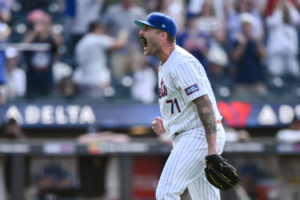
Looking at his career as a whole provides a broader perspective. Reid-Foley has logged 71 major league appearances, compiling a 4.10 ERA across 131.2 innings. Those numbers paint the picture of a pitcher who has been serviceable at times, but rarely dominant. He has bounced between roles and organizations, frequently teased by potential but ultimately limited by command and durability concerns.
For the Braves, this context makes his role fairly clear. He represents insurance rather than a centerpiece a pitcher who can be called upon if circumstances demand it, but not one the club is counting on from day one. In a different organizational setup, perhaps with fewer established bullpen options, Reid-Foley might have a clearer runway to meaningful innings. In Atlanta, however, he finds himself competing against both numbers and reputation.
Ultimately, Reid-Foley’s 2026 outlook hinges on patience and persistence. The talent that once made him an intriguing option hasn’t disappeared entirely, but the margin for error is razor thin. If he can refine his control and post strong results in Gwinnett, he could work his way back into the conversation. Until then, the Braves’ bullpen appears firmly set, leaving Reid-Foley to wait for his next opportunity to prove he still belongs on a major league mound.
Will the Braves Make Any Other Offseason Moves?
As the offseason continues to unfold, there is still uncertainty surrounding whether the Atlanta Braves will pursue any additional headline grabbing moves before the new season begins. Up to this point, the organization has been active, particularly when it comes to reinforcing the bullpen, but questions remain about whether the front office feels its work is truly finished.
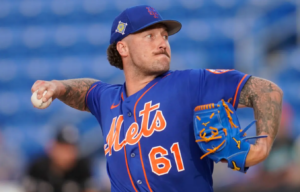
Atlanta has already invested heavily in its relief corps, bringing in several proven arms to deepen the unit. The Braves committed resources to adding experienced bullpen pieces such as Raisel Iglesias, Tyler Kinley, Joel Payamps, and Robert Suárez.
These signings reflect a clear emphasis on stabilizing late inning situations and protecting leads, an area that can often determine success over the course of a long season. By assembling a bullpen with both depth and versatility, Atlanta appears intent on ensuring that relief pitching will not be a weakness once games reach the later innings.
Beyond the bullpen, the Braves have also addressed position-player needs through a handful of notable signings. Jorge Mateo was added in response to the injury suffered by Ha-Seong Kim, giving the team a capable option to help fill that void. In addition, Atlanta brought in Mike Yastrzemski and Kim, further strengthening its lineup and providing more flexibility across the field. These moves suggest that the Braves are focused on maintaining balance throughout the roster, ensuring that injuries or slumps do not leave them overly exposed in any one area.
One of the Braves’ biggest advantages heading into the upcoming season is roster stability. Many of the team’s most productive and impactful players are already secured on long term contracts, allowing the organization to avoid scrambling to replace key contributors. This continuity not only helps with on field performance but also provides clarity for the front office when planning future moves. With so many core pieces locked in, Atlanta can afford to be selective rather than reactive in how it approaches the remainder of the offseason.
Despite this stability, there is still a lingering concern that continues to hover over the Braves: the state of the starting rotation. While the team has talent in place, recent seasons have been defined by injuries that have tested Atlanta’s pitching depth. Over the last two years in particular, the Braves have been forced to navigate significant setbacks among their starters, often relying on less experienced arms or short-term solutions to fill innings. Those experiences have underscored just how fragile rotation depth can be, even for a well constructed roster.
It’s true that starting pitching is a universal need across Major League Baseball, as every one of the league’s 30 teams is constantly searching for reliable arms. However, given Atlanta’s recent history, the urgency to add another starter may be greater for the Braves than for many of their peers. The grind of a full season demands durability and depth, and without sufficient insurance, even a strong rotation can quickly become a liability if injuries strike again.
How the Braves choose to address this question largely depends on their willingness to spend. It remains uncertain how aggressive the front office is prepared to be financially, especially after already allocating resources to the bullpen and bench. Atlanta has often favored value driven moves rather than splashy expenditures, preferring to identify pitchers who can outperform their contracts rather than committing to massive deals. That philosophy could once again guide their approach if they decide to pursue another starter.
From a fan’s perspective, adding one more dependable, cost effective arm to the rotation would go a long way toward easing concerns. A pitcher who can provide consistent innings, even if not a frontline ace, could help stabilize the staff and reduce the strain on both the bullpen and the rest of the roster. Given the Braves’ championship aspirations, such a move could prove crucial over the course of the season.
Ultimately, while Atlanta has already checked off several important boxes this offseason, the question of whether they will further reinforce the starting rotation remains unanswered. If the Braves can find the right opportunity at the right price, adding another starter could be the final piece that transforms a strong roster into a more complete and resilient contender.