The Philadelphia Phillies continue to occupy a prominent place in late offseason conversations as they navigate the final stages of shaping their roster for the 2026 campaign. While the organization has largely leaned on internal solutions and incremental adjustments throughout the winter, some observers around the league believe the front office still has unfinished business before pitchers and catchers report to spring training. In particular, there is growing debate about whether the Phillies can truly afford to stand pat in the outfield, an area that quietly became less certain as the offseason progressed.
That discussion took center stage recently on MLB Network, where analysts examined Philadelphia’s winter strategy during a segment of Hot Stove. The panel reviewed the Phillies’ modest additions, the players who departed, and the ripple effects those changes could have on a roster that expects to contend deep into October once again.
While the conversation touched on several aspects of the team’s construction, the outfield emerged as a recurring theme particularly the question of whether the club has enough reliability, athleticism, and energy in the middle of the diamond.
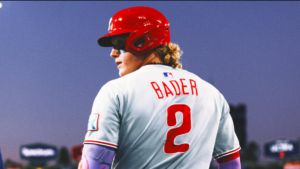
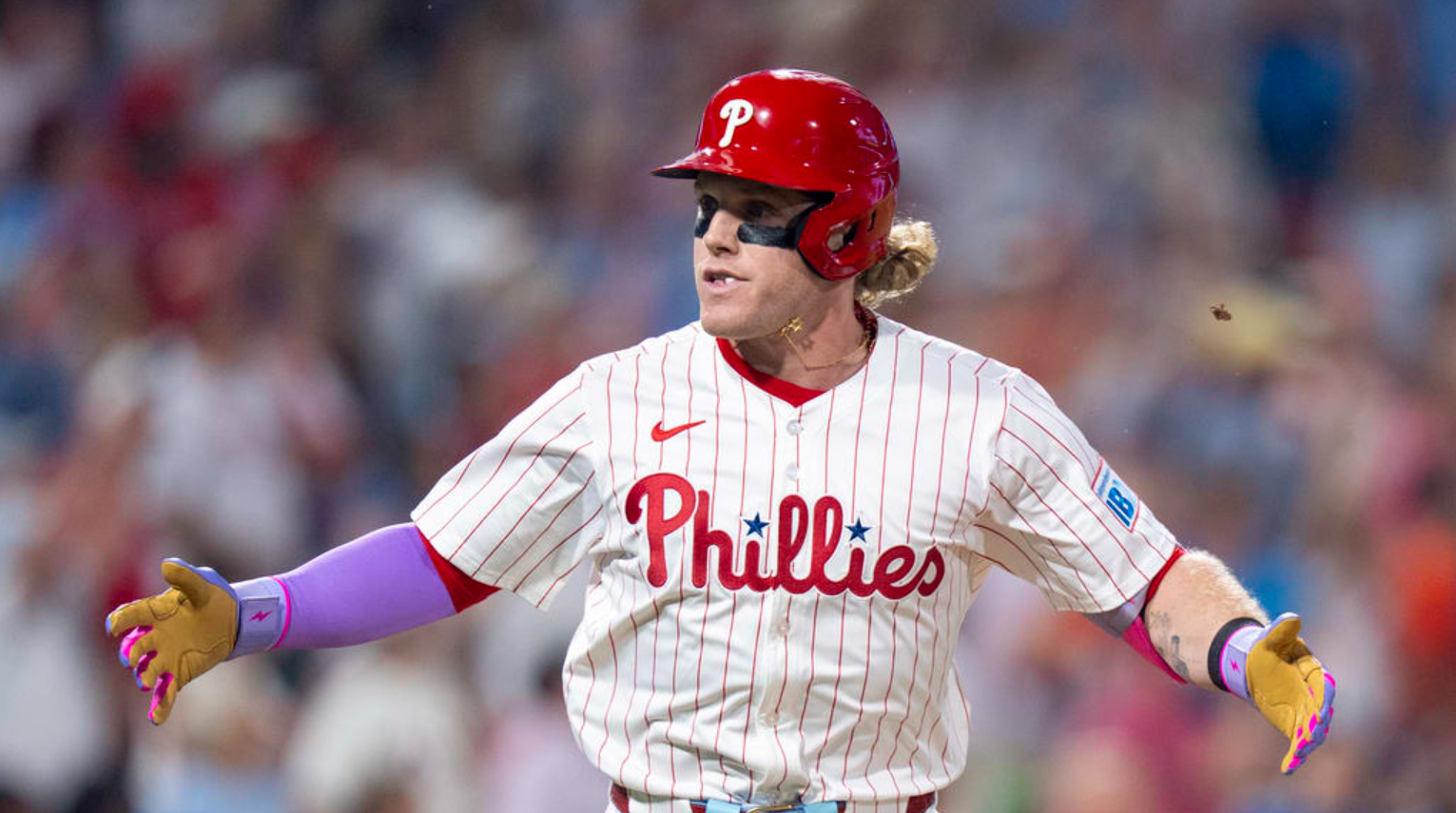
Following the broadcast, MLB Network shared the clip on its official X account (formerly Twitter), amplifying a strong opinion voiced by longtime analyst Harold Reynolds. Reynolds did not hedge his stance. In his view, the Phillies should make re-signing outfielder Harrison Bader a priority before spring training begins. Reynolds argued that Bader’s impact on the club went far beyond a short statistical surge and instead altered the overall tone and intensity of the team during the second half of the 2025 season.
“I still think they’ve got to re-sign Harrison Bader,” Reynolds said during the segment. “That guy flipped a switch for that team. He’s an igniter. I think you’ve got to bring him back and let him play a full season.”
Those remarks encapsulate how quickly Bader ingratiated himself within the Phillies’ clubhouse after arriving at the 2025 trade deadline. Acquired as a veteran reinforcement rather than a marquee star, Bader immediately provided attributes Philadelphia had been searching for: elite defense in center field, above-average speed, and a relentless style of play that injected urgency into the lineup. While the Phillies already possessed power and star recognition throughout their roster, Bader filled a different and arguably just as important role.
Reynolds’ perspective carries weight because of his own playing background and long standing role as a national voice on the game. Best known for his playing days with the Seattle Mariners, Reynolds has built a reputation for valuing defensive excellence, athleticism, and the subtle factors that contribute to winning baseball over a full season. In his assessment, Bader checked all of those boxes during his brief tenure in Philadelphia.
Statistically, Bader’s performance with the Phillies was impressive, particularly given the small sample size and the pressure of joining a contender midseason. Over just 50 games in a Philadelphia uniform, he posted a .305 batting average and an .824 OPS, numbers that exceeded expectations for a player often characterized more for his glove than his bat. He consistently reached base, applied pressure with his legs, and delivered timely hits that lengthened the lineup.
Yet Reynolds and others were quick to emphasize that Bader’s true value could not be fully captured by traditional box score metrics. His presence in center field stabilized the Phillies’ defensive alignment almost immediately.
With Bader covering vast amounts of ground, corner outfielders were able to shade more aggressively, pitchers could challenge hitters with greater confidence, and the entire defense operated with a heightened sense of cohesion. These are the kinds of benefits that often go unnoticed outside the clubhouse but are deeply appreciated by teammates and coaches.
Bader’s speed also changed the dynamic of the Phillies’ offense. Even when he was not driving the ball, his ability to steal bases, take extra bags, and force rushed throws created opportunities for the hitters behind him. In tight games especially late in the season those marginal advantages often make the difference between winning and losing. For a team with championship aspirations, that type of edge can be invaluable.
Despite those contributions, Bader’s future in Philadelphia became uncertain when he declined his $10 million mutual option for the 2026 season. By doing so, he entered free agency, opening the door for other clubs to pursue his services and forcing the Phillies to weigh their interest against broader payroll considerations. The decision did not come as a shock strong performances late in the year often encourage players to test the market but it complicated an already delicate roster puzzle.
From the Phillies’ perspective, the offseason has been defined by restraint. Rather than making sweeping moves, the organization has opted for continuity, trusting that its core remains strong enough to compete while leaving room for younger players to emerge. That philosophy has been publicly reinforced by Dave Dombrowski, the team’s President of Baseball Operations, who has indicated on multiple occasions that the front office is largely comfortable with where the roster stands as spring training approaches.
Dombrowski’s confidence suggests that the Phillies believe their internal options can adequately cover any perceived gaps, including in the outfield. However, Reynolds’ argument challenges that assumption, particularly in light of the players who have departed since the end of the 2025 season. Those exits have subtly thinned the team’s depth, increasing the importance of reliability and versatility among the remaining position players.
The contrast between Dombrowski’s measured approach and Reynolds’ sense of urgency highlights a broader philosophical debate that many contending teams face. On one hand, maintaining financial flexibility can prove crucial over the course of a long season, especially when unforeseen injuries or trade opportunities arise. On the other, passing on a proven fit particularly one who already demonstrated chemistry with the roster can leave a team vulnerable if internal options fail to meet expectations.
For Reynolds, the argument in favor of Bader is as much about identity as it is about production. He views Bader as a tone setter, someone whose energy and intensity resonate throughout the lineup and into the dugout. In Reynolds’ telling, Bader did not simply fill a hole; he elevated the standard of play and sharpened the Phillies’ competitive edge during a critical stretch of the season.
There is also the matter of sustainability. Bader’s stint with Philadelphia was limited to roughly two months, leaving open the question of whether his offensive surge would hold over a full 162-game schedule. Skeptics might argue that his numbers were inflated by a hot stretch or favorable matchups. Supporters counter that even if his batting line regressed slightly, his defense and baserunning would still provide significant value especially when spread across an entire season.
As the calendar edges closer to spring training, the Phillies find themselves at a crossroads that is familiar to many contenders. Do they prioritize continuity and trust in their existing depth, or do they pursue a move that reinforces both the roster and the clubhouse dynamic? Re-signing Bader would signal a commitment to the latter, emphasizing stability, defense, and energy over strict adherence to preseason projections.
The decision is further complicated by market forces. Bader’s performance down the stretch likely enhanced his appeal to other teams seeking a reliable center fielder with postseason experience. That competition could drive up his price, forcing the Phillies to decide how much they are willing to invest in a player whose value is not always reflected in headline grabbing statistics.
Ultimately, the question facing Philadelphia is not simply whether Harrison Bader is a good player. It is whether the version of the Phillies that took the field late in 2025 with Bader patrolling center field and setting the tone represents the blueprint they want to carry forward into 2026. For Reynolds, the answer is clear. He believes that spark still matters, and that letting it walk away could prove costly over the long grind of a championship chase.
As spring training draws nearer, scrutiny around the Phillies’ next move will only intensify. Fans, analysts, and rival executives alike will be watching to see whether the organization chooses flexibility over familiarity or decides that the impact Bader made in such a short time is worth preserving for a full season.